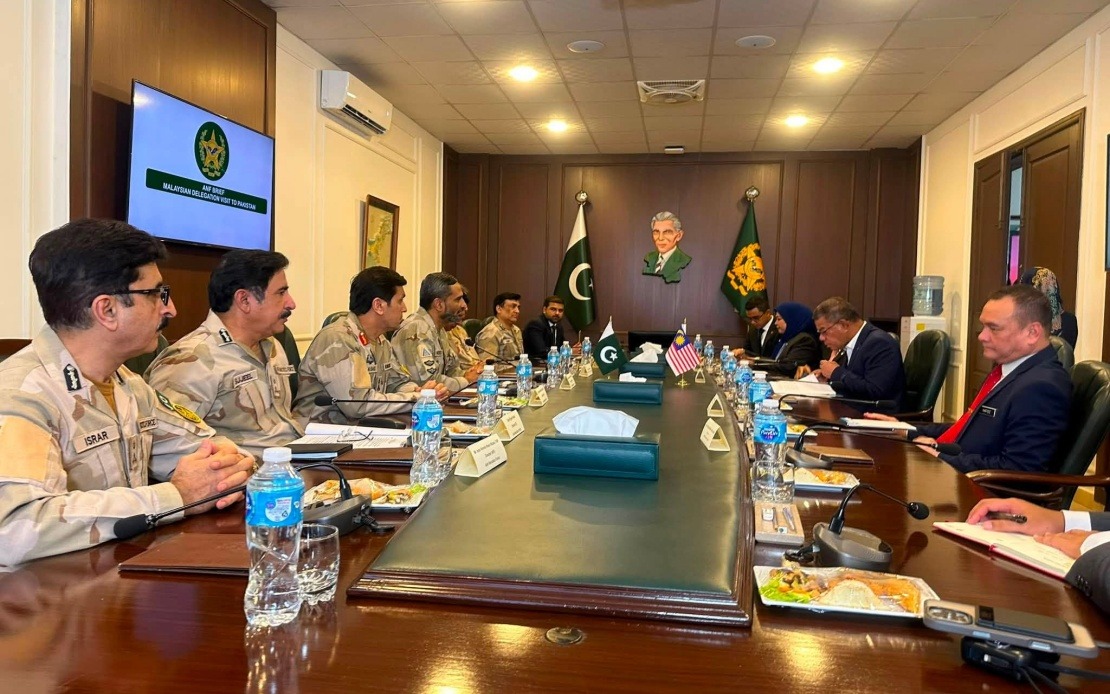
Home Minister Datuk Seri Saifuddin Nasution Ismail has announced plans for a structured memorandum of understanding between Malaysia and Pakistan designed to elevate their existing anti-narcotics collaboration to address the increasingly sophisticated drug threats facing both nations. The announcement came during his official visit to Islamabad, where he engaged with Pakistan's Anti-Narcotics Force leadership and senior government officials to map out a comprehensive enforcement strategy tailored to regional realities.
The proposed framework represents recognition by both countries that drug trafficking networks have evolved beyond simple bilateral concerns. Modern narcotics operations now involve complex supply chains managed by transnational organised crime syndicates that exploit geographical advantages and weak enforcement linkages. Pakistan's critical geographical position along trafficking corridors emanating from Afghanistan makes it a natural ally for Malaysia, which sits at the terminus of distribution networks extending into Southeast Asia. The proliferation of synthetic drugs, particularly methamphetamine, has compounded enforcement challenges, requiring coordinated responses that transcend national jurisdiction.
Saifuddin Nasution emphasised that traditional enforcement approaches prove inadequate against contemporary criminal networks. Intelligence-led operations, real-time information sharing, and coordinated interdiction efforts across borders represent the new operational imperative. The memorandum will formalise mechanisms for such cooperation, moving beyond symbolic agreements to establish concrete protocols for dismantling supply chains before contraband reaches Malaysian shores. This approach aligns with international best practices where countries directly confront trafficking threats through intelligence partnerships rather than isolated domestic crackdowns.
Historical data demonstrates the potential of Malaysia-Pakistan cooperation. Between 2012 and 2018, the two nations successfully coordinated more than 28 significant cases, indicating established operational compatibility and mutual trust between enforcement agencies. These precedents provide foundations upon which expanded cooperation can build. The forthcoming joint working group will systematically develop this foundation through enhanced intelligence protocols, coordinated field operations, training exchanges, and expertise transfers between Malaysian and Pakistani law enforcement personnel.
The geographical context underlying this partnership deserves emphasis. Afghanistan's role as the world's primary opium producer means that Pakistan inevitably confronts massive narcotics flows attempting transit toward international markets. Malaysia, as a regional hub and gateway to East Asian consumption markets, faces corresponding pressure from supply-side dynamics originating upstream in Central Asia. Neither country can effectively address these challenges unilaterally. Regional cooperation provides the multiplier effect necessary to disrupt trafficking routes that organised crime groups have refined over decades.
Beyond narcotics specifically, Saifuddin Nasution's broader engagement in Islamabad signals Malaysia's interest in strengthening ties across multiple domains. Discussions with Pakistan's Deputy Prime Minister Mohammad Ishaq Dar encompassed economic cooperation including trade, investment, and food security arrangements involving potential supplies of rice and meat. These economic dimensions complement security cooperation, reflecting recognition that sustainable bilateral relationships require multifaceted engagement. Proposed visa facilitation measures and people-to-people exchange initiatives acknowledge that durable partnerships rest on cultural and personal connections alongside official channels.
The establishment of a Joint Working Group on security, narcotics control, and police training represents institutional architecture enabling sustained collaboration beyond ceremonial announcements. Such mechanisms create permanent coordinating structures where technical experts from both nations can address evolving challenges through regular engagement. Police training exchanges, in particular, facilitate knowledge transfer regarding interrogation techniques, forensics, laboratory analysis, and intelligence gathering methodologies. Pakistani experience managing massive heroin seizures and methamphetamine lab interdictions offers valuable learning for Malaysian enforcement personnel.
The signing of the International Transfer of Prisoners Agreement during these discussions adds practical dimension to cooperation. This legal instrument enables both nations to manage custody of prisoners convicted in either jurisdiction, reducing complications arising from foreign nationals detained for narcotics offences. Such arrangements improve security outcomes and reduce administrative burdens that consume law enforcement resources. For Malaysia specifically, prisoner transfer agreements with key transit countries like Pakistan reduce incarceration costs while facilitating rehabilitation of offenders in their home countries.
Additionally, the Malaysian delegation's study of Pakistan's National Database and Registration Authority systems reflects broader security modernisation objectives. NADRA's digital identity infrastructure, biometric integration, and border management capabilities offer technological models applicable to Malaysian ambitions. The Home Ministry's interest in digital identity solutions and cybersecurity frameworks demonstrates recognition that twenty-first-century narcotics enforcement requires technological sophistication. Identity verification systems, passport data integration, and digital record linkage enable rapid intelligence cross-referencing that accelerates criminal network identification and interdiction operations.
For Malaysia and Southeast Asia more broadly, this partnership addresses a critical vulnerability in the regional security architecture. The Association of Southeast Asian Nations collectively struggles to coordinate narcotics enforcement, creating geographical gaps that trafficking networks systematically exploit. Malaysia's bilateral engagement with Pakistan demonstrates a pragmatic approach recognising that effective drug control sometimes requires partnerships extending beyond ASEAN borders. Pakistan's experience and geographical position make it an invaluable ally in blocking supplies at their source before reaching Southeast Asian markets.
The timing of these discussions reflects evolving geopolitical dynamics and transnational crime trajectories. Synthetic drug production increasingly occurs closer to consumption markets rather than exclusively in traditional source zones. This shifting pattern means Malaysia must engage not only with regional partners but also with countries like Pakistan that bridge production and distribution zones. Intelligence sharing regarding precursor chemical flows, laboratory operations, and trafficking method innovations becomes essential to staying ahead of organised crime adaptations.
Looking forward, the success of this cooperation framework depends on sustained political commitment, adequate resource allocation, and genuine operational integration at technical levels. Bureaucratic enthusiasm often exceeds implementation capacity, particularly when cooperation requires sharing sensitive intelligence or coordinating operations across significant distances. Both nations must institutionalise cooperation through dedicated personnel, secure communication channels, and regular high-level oversight ensuring momentum persists beyond initial enthusiasm.
For Malaysian readers and policymakers, this initiative signals recognition that regional security cannot be achieved through isolation or exclusively ASEAN-centric approaches. Contemporary transnational threats demand partnerships calibrated to geographical realities and threat patterns, regardless of traditional alliance frameworks. The Malaysia-Pakistan narcotics partnership represents pragmatic statecraft adapting to twenty-first-century security challenges where drug trafficking poses threats comparable to traditional military concerns.

