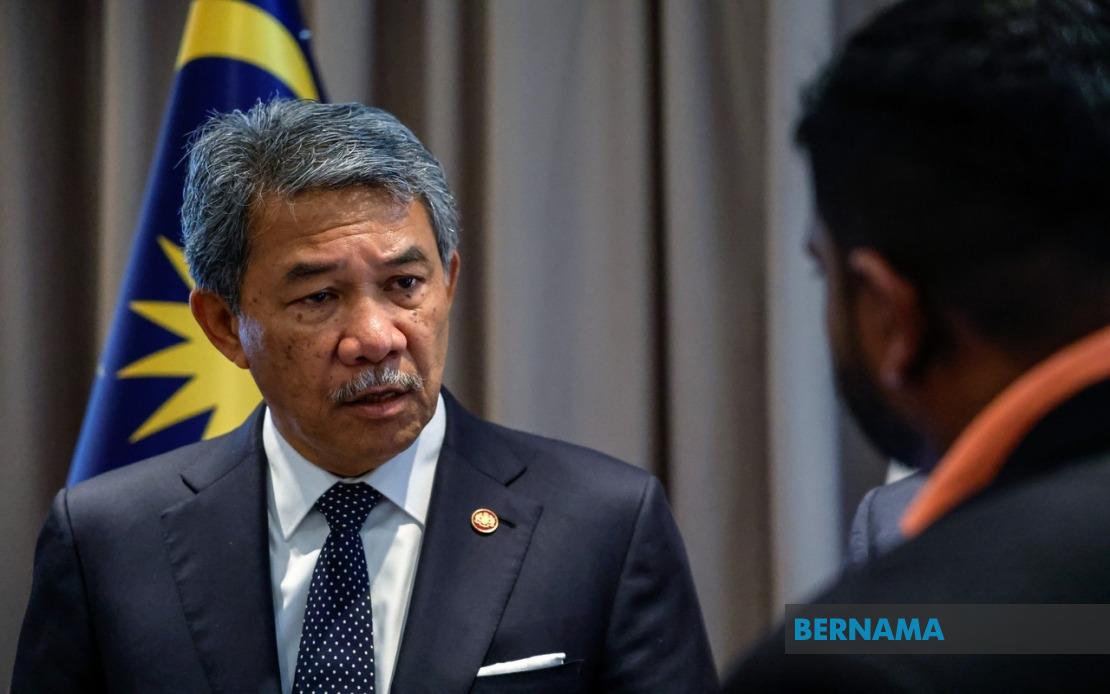
The governments of Malaysia and the Philippines have committed to expediting the return of more than 5,000 undocumented migrants currently held across four immigration detention facilities in Sabah, following high-level talks between their foreign ministers in Manila. The meeting, the 9th Malaysia-Philippines Joint Commission Meeting, brought together Foreign Minister Datuk Seri Mohamad Hasan and Philippine Secretary of Foreign Affairs Ma. Theresa P. Lazaro to address mounting capacity challenges at the detention centres and map out a coordinated repatriation strategy.
The screening process conducted by the Philippine Embassy in Kuala Lumpur has already identified more than 1,000 individuals who meet the criteria for immediate deportation back to the Philippines. These individuals represent the first wave of returnees and are expected to be transported via maritime routes or other available channels. The identification of this cohort signals meaningful progress in addressing what has become a significant strain on Sabah's immigration infrastructure, where facilities housing undocumented migrants have reached saturation point.
Datuk Seri Mohamad Hasan emphasised during the discussions that Malaysia's detention centres are operating well beyond their intended capacity and require immediate relief through sustained repatriation efforts. He called on the Philippine government to prioritise swift action in receiving its nationals while the remaining detainees continue to undergo identity verification and screening procedures. The accelerated timeline reflects mounting pressure on both countries to resolve a longstanding humanitarian and administrative challenge that has complicated bilateral relations for several years.
Beyond the immediate deportation framework, the two nations explored the complex issue of education provision for children of undocumented migrants currently in Sabah. Malaysia has undertaken to examine the feasibility of allowing continued schooling for these children before their families are repatriated. This consideration reflects acknowledgment of the humanitarian dimensions of the detention situation and the educational disruption faced by younger migrants. However, Datuk Seri Mohamad was emphatic that any educational programmes must remain under direct Philippine government control and oversight to ensure proper management and accountability.
The Malaysian minister's insistence on state-managed educational facilities reflects broader concerns about the emergence of unregulated private institutions within migrant communities. Such informal schooling arrangements, he indicated, operate without adequate monitoring mechanisms and do not meet established educational standards. By stipulating that the Philippine government assume direct responsibility for any educational initiatives, Malaysia aims to prevent the proliferation of makeshift schools that could perpetuate irregularities in the migrant population's legal status or complicate future repatriation efforts.
Separate from the migration discussions, the bilateral talks touched on the contentious issue of Sabah's territorial status, which has periodically surfaced in Philippine political discourse. Datuk Seri Mohamad clarified that this matter did not form part of the substantive agenda during the Joint Commission Meeting. He stressed that Malaysia expects the Philippines to observe established international law and recognise the global consensus regarding Sabah's incorporation into Malaysian sovereignty. The Malaysian foreign minister pointed to United Nations recognition of Sabah as part of Malaysia, citing a commission presented by the UN Secretary-General as definitive confirmation of the territory's status.
This diplomatic reassurance became necessary following remarks by Philippine Senator Robin Padilla, who had called for President Ferdinand Marcos Jr to resurrect Manila's long-dormant territorial claim over Sabah. In response to that pronouncement, Malaysia had signalled its intention to lodge a formal diplomatic note with the Philippines. The surfacing of the Sabah question, even in limited form, underscores the sensitivities that periodically complicate otherwise pragmatic cooperation between the two Southeast Asian neighbours.
The repatriation initiative addresses a pressing humanitarian and administrative challenge that has accumulated over decades of irregular migration flows from the Philippines to Malaysian Borneo. Sabah, with its geographical proximity to Mindanao and established employment networks, has long served as a destination for Filipino workers seeking income opportunities. However, the absence of legal entry documentation for thousands of migrants has created a sprawling detention infrastructure that consumes government resources and presents ongoing operational difficulties for immigration authorities.
The identification of over 1,000 individuals for immediate return represents a meaningful reduction in overall detention numbers, though it falls short of the full 5,000-plus figure still awaiting processing. The tiered approach—prioritising those whose nationality and identity have been conclusively established—allows for focused repatriation efforts while comprehensive screening of remaining detainees continues. This methodology balances operational efficiency with due diligence, ensuring that deportations proceed fairly while maintaining security protocols.
For Malaysian readers and policymakers, the agreement signals constructive bilateral engagement on a complex migration issue that touches multiple policy domains including immigration enforcement, humanitarian concern, and regional stability. The involvement of senior foreign ministry officials underscores the political priority both governments assign to resolving this question. Sabah's status as a primary entry point for undocumented migrants, combined with its substantial Filipino population, means that progress on repatriation carries significant implications for state security, public services, and community integration within the state.
The pledges made during the Manila discussions will be tested in coming months as the repatriation process advances. The success of the initiative will depend substantially on the Philippine government's capacity and willingness to receive large cohorts of citizens in rapid succession, a logistical and administrative challenge of considerable scale. For Sabah, accelerated repatriation offers potential relief from overcrowded detention facilities and associated costs, though managing the transition and ensuring the sustainability of outflows will require sustained coordination between the two capitals.

