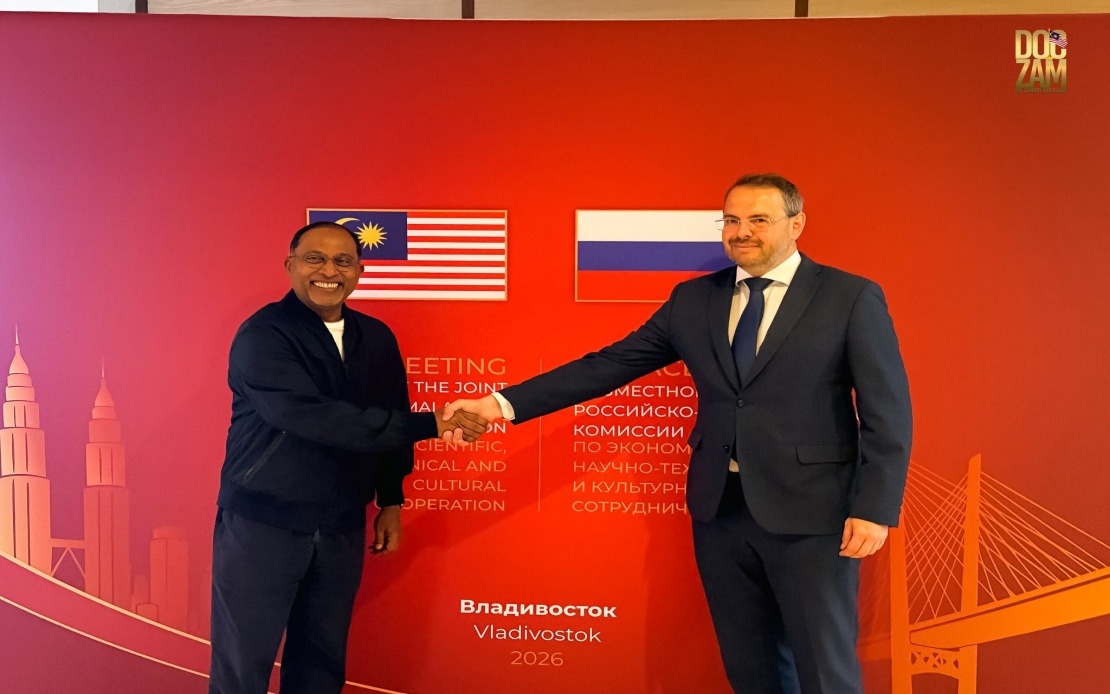
Malaysia and Russia are preparing to chart fresh directions in their strategic partnership, with a high-level bilateral meeting set to take place in Vladivostok this week. Higher Education Minister Datuk Seri Dr Zambry Abd Kadir is heading the Malaysian delegation to the Fifth Malaysia-Russia JC-ESTC Meeting, where officials from both nations will canvas opportunities spanning commerce, research innovation, and technological advancement. The gathering represents a significant moment for consolidating existing agreements while identifying untapped potential in key sectors that matter to both economies.
The agenda encompasses far more than academic exchanges, though education remains central to Malaysia's priorities. Trade expansion and fresh investment channels feature prominently, reflecting how both capitals view economic engagement as fundamental to the relationship. Alongside these commercial dimensions, the discussions will examine possibilities in energy cooperation, agricultural development, and cultural initiatives—areas where complementary strengths could yield tangible outcomes. This breadth of focus underscores how contemporary bilateral relations extend well beyond traditional diplomatic courtesies into concrete partnerships affecting citizens' livelihoods.
Zambry has emphasised that Malaysia approaches the platform with results-oriented expectations. Rather than allowing the JC-ESTC to become another forum for rhetoric without follow-through, he has stressed the need for actionable commitments that translate into genuine benefits for both populations. This emphasis on outcomes reflects a wider frustration among Southeast Asian partners about international meetings that generate impressive communiqués but deliver modest practical results. By insisting on projects, investments, and technology transfers rather than mere promises, Kuala Lumpur is signalling a more mature, businesslike approach to strategic cooperation.
Higher education cooperation holds particular significance in Malaysia's strategy. The country views expanded student mobility, joint research initiatives, and university partnerships as mechanisms for elevating educational quality while creating networks that foster long-term bilateral understanding. By positioning talent development in science, technology, and emerging strategic fields as priorities, Malaysia is essentially preparing its workforce for future economic challenges. Russian institutions bring distinctive expertise in mathematics, physics, and engineering disciplines where historical Soviet investments created world-class capabilities. Such collaboration could enhance Malaysian researchers' competitiveness in global knowledge economies.
The composition of the Malaysian delegation—spanning 17 ministries and agencies—signals the scope of ambition underpinning these discussions. This is not merely a bilateral chat between two foreign ministries but rather a whole-of-government engagement touching energy security, agricultural productivity, technological advancement, and social cohesion. For Southeast Asian observers, Malaysia's approach provides a template for how regional nations might structure partnerships with larger powers: through institutionalised frameworks that distribute benefits across multiple sectors rather than concentrating them in narrow corridors.
Russia's Deputy Minister of Science and Higher Education Konstantin Mogilevsky welcomed Zambry upon arrival, signalling Moscow's seriousness about these engagements. The fact that Russia is represented at ministerial level, with Valery Falkov scheduled to co-chair proceedings, demonstrates that both sides view the meeting as consequential. This parity of representation matters; it suggests neither party is approaching the discussion from a subordinate position but rather as equals seeking mutual advantage. For Malaysia, this is particularly important given concerns about maintaining equitable partnerships with larger powers.
The JC-ESTC itself, established in 2015, has operated for nearly a decade as the formal mechanism for structured cooperation. Yet Zambry's comments indicate that the platform requires revitalisation and sharper focus on implementation. This reflects a pattern common among bilateral frameworks: they accumulate agreements over time without necessarily ensuring follow-through. By pushing for transformation toward action-oriented outcomes, Malaysia is attempting to rescue the mechanism from becoming merely ceremonial. Such revitalisation could prove valuable as a model for other regional partnerships that similarly struggle with execution gaps.
Malaysia's characterisation of complementary strengths—particularly in science, technology, energy, higher education, and human capital development—provides the intellectual foundation for expanded cooperation. Rather than viewing the relationship through narrow geopolitical lenses, both nations are identifying genuine areas where one party's capabilities meet the other's requirements. Russia's established expertise in certain technological domains and Malaysia's growing innovation ecosystem, combined with its strategic position in Southeast Asia, create natural synergies. This pragmatic approach, grounded in mutual interest rather than ideological alignment, represents sound statecraft.
The timing of this meeting carries significance for Southeast Asia's broader strategic landscape. As the region navigates great power competition and seeks to maintain strategic autonomy, Malaysia's approach of deepening partnerships across multiple dimensions while maintaining balanced relationships offers instructive lessons. By securing cooperation in economics, research, education, and technology rather than allowing engagement to concentrate in defence or geopolitical domains, Kuala Lumpur preserves flexibility in its foreign policy orientation. This diversified engagement strategy allows Malaysia to benefit from Russian expertise and investment without becoming entangled in great power rivalries.
Zambry's hope that the meeting will usher in a new chapter in bilateral ties, complete with concrete agreements and committed follow-up actions, reflects realistic ambition. The challenge lies not in generating agreements—bilateral frameworks can produce these readily—but in ensuring their implementation. Success will be measured by whether specific projects materialise, whether investment flows increase, whether research collaborations yield publications and discoveries, and whether student exchanges expand. These measurable indicators will ultimately determine whether this week's discussions represent genuine strategic deepening or merely another cycle of diplomatic engagement without substance.
For Malaysian stakeholders in education, research, energy, and commerce, the outcomes from Vladivostok carry potential implications. Expanded research networks could provide academics with international collaborations; energy sector gains might enhance Malaysia's supply security; investment flows could generate employment and technological transfer; educational partnerships might improve institutional capabilities. The success of these aspirations depends on whether both delegations depart Vladivostok with genuine commitments rather than aspirational language. As Malaysia continues charting its course through a complex regional environment, deepening substantive partnerships with established powers like Russia offers one avenue for advancing national interests while contributing to regional stability.

