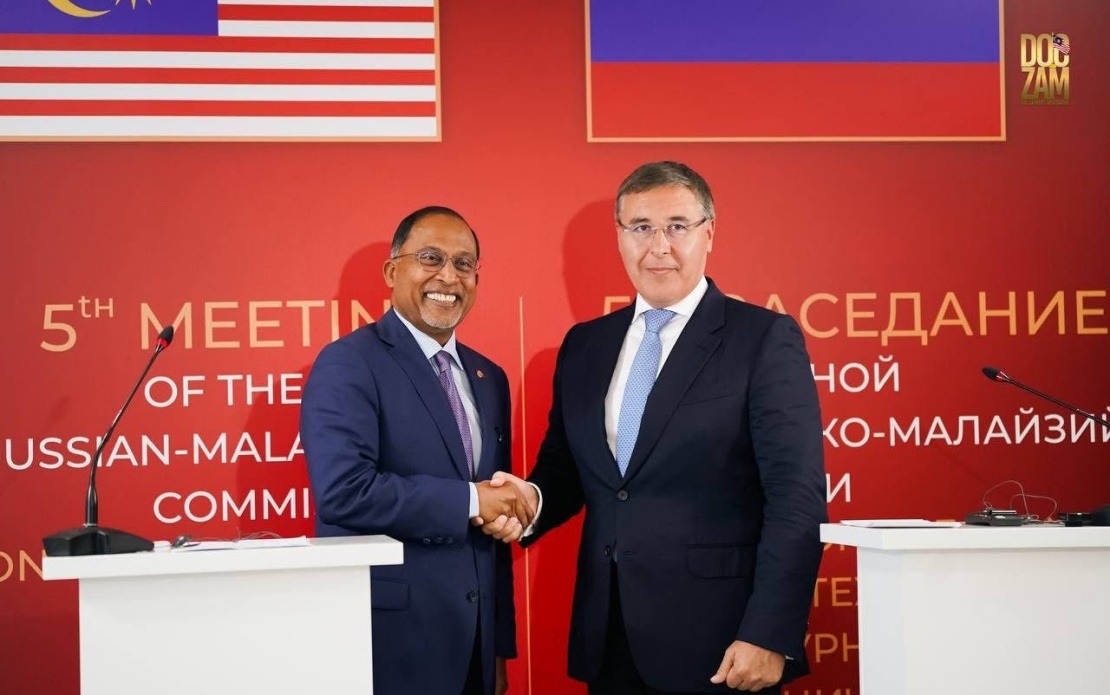
Malaysia and Russia have pledged to conclude negotiations on their 2027 Joint Action Plan before year-end, signalling a renewed push to transform diplomatic goodwill into tangible collaborative ventures spanning education, commerce, and technological innovation. Higher Education Minister Datuk Seri Dr Zambry Abd Kadir made the announcement following the Fifth Meeting of the Malaysia-Russia Joint Commission for Economic, Scientific, Technical and Cultural Cooperation, which he co-chaired with Russian Minister of Science and Higher Education Valery Falkov in Vladivostok.
The commitment reflects efforts to capitalise on the strengthened high-level political relationship between the two nations. The personal engagement of His Majesty Sultan Ibrahim, King of Malaysia, Russian President Vladimir Putin, and Prime Minister Datuk Seri Anwar Ibrahim has created momentum that officials now seek to channel into concrete institutional arrangements. The finalization of the action plan by year-end represents a structured approach to ensuring that diplomatic cordiality translates into measurable outcomes rather than remaining purely ceremonial.
In the critical area of human capital development, Russia will sustain its annual offer of 40 government scholarships to Malaysian students, underscoring the importance both nations place on academic exchange. Beyond this established programme, the two countries have embraced several forward-looking educational initiatives. These include launching the inaugural Malaysia-Russia Rectors' Forum in 2027, which would bring together academic leaders to discuss institutional partnerships and research collaboration. The expansion of the MAI-UniKL Russian Aerospace Programme signals particular interest in advanced technical fields that align with both nations' strategic priorities and offer employment opportunities for graduates in high-value sectors.
At the fifth joint commission meeting, officials also approved a youth development initiative through the Malaysia-Russia Youth Leadership Summer Camp, designed to nurture the next generation of bilateral engagement. Such people-to-people programmes are particularly valuable in Southeast Asia, where demographic dividends and youthful populations create constituencies for long-term international relationships. By investing in younger cohorts, Malaysia and Russia are laying groundwork for sustained cooperation that extends beyond current political cycles.
Trade and agricultural cooperation emerged as priority areas, with both delegations exploring mechanisms to expand market access and strengthen commercial ties. Discussions centred on fertiliser supply arrangements, including urea, which carries direct relevance to Malaysia's food security objectives. The agricultural dialogue reflects pragmatic recognition that Russian agricultural and chemical expertise can complement Malaysia's regional food production needs, particularly as global supply chains remain vulnerable to disruption.
The bilateral engagement encompasses an expansive array of strategic sectors that reveal the sophisticated depth of the emerging partnership. Cooperation frameworks now encompass artificial intelligence and digital technology—domains where both nations recognise competitive necessity in the Fourth Industrial Revolution. Smart cities, information security, telecommunications, and renewable energy featured prominently in discussions, indicating alignment on technological modernization. The exploration of peaceful nuclear energy cooperation, contingent on regulatory compliance, suggests long-term thinking about Malaysia's energy security and decarbonization pathways. Liquefied natural gas and liquefied petroleum gas cooperation underscores energy dimension concerns relevant to Southeast Asia's resource-dependent economies.
Financial sector cooperation has progressed notably through central bank involvement. The engagement of Bank Negara Malaysia and the Bank of Russia signals high-level institutional commitment to developing payment systems, trade financing, and investment mechanisms. Particular emphasis on Labuan as an international financial centre and gateway to ASEAN suggests Malaysia seeks to leverage its geographic and institutional advantages to position itself as a bridge for Russian capital and expertise entering Southeast Asian markets. The discussion of Islamic finance cooperation opens distinctive avenues given Malaysia's preeminence in Islamic banking, potentially creating opportunities for Russian entities to participate in Southeast Asia's fastest-growing financial segments.
Three cooperation agreements were formally executed between Malaysian and Russian higher education institutions during the meeting, cementing academic partnerships. Universiti Teknologi MARA signed accords with both the National Research University Moscow Power Engineering Institute and the Institute of Experimental Medicine, while Universiti Tun Hussein Onn Malaysia established ties with the State University of Land Use Planning. These institutional linkages provide structural conduits for researcher mobility, joint research projects, and curriculum development in fields ranging from engineering to biomedical sciences.
The expansion into industrial, healthcare, transport, green technology, and climate change cooperation demonstrates the holistic nature of contemporary bilateral relations. Creative economy and space sectors represent newer frontiers, reflecting global trends toward knowledge-based and innovation-driven development. For Malaysia, engagement with Russian expertise in these domains offers pathways to diversification beyond traditional sectors while positioning the nation as a regional innovation hub.
Malaysia's commitment to host the sixth joint commission meeting in 2027 carries symbolic significance, coinciding with the 60th anniversary of diplomatic relations between the two countries. This milestone anniversary provides an opportunity to assess progress across all agreed frameworks and potentially establish new cooperation pillars. The fact that Malaysia will serve as host reflects confidence in the bilateral trajectory and signals that the partnership has transcended Cold War-era suspicions to become a pragmatic, multifaceted engagement relevant to contemporary Southeast Asian interests.
For Malaysian stakeholders, this evolving partnership addresses practical concerns. Access to Russian scholarships and educational networks provides alternatives to Western institutions, diversifying human capital development pathways. Trade and investment cooperation could redirect regional value chains, potentially benefiting Malaysian industries through technology transfer and market expansion. Energy cooperation aligns with regional sustainability imperatives, while financial sector innovation may enhance Malaysia's competitive position as a fintech and Islamic finance hub. The emphasis on mutual respect and benefit in the closing statement reflects Malaysia's balancing approach as a non-aligned nation navigating great power competition.

