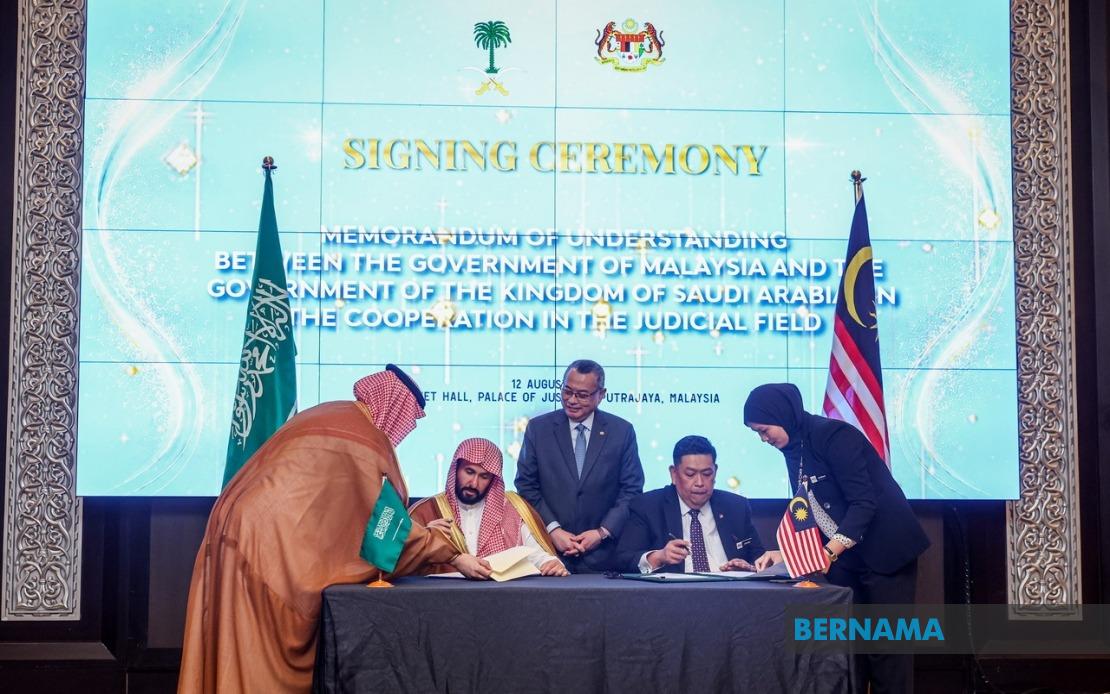
Malaysia and Saudi Arabia have taken a significant step in strengthening bilateral relations by signing a memorandum of understanding aimed at deepening cooperation across judicial systems. The agreement was formalised at the Palace of Justice in Putrajaya, bringing together Chief Registrar of the Federal Court Azhaniz Teh Azman Teh and Saudi Arabian Minister of Justice Sheikh Dr Waleed Mohammed Alsmani in a ceremony witnessed by Chief Justice Tun Wan Ahmad Farid Wan Salleh. This development comes as part of Sheikh Dr Waleed's official visit to Malaysia and underscores the two nations' commitment to institutional collaboration in the justice sector.
The memorandum establishes a structured framework for interaction across multiple domains within the judicial field. Rather than focusing on a single area, the agreement contemplates comprehensive engagement spanning civil case management protocols, advancement in judicial technology and digitalisation initiatives, systematic exchange of practical experience among judicial professionals, and sharing of publicly available information pertaining to court systems. This multi-faceted approach reflects a recognition that modern judiciaries face common challenges requiring collaborative solutions, particularly as courts worldwide grapple with efficiency demands and technological transformation.
For Malaysia, this partnership represents an opportunity to benchmark its judicial practices against an established regional system while simultaneously positioning Malaysian innovations—particularly in court digitalisation—as models worthy of international study. The reference to Malaysia's e-Court system suggests that the nation's investment in judicial technology has achieved recognition beyond its borders. This recognition validates Malaysia's approach to modernising its justice infrastructure and creates potential pathways for technology-sharing that could benefit both jurisdictions seeking to improve case disposition times and accessibility.
The inclusion of a focused dialogue on Malaysia's judicial approach to sexual offences against children constitutes a particularly noteworthy element of the cooperation framework. This thematic emphasis indicates that both nations recognise child protection as a priority concern warranting specialised judicial mechanisms and expertise-sharing. For Malaysia, it presents an opportunity to showcase legislative frameworks and sentencing practices developed to address this sensitive category of crimes, while potentially learning from Saudi Arabia's experience in implementing Sharia-based protections for vulnerable populations. Such exchanges can inform policy refinement and judicial training across Southeast Asia.
The timing of this agreement carries significance within regional dynamics. As Malaysia navigates its role within the Organisation of Islamic Cooperation and seeks to strengthen relationships with key Gulf players, deepening ties with Saudi Arabia across institutional lines—rather than merely diplomatic channels—demonstrates commitment to substantive engagement. For Saudi Arabia, partnerships with established constitutional democracies like Malaysia offer insights into secular legal frameworks that coexist with Islamic jurisprudence, a balance increasingly relevant as the Kingdom pursues Vision 2030 reform initiatives.
The emphasis on institutional visits and regular exchanges suggests the architects of this MoU envision ongoing human-to-human engagement between Malaysian and Saudi judicial officers. Such interactions transcend formal documentation by fostering professional relationships and mutual understanding among judges, court administrators, and legal practitioners. These personal connections often prove invaluable when jurisdictions subsequently collaborate on individual cases, extradition matters, or cross-border legal disputes affecting citizens of both nations.
From a Southeast Asian perspective, this bilateral arrangement may catalyse broader discussions about judicial cooperation across the region and beyond. As individual nations within ASEAN pursue their own partnerships with external actors, Malaysia's experience in formalising judicial cooperation with Saudi Arabia could provide templates for similar arrangements. The MoU's emphasis on digitalisation, in particular, speaks to a shared regional challenge: upgrading court infrastructure to handle increasing caseloads whilst improving access to justice for citizens in an era of technological possibility.
The knowledge-sharing component extends beyond abstract legal principles to encompass practical administrative wisdom. Malaysian courts' experience in case management—critical for a jurisdiction managing diverse civil, criminal, and commercial disputes—holds tangible value for counterparts globally. Conversely, Saudi Arabia's approaches to integrating Islamic law principles with modern judicial administration offer perspectives that Malaysian courts, serving a Muslim-majority society, may find instructive when refining their own practices.
This cooperation framework arrives at a juncture when courts worldwide are reassessing their technological capabilities and accessibility. The COVID-19 pandemic accelerated digitalisation in many jurisdictions, and both Malaysia and Saudi Arabia have invested substantially in virtual hearing capabilities and case management systems. By institutionalising regular exchanges on these matters, the MoU ensures that both nations can learn from each other's implementation successes and challenges, potentially avoiding costly missteps and accelerating the diffusion of best practices.
The stated objective of providing "a structured platform for closer institutional engagement, knowledge-sharing and continued cooperation towards the efficient administration of justice" reflects contemporary understanding that judicial effectiveness transcends individual judges or cases. Systemic improvements in how courts manage their operations, deploy technology, and train personnel produce ripple effects throughout the legal ecosystem. Malaysian and Saudi Arabian cooperation in these areas thus promises benefits extending beyond the immediate signatories to affect citizens' experiences with their respective justice systems.
Looking forward, the success of this MoU will depend on sustained implementation beyond the ceremonial signing. Meaningful judicial cooperation requires dedicated resources, clear accountability mechanisms, and genuine commitment from senior leadership to facilitate officer exchanges and training programmes. The presence of the Chief Justice at the signing ceremony signals institutional priority, suggesting that practical follow-through is likely. For Malaysia's judiciary, this engagement with Saudi Arabia diversifies its international partnerships whilst reinforcing the nation's credentials as a sophisticated judicial system capable of contributing meaningfully to global discussions about justice administration in the twenty-first century.

