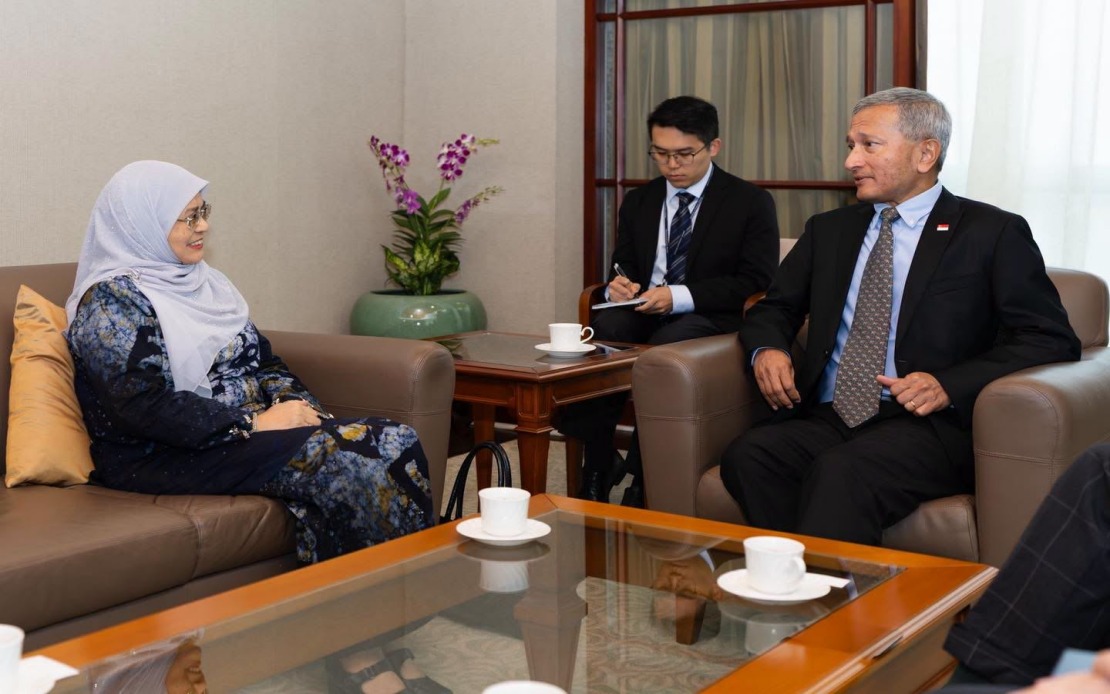
The relationship between Malaysia and Singapore took on renewed significance this week as the newly appointed Malaysian High Commissioner to Singapore held her inaugural official meeting with Singapore's Foreign Minister, underscoring both nations' determination to sustain and deepen their longstanding partnership. Datin Paduka Anizan Siti Hajjar Adnin's courtesy call on Dr Vivian Balakrishnan marked an important diplomatic milestone, signalling continuity in the bilateral engagement that has characterised the two neighbours' interactions since independence.
During the Wednesday meeting, both delegations reaffirmed their shared conviction that maintaining positive momentum in their relations remains essential for progress across the full spectrum of cooperation. The discussions reflected a broader strategic understanding that the Malaysia-Singapore relationship extends far beyond formal government dealings into the everyday fabric of both societies, where thousands of citizens maintain families, operate businesses, and pursue livelihoods that bridge the two nations.
The Malaysian High Commission's statement emphasised that both sides had exchanged substantive views on the bilateral agenda and identified concrete opportunities for improvement. Particularly significant was their focus on enhancing the quality of life for ordinary people in Malaysia and Singapore, especially those whose lives straddle both nations. This people-centric approach highlights a recognition that durable diplomatic relations must translate into tangible benefits for the populations they serve, rather than remaining confined to ceremonial protocols.
Balakrishnan's public remarks underscored Singapore's perspective on the partnership, describing the Malaysia-Singapore relationship as uniquely grounded in shared historical experience and deep social connections. He pointed to the extensive cooperation already embedded across numerous sectors and expressed confidence that Anizan's distinguished diplomatic background would enable her to build constructively on the achievements of her predecessors. His comments reflected Singapore's investment in ensuring that high-quality leadership at the diplomatic level translates into sustained forward momentum in practical cooperation.
Anizan assumed her position as Malaysian High Commissioner on July 2, 2026, bringing with her an extensive record of diplomatic service. Her appointment represents Malaysia's commitment to staffing its mission in Singapore with experienced personnel capable of navigating the complexities of managing a relationship that, while fundamentally cooperative, involves regular dialogue on contentious issues ranging from maritime boundaries to water agreements and labour mobility.
The timing of this diplomatic engagement carries particular relevance for Southeast Asia more broadly. Malaysia and Singapore, as two of the region's most developed economies and ASEAN members, serve as anchors for regional stability and integration efforts. Their ability to maintain constructive relations despite periodic tensions over bilateral matters such as the Johor Bahru airspace and maritime disputes sets a template for how neighbouring nations can balance assertive pursuit of national interests with commitment to broader cooperation frameworks.
For Malaysian readers, the reaffirmation of bilateral commitment holds direct implications. The relationship's health directly affects thousands of Malaysians who work in Singapore, rely on cross-border commerce, or maintain family networks across the Causeway. Similarly, the functioning of shared infrastructure, water agreements, and labour arrangements depends on the diplomatic goodwill and institutional cooperation that such high-level meetings help sustain and reinvigorate.
The focus on exploring pathways to improve citizens' lives suggests that both governments recognise growing cross-border integration among their populations, with significant numbers of Malaysians employed in Singapore's finance, healthcare, and technology sectors, while Singaporean businesses maintain substantial operations throughout Malaysia. Disruptions to bilateral relations inevitably create friction for these populations, making diplomatic efforts to maintain positive momentum a practical necessity rather than merely symbolic protocol.
Looking forward, the nature of Malaysia-Singapore cooperation will likely evolve as both nations navigate emerging regional challenges including climate change, digital transformation, and supply chain resilience. The High Commissioner's mandate will encompass not only traditional diplomatic functions but also facilitating the complex coordination required across multiple government agencies dealing with transboundary issues. Her appointment during a period of broader regional geopolitical shifts suggests that both capitals understand the importance of ensuring that experienced diplomats lead their respective missions.
The courtesy call represents more than a ceremonial exchange; it embodies both nations' assessment that their relationship, while mature and institutionalised, requires ongoing active management and renewal. As Malaysia and Singapore continue implementing bilateral agreements and exploring new areas of cooperation, the quality of diplomatic representation and the personal relationships forged between officials become increasingly consequential for translating political commitments into concrete outcomes affecting businesses, workers, and families across both nations.

