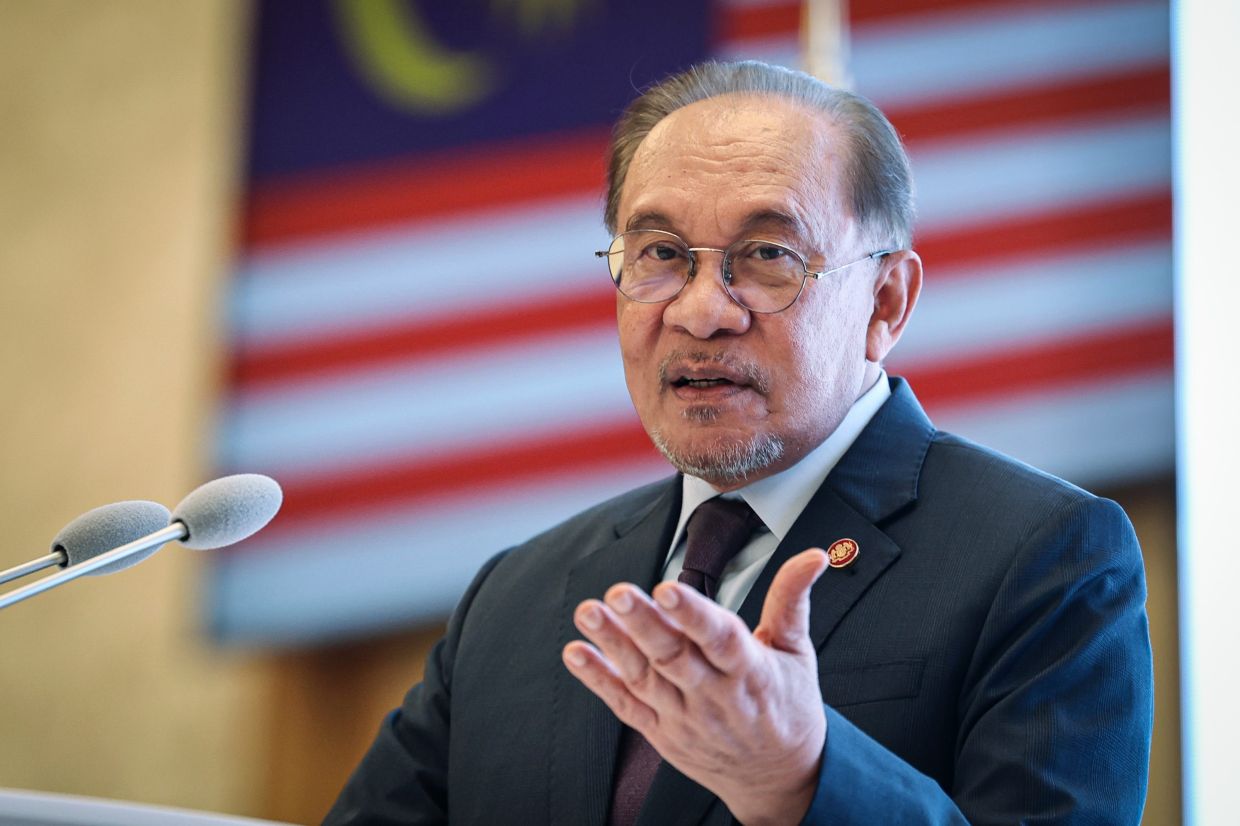
Prime Minister Datuk Seri Anwar Ibrahim has signalled that the highly anticipated master plan for the Johor-Singapore Special Economic Zone (JS-SEZ) will reach completion in the coming months, marking a significant milestone in one of Southeast Asia's most strategically important cross-border development initiatives. The announcement came during a courtesy call between Anwar, who doubles as finance minister, and Singapore President Tharman Shanmugaratnam, who is currently on a three-day state visit to Malaysia from July 13 to 15 at the invitation of His Majesty Sultan Ibrahim, King of Malaysia.
The JS-SEZ represents an ambitious attempt to leverage the economic complementarities of Malaysia's Johor state and Singapore's status as a global financial and logistics hub. The zone aims to create integrated infrastructure and investment opportunities that could transform the region's economic landscape, attracting multinational corporations and facilitating deeper integration of supply chains across the southern Malaysian-Singaporean corridor. For Malaysian investors and policymakers, the finalisation of this master plan carries substantial implications for Johor's economic trajectory and positioning within the broader ASEAN framework.
During their discussions, Anwar and Tharman covered the full spectrum of bilateral relations, including Malaysia-Singapore ties, emerging regional developments, and matters of shared strategic concern. The prime minister's characterisation of these exchanges as productive reflects an ongoing effort to maintain the diplomatic momentum that has defined recent interactions between Kuala Lumpur and Singapore. The choice to highlight JS-SEZ progress specifically underscores the project's elevated importance within the bilateral agenda, suggesting that both governments view its advancement as emblematic of their broader commitment to regional cooperation.
An important element of their conversation centred on what Anwar described as "positive progress in efforts to resolve several outstanding matters" between the two countries. Malaysia and Singapore have historically navigated complex bilateral issues ranging from maritime boundaries and air space coordination to water agreements and economic competition. Anwar's public acknowledgement of headway on these fronts indicates a deliberate effort to project confidence that even contentious issues can be managed through sustained dialogue and goodwill.
Both leaders reaffirmed their commitment to continuing negotiations on any remaining disputes, explicitly grounding their approach in principles of mutual respect and constructive engagement. This language carries particular weight in the Malaysian-Singaporean context, where public pronouncements on bilateral matters are carefully calibrated to avoid misunderstanding and maintain the political space for behind-the-scenes problem-solving. The emphasis on these foundational principles suggests that both governments recognise the importance of preserving relationship stability even as they work through specific disagreements.
For Malaysian readers and businesses, the JS-SEZ finalisation represents a tangible opportunity to participate in a development corridor that could rival the strategic importance of regional initiatives like the Klang Valley or Penang's industrial zones. The special economic zone model has proven effective in other contexts across Southeast Asia, offering investors regulatory clarity, infrastructure investment, and streamlined business operations. However, success will depend heavily on the specific terms of the master plan, including issues of governance, revenue sharing, labour mobility, and environmental standards.
The timing of Singapore's presidential visit and the JS-SEZ announcement also reflects the calculated diplomacy between the two nations. State visits serve multiple purposes beyond ceremonial functions; they provide high-level platforms for advancing substantive agendas and sending signals to both domestic and international audiences about the health of bilateral relations. Tharman's visit, initiated at the invitation of the Malaysian King, demonstrates reciprocal respect and commitment to maintaining regular high-level engagement, a practice that tends to facilitate progress on complex joint ventures.
From a regional perspective, the JS-SEZ initiative holds significance beyond immediate bilateral concerns. ASEAN members, particularly those competing for foreign direct investment and regional supply chain positioning, will watch closely as Malaysia and Singapore advance this corridor. The zone could influence how multinational enterprises structure their Southeast Asian operations, potentially creating spillover benefits for Johor and surrounding regions through job creation, skills development, and infrastructure improvements. Conversely, regional competitors may seek to accelerate their own economic initiatives to maintain comparative advantage.
The reference to strengthening Malaysia-Singapore relations "based on trust, mutual respect, and shared benefits" articulates the philosophical foundation that both governments aim to embed in their interactions going forward. Trust between neighbouring nations, particularly when they share maritime boundaries, competing economic interests, and historical sensitivities, requires consistent demonstration through both symbolic acts and substantive cooperation. The JS-SEZ master plan completion can serve as concrete evidence of this commitment, delivering tangible benefits that justify the diplomatic investment.
Anwar's optimistic framing of the bilateral relationship and the JS-SEZ timeline should be understood within the context of Malaysia's broader economic agenda. As the government seeks to attract investment and position Malaysia as a competitive destination for regional headquarters and operations, developments with Singapore carry outsized significance. The financial sector, petrochemicals, logistics, and advanced manufacturing—all sectors where Malaysia aspires to strengthen competitiveness—stand to benefit from a well-functioning JS-SEZ.
Moving forward, stakeholders in both countries will focus on the specific provisions of the finalised master plan. Details regarding investment thresholds, employment provisions, technology transfer expectations, and governance structures will ultimately determine whether the initiative achieves its potential or becomes a symbol of unfulfilled ambition. The coming months will reveal whether Anwar's confidence in near-term completion translates into a practical framework that both governments and private investors can implement effectively.

