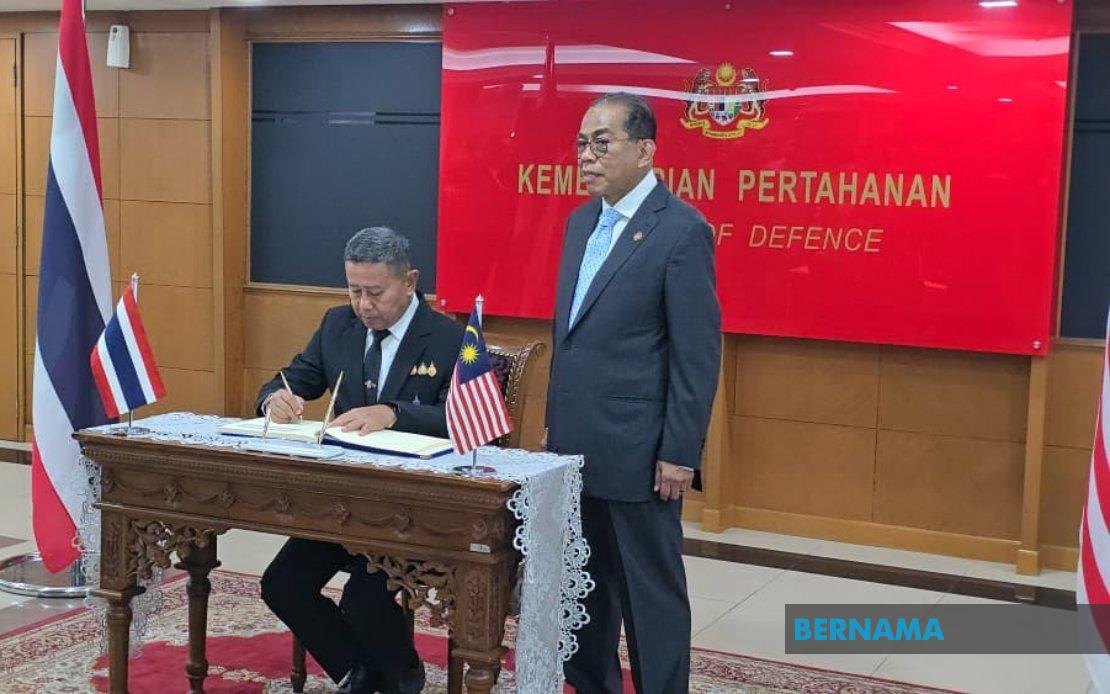
Malaysia and Thailand have renewed their pledge to deepen defence partnerships and jointly tackle emerging security threats across Southeast Asia, following high-level talks between their respective defence ministers in Kuala Lumpur on July 14. The meeting between Malaysia's Datuk Seri Mohamed Khaled Nordin and Thailand's newly appointed Defence Minister Lieutenant General Adul Boonthumjaroen at Wisma Pertahanan underscores the strategic importance both nations attach to their military relationship amid a complex regional landscape marked by transnational challenges and geopolitical sensitivities.
Adul's visit marked his inaugural engagement with Malaysian defence leadership since assuming his portfolio under Prime Minister Anutin Charnvirakul's administration. The discussions reflected the warmth characterising the bilateral relationship between the two countries' defence establishments, with Mohamed Khaled extending congratulations on Adul's recent appointment and voicing optimism about Thailand's trajectory under its current political leadership. The exchange of courtesies at the ministerial level signals continuity in Malaysia-Thailand defence relations despite periodic shifts in Bangkok's political landscape, a pattern that has historically insulated security cooperation from broader diplomatic fluctuations.
Both defence chiefs explicitly reaffirmed their commitment to promoting sustainable peace and stability throughout Southeast Asia, a declaration that carries particular weight given the region's vulnerability to maritime disputes, transnational terrorism, and non-traditional security threats. Malaysia and Thailand, as founding members of ASEAN, recognise their dual responsibility to uphold the regional architecture while addressing immediate security concerns that transcend national borders. Their emphasis on regional peace reflects broader ASEAN principles of non-interference and consensus-building, even as individual members face distinct security dilemmas requiring bilateral or multilateral cooperation.
Thailand's explicit endorsement of Malaysia's mediation efforts in the Thailand-Cambodia border dispute represents a significant diplomatic gesture that elevates Malaysian influence within Southeast Asian security architecture. The recognition of Malaysia's proactive role in facilitating dialogue and fostering stability suggests that Bangkok views Kuala Lumpur as a credible honest broker capable of navigating sensitive territorial disputes without partisan bias. This validation enhances Malaysia's standing as a stabilising force in the region and potentially positions it for expanded mediation responsibilities in other inter-state tensions that could destabilise ASEAN cohesion.
The border tensions between Thailand and Cambodia have periodically flared into armed confrontations despite international mediation efforts, making Malaysia's contributions to defusing such conflicts particularly valuable to regional peace. By acknowledging Malaysia's peacebuilding initiatives, Thailand implicitly signals its receptiveness to continued collaborative approaches to border management and conflict prevention. For Malaysia, this endorsement reinforces the diplomatic dividends of maintaining balanced relationships with all ASEAN partners and demonstrates how security cooperation can be leveraged to enhance political influence within multilateral forums.
Beyond ministerial discussions, Adul's programme included a substantive visit to the National Aerospace and Defence Industries Group of Companies, a strategic Malaysian defence contractor. This industrial component of his visit opened pathways for bilateral exploration of defence procurement, technology transfer, and joint development initiatives. Such engagement reflects contemporary realities wherein defence cooperation encompasses not merely strategic dialogue but concrete partnerships in military equipment, systems integration, and technological advancement. For NADI, the Thai minister's visit represented an opportunity to showcase Malaysian defence industrial capabilities and explore regional market opportunities within a security framework increasingly emphasising indigenous capacity-building.
The visit illustrated how defence diplomacy operates across multiple institutional levels, encompassing both governmental-to-governmental engagement and private sector opportunities. Malaysia's defence industry, while modest compared to global standards, possesses niche competencies relevant to Southeast Asian operational requirements and cost structures. Thai interest in NADI's facilities and capabilities reflects broader regional trends wherein smaller ASEAN nations seek to develop indigenous defence manufacturing capabilities rather than remaining solely dependent on distant suppliers. Bilateral cooperation in this domain could yield mutual benefits including shared research investments, economies of scale, and technologically-tailored solutions addressing region-specific challenges.
The substance of Malaysia-Thailand defence cooperation extends across traditional domains including maritime security, counter-terrorism operations, and humanitarian disaster response. Both nations share extensive coastlines vulnerable to piracy, smuggling, and irregular maritime activities requiring coordinated surveillance and enforcement. Intelligence sharing protocols, joint training exercises, and operational coordination mechanisms constitute the operational backbone of their partnership. Additionally, both countries contend with transnational terrorist organisations and insurgent groups operating across porous borders, necessitating intelligence exchange and joint counter-terrorism operations sanctioned through bilateral mechanisms.
Regional security dynamics have intensified scrutiny of Malaysia-Thailand relations, particularly given their geographic proximity, overlapping maritime interests, and shared vulnerabilities to non-traditional security threats. Terrorist financing networks, drug trafficking routes, and irregular migration flows traverse their mutual border region, demanding sophisticated law enforcement and intelligence cooperation. The defence ministerial engagement provides high-level political cover for operational military-to-military relationships that address these transnational challenges through coordinated capabilities and information sharing.
Looking forward, the Malaysia-Thailand defence partnership faces opportunities for expansion amid evolving regional strategic competition and proliferating security challenges that transcend single-nation capacity. Climate change-induced disasters, pandemic preparedness, and maritime domain awareness represent emerging collaborative frontiers wherein bilateral cooperation generates regional spillover benefits. The ministers' discussion of future cooperation possibilities with NADI suggests both nations recognise potential for deepening industrial partnerships that could enhance regional defence autonomy and technological capability development.
The timing of Adul's visit carries subtle significance given fluctuations in Thai domestic politics and ASEAN cohesion. By immediately engaging with Malaysian leadership, the new Thai Defence Minister demonstrated commitment to maintaining ASEAN institutional relationships and bilateral partnerships regardless of Bangkok's internal political circumstances. For Malaysia, hosting such high-level visits reinforces regional leadership credentials and demonstrates the nation's capacity to maintain stable, productive relationships with key partners despite occasional diplomatic frictions elsewhere.
As Southeast Asia navigates increasingly contested regional competition and mounting security complexities, defence partnerships such as Malaysia-Thailand cooperation acquire heightened strategic value. The bilateral framework provides flexible mechanisms for addressing shared challenges whilst respecting ASEAN principles of non-interference and consensus-building. Through sustained engagement at ministerial, operational, and industrial levels, both nations contribute incrementally toward regional security architectures capable of managing transnational threats and maintaining stability within an increasingly multipolar strategic environment. The reaffirmation of commitment to continued cooperation signals that Malaysia and Thailand view their defence partnership as enduring foundation for addressing the region's complex security landscape.

