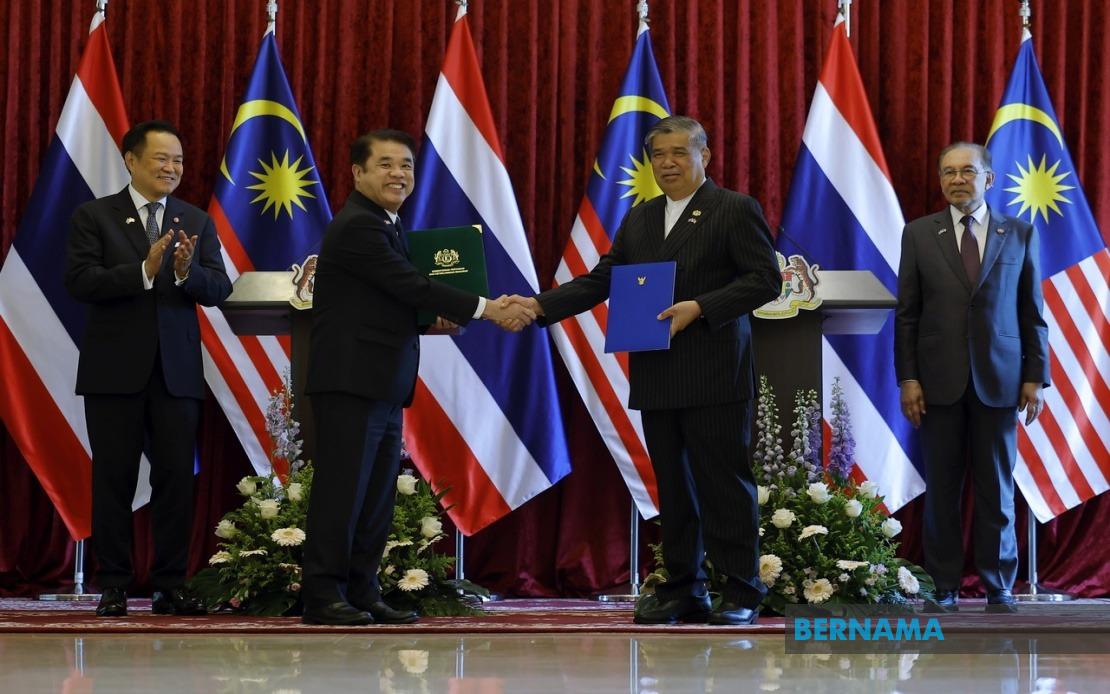
During an official visit to Putrajaya, Thai Prime Minister Anutin Charnvirakul and Malaysian Prime Minister Datuk Seri Anwar Ibrahim have committed their nations to a sweeping agricultural partnership, signing a memorandum of understanding that addresses critical food security challenges facing Southeast Asia. The agreement, unveiled at the Malaysian Prime Minister's Office on Thursday, represents a significant step in bilateral relations and underscores the region's collective focus on agricultural resilience amid global supply chain uncertainties.
The accord encompasses multiple dimensions of agricultural and fisheries cooperation, including crop production, livestock management, aquaculture development, and research initiatives. Critically, the framework also establishes mechanisms for technology transfer and human resource development, allowing both countries to build institutional capacity in farming techniques, pest management, and sustainable agricultural practices. These technical components signal recognition that modern food production demands not merely trade access but genuine knowledge-sharing and capability-building between neighbouring economies.
A particularly significant breakthrough involves resolution of protracted market access disputes that have complicated bilateral agricultural trade. Long-standing disagreements over shrimp and barramundi (seabass) imports have created friction between farmer communities on both sides of the border. The successful resolution of these issues removes barriers that have constrained regional agricultural commerce and allows producers in both nations to access neighbouring markets more freely. For Malaysian fisheries operators and Thai aquaculture producers, this clearing of regulatory obstacles opens revenue opportunities that had previously remained contested.
Thailand's Government Spokesperson Ratchada Thanadirek elaborated that agriculture ministers from both countries have been tasked with accelerating implementation of these measures, signalling high-level political commitment to translating diplomatic agreements into practical, field-level outcomes. The appointment of ministerial responsibility ensures continuity and accountability, moving beyond the symbolic nature of bilateral statements toward tangible policy action. This institutional mechanism reflects lessons learned from previous regional cooperation initiatives where implementation faltered due to unclear delegated authority.
Beyond the agricultural focus, the bilateral discussions encompassed broader economic cooperation objectives. Both governments reaffirmed their shared aspiration to achieve US$30 billion in annual bilateral trade, a target that positions agricultural and fisheries products as anchors within a diversified trade portfolio. This encompasses enhanced cooperation in tourism, investment, infrastructure development, and security matters, indicating that agricultural cooperation functions within a holistic strategic framework rather than as an isolated sectoral initiative.
The two prime ministers also emphasised supply chain resilience across food security, energy resources, and high-technology sectors. This multi-sectoral approach reflects recognition that food security in the 21st century depends upon stable energy markets, reliable logistics networks, and technological innovation in cultivation methods. By coordinating across these domains, Malaysia and Thailand position themselves to weather external shocks more effectively than isolated national policies would permit.
Anutin's visit marks his first bilateral engagement with Malaysia since his reappointment in March 2026, lending symbolic importance to the agricultural agreements as foundational elements in renewed diplomatic engagement. The Thai Prime Minister's decision to prioritise Malaysia during his early months in office signals Bangkok's strategic assessment of the relationship's importance for regional stability and economic development. The timing also reflects awareness that food security concerns have risen in political salience throughout Southeast Asia.
Plans for joint ceremonial activities underscore the partnerships' public dimension. On Friday, both leaders are scheduled to visit Bukit Kayu Hitam in Kedah to inaugurate a road connecting the Immigration, Customs, Quarantine and Security Complex on the Malaysian side with the Customs, Immigration and Quarantine Complex in Thailand's Sadao district. This infrastructure project facilitates smoother movement of goods across the border, directly supporting the agricultural trade ambitions embedded in the bilateral agreements. Improved border infrastructure removes logistical bottlenecks that have historically hindered cross-border commerce in perishable agricultural products.
The bilateral engagement assumes additional significance in light of preparations for the 70th anniversary of Thailand-Malaysia diplomatic relations, scheduled for 2027. Anutin has directed relevant Thai agencies to expedite implementation of all agreements and to complete outstanding bilateral memoranda of understanding before this milestone, suggesting that both governments view the coming years as a critical period for deepening institutional ties. This forward-planning approach indicates that agricultural cooperation represents an enduring partnership framework rather than a temporary initiative.
For Malaysian agricultural stakeholders, particularly those engaged in shrimp farming, barramundi aquaculture, and crop production, the agreements offer expanded market access to Thailand's 70-million-person consumer base. Thai agricultural producers, meanwhile, gain reciprocal access to Malaysian markets and participate in technology-transfer initiatives that may enhance productivity. The mutual benefits structure creates incentives for sustained cooperation despite the inevitable disagreements that accompany trade relationships.
Regionally, the Malaysia-Thailand agricultural partnership contributes to broader Southeast Asian food security architecture. The Association of Southeast Asian Nations has increasingly prioritised agricultural modernisation and supply chain integration, viewing these as essential for accommodating population growth and managing climate-related productivity shocks. When major regional powers like Malaysia and Thailand formalise cooperation in these domains, they establish precedents and demonstrate feasibility models that smaller neighbours may subsequently emulate.
The focus on food security cooperation arrives amid global context of climate volatility, shifting agricultural patterns, and demographic pressures that amplify food demand. Both Malaysia and Thailand face climate challenges affecting crop yields and aquaculture production. Coordinated approaches to research, technology deployment, and market access enhance each nation's capacity to sustain agricultural output despite these headwinds. From this perspective, the bilateral agreements represent pragmatic adaptation to long-term structural challenges rather than merely incremental trade facilitation measures.

