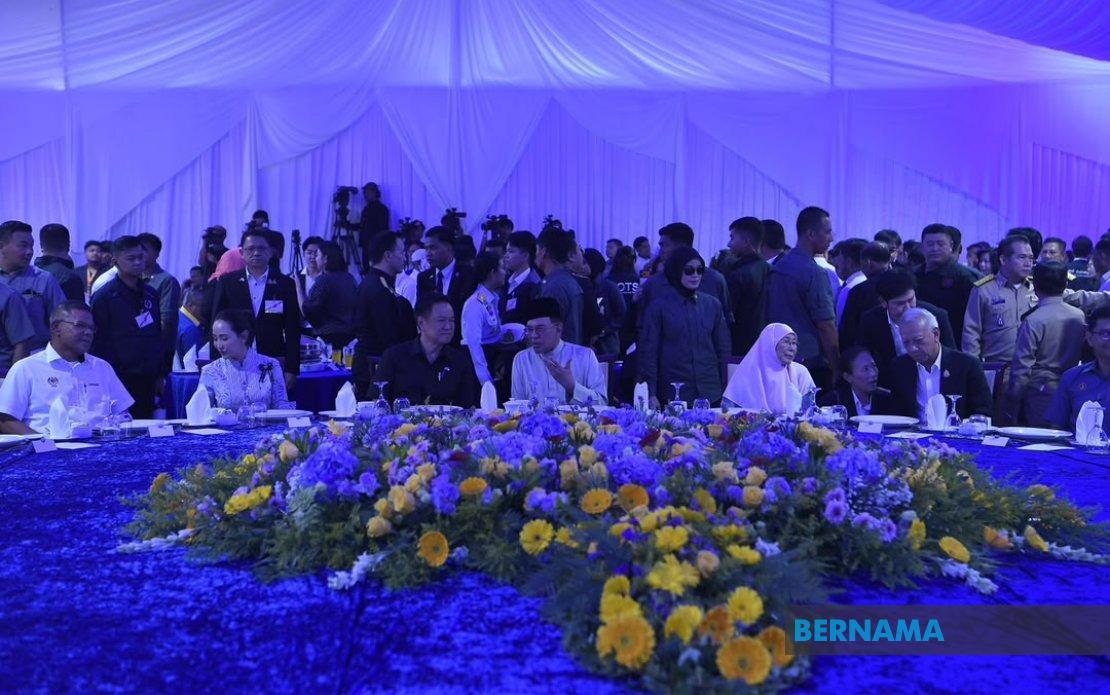
Prime Minister Datuk Seri Anwar Ibrahim and Thai Prime Minister Anutin Charnvirakul jointly opened a strategically significant new road corridor on July 10, formally connecting Malaysia's Bukit Kayu Hitam Immigration, Customs, Quarantine and Security Complex with Thailand's corresponding Sadao facility. The occasion marks a watershed moment in transnational infrastructure development along one of Southeast Asia's busiest land borders, with both leaders emphasizing their governments' determination to forge deeper diplomatic partnerships and modernize boundary management systems.
The commissioning of this new thoroughfare represents more than a simple replacement of aging infrastructure. According to the Home Ministry, the project embodies both nations' unwavering commitment to advancing bilateral relationships, expanding strategic coordination across shared borders, and fortifying the connectivity frameworks essential to regional prosperity. By replacing the outmoded Danok crossing with a purpose-built modern facility, Malaysia and Thailand are positioning themselves to better manage the substantial daily traffic of people, goods, and services that characterize this crucial frontier zone.
Operationally, the new road will commence serving all vehicular traffic from 6 am on July 11 according to Malaysian time, while the pre-existing crossing at Bukit Kayu Hitam-Danok will cease operations from midnight the same day. This synchronized transition ensures minimal disruption to the regular flow of commerce and travel that depends on this gateway. The physical architecture of the new corridor reflects contemporary border management philosophy, incorporating integrated control mechanisms and modern technological systems designed to expedite legitimate movement whilst maintaining robust security oversight.
The significance of this development extends well beyond bilateral concerns. Both countries explicitly framed the initiative as a contribution to the broader ASEAN Connectivity agenda, a pan-regional framework aimed at reducing physical and regulatory barriers to movement across Southeast Asia. By enhancing the efficiency and capacity of this particular crossing, Malaysia and Thailand are simultaneously investing in continental-scale supply chains, tourism infrastructure, and investment flows that benefit the entire region. The improved corridor will facilitate smoother passage of commercial vehicles, thereby reducing transit times and logistics costs for enterprises operating throughout the borderless economic space that ASEAN aspires to create.
For Malaysian border communities and businesses, the new infrastructure promises tangible economic gains. Local entrepreneurs engaged in cross-border trade should experience reduced congestion, faster customs clearance, and more predictable transit schedules. The modernized facility should also strengthen the competitiveness of northern Malaysian districts by improving their accessibility to the broader Thai market and positioning them more attractively for regional supply chain investments. The Home Ministry specifically highlighted the project's potential to stimulate economic growth in peripheral border zones, an objective aligned with Malaysia's development priorities.
The infrastructure upgrade also reflects evolving approaches to border security in an era of sophisticated threats. Rather than relying solely on physical barriers or antiquated inspection methods, the new complex incorporates digital systems and integrated surveillance capabilities that theoretically enhance both the speed and effectiveness of security screening. This integration of technology with traditional enforcement mechanisms represents a mature understanding that modern borders must simultaneously facilitate legitimate commerce and travel whilst detecting and interdicting illicit activities, contraband, and security risks.
Thailand's involvement demonstrates the regional consensus that mutual infrastructure investment serves all parties' interests. By collaborating with Malaysia on this project, Bangkok signals its commitment to deepening economic ties with its southern neighbor whilst addressing longstanding logistical challenges that have constrained bilateral trade and tourism. The Sadao facility's upgrade parallels Malaysia's efforts at Bukit Kayu Hitam, ensuring compatibility and operational efficiency across the frontier.
The initiative also carries symbolic weight within Malaysia's broader governance framework. The Home Ministry explicitly connected the project to Malaysia MADANI, the current administration's overarching policy vision emphasizing inclusive prosperity, security, and institutional resilience. By modernizing border infrastructure through technological adoption and international cooperation, the government demonstrates commitment to protecting national interests whilst advancing interconnectedness—a balancing act central to Malaysia's geopolitical positioning as both a sovereign state and an active regional participant.
Both governments acknowledged the contributions of multiple agencies across both nations in realizing this complex undertaking. Cross-border infrastructure projects necessarily require coordination among immigration authorities, customs bodies, quarantine officials, security agencies, and local administrations—a testament to bureaucratic capacity and political will on both sides. The successful completion thus validates the possibility of effective multilateral cooperation on infrastructure challenges that individual nations struggle to address alone.
Looking forward, this corridor's operational success will likely influence future infrastructure planning along other Southeast Asian borders. Malaysia and Thailand have essentially demonstrated that modernizing legacy crossing points through integrated facilities and technology deployment yields genuine benefits. As other ASEAN members confront similar infrastructure constraints, this project may serve as a replicable model, potentially accelerating regional connectivity goals outlined in initiatives like the ASEAN Master Plan on Connectivity.
The economic ramifications deserve sustained attention. Trade observers anticipate that improved border infrastructure will lower compliance costs for businesses, encourage new cross-border ventures, and potentially redirect some regional traffic flows. The Bukit Kayu Hitam-Sadao corridor now competes more favorably with alternative routes through other Southeast Asian gateways, potentially capturing increased market share in north-south regional commerce.
Ultimately, the launch of this modern border infrastructure reflects a mature understanding that in the contemporary era, national security and regional prosperity are not opposing values but complementary objectives. By investing in sophisticated, transparent, and efficient border operations, Malaysia and Thailand are protecting their territories whilst simultaneously enabling the legitimate cross-border flows that generate shared economic benefits. This dual commitment—to security and connectivity—may represent the most significant takeaway from this infrastructure milestone.

