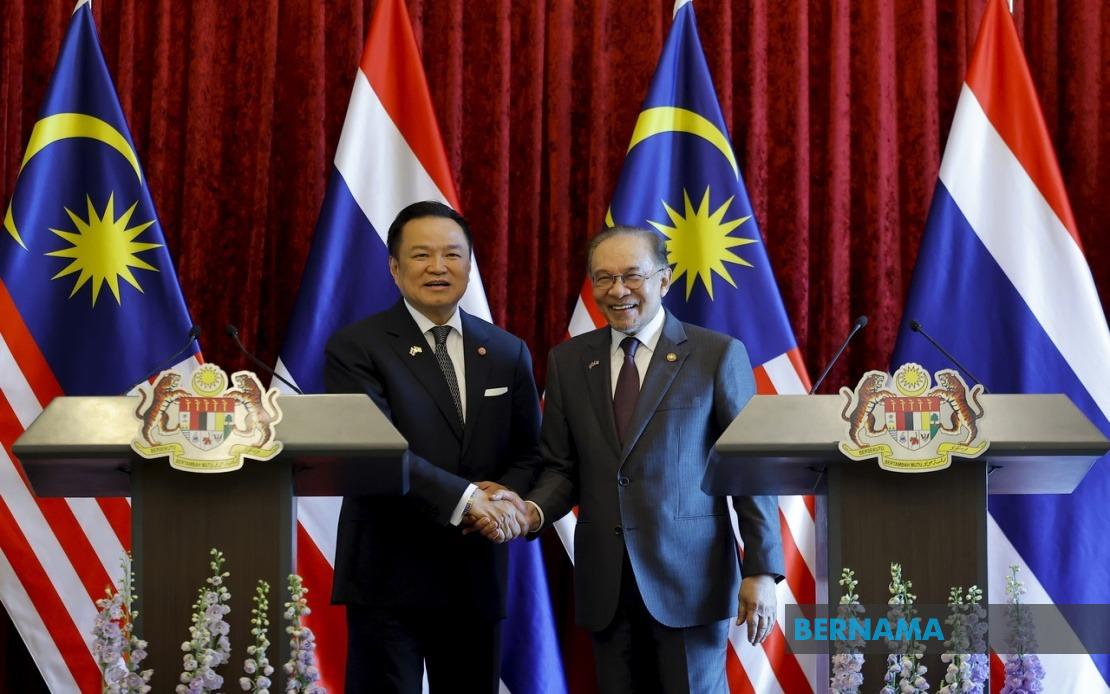
Prime Minister Datuk Seri Anwar Ibrahim and his Thai counterpart Anutin Charnvirakul have charted an ambitious course for bilateral cooperation, announcing a slate of initiatives designed to transform the Malaysia-Thailand border into an engine of regional economic growth. Meeting in Putrajaya on July 9, the two leaders agreed to accelerate the implementation of multiple connectivity schemes spanning infrastructure, trade facilitation and special economic zone development. The substantive discussions reflected both governments' determination to leverage their geographic proximity and historical ties into tangible commercial gains, with a bilateral trade target of US$30 billion by 2027 serving as the headline benchmark.
The strategic importance of this accord cannot be overstated for Malaysia's position within Southeast Asia. Thailand remains one of Malaysia's largest trading partners in the region, and the success of these border initiatives will set a template for how ASEAN nations approach cross-border economic integration. The agreements reached during the bilateral meeting touch upon critical infrastructure linking Malaysian states like Kedah directly with Thailand's border provinces, creating natural corridors for commerce and people movement. Beyond mere symbolic gestures, both leaders emphasised the practical mechanics: streamlined immigration and customs procedures that reduce transaction costs and friction for businesses and travellers alike.
Anwar's characterisation of the relationship as one demanding deeper collaboration across all sectors suggests recognition that Malaysia-Thailand ties have considerable untapped potential. Historically, economic integration between the two neighbours has been sporadic and often reactive to regional developments rather than proactively shaped by clear strategic vision. The current initiative breaks from that pattern by establishing concrete timelines and measurable targets. The US$30 billion trade goal by 2027 represents growth from current levels, implying an acceleration in cross-border commerce that will require not just political will but sustained institutional reform on both sides of the border.
The special border economic zones emerging from these negotiations represent a particularly innovative aspect of the bilateral framework. Such zones typically combine relaxed regulatory requirements, tax incentives and streamlined business registration procedures to attract manufacturers, logistics operators and service providers seeking to capitalise on cost advantages while maintaining access to wider ASEAN markets. For Malaysian companies, these zones offer entry points into Thailand's industrial ecosystem and vice versa. The Bukit Kayu Hitam area in Kedah and the Sadao region in Songkhla have long possessed geographic characteristics suitable for such development but lacked the political and institutional infrastructure to realise their potential.
The decision to conduct bilateral talks extending beyond Putrajaya to these border towns carries symbolic weight reflecting Anutin's personal commitment to the partnership. By visiting Bukit Kayu Hitam and Sadao, the Thai Prime Minister underscores that border development is not a capital-city preoccupation but requires engagement with regional stakeholders and communities directly affected by infrastructure changes. This approach potentially builds local buy-in and demonstrates to business communities on both sides that high-level political backing exists for investments in cross-border ventures.
For Malaysian stakeholders, particularly in Kedah and Perlis, these developments offer tangible benefits. Border regions have historically lagged in development compared to more central urban areas, with limited access to capital and markets. The infrastructure projects and special zones envisaged under the Malaysia-Thailand accord promise employment generation, skills development and investment inflows. However, realising these benefits depends critically on implementation quality and consistency. Previous ASEAN border initiatives have sometimes faltered due to bureaucratic delays, inconsistent policy application or shifting political priorities.
The customs and immigration facilitation measures deserve particular attention as they address what has long frustrated businesses operating across the Malaysia-Thailand frontier. Lengthy clearance procedures, inconsistent documentation requirements and limited coordination between agencies have historically imposed significant costs on traders and logistics operators. Systematic improvements in this domain could have cascading benefits throughout supply chains, making the Malaysia-Thailand border more competitive against alternative regional trade routes. For Malaysian exporters targeting markets beyond Thailand, an efficient border crossing reduces overall delivery times and costs.
The bilateral trade target of US$30 billion by 2027 sets an ambitious but potentially achievable benchmark. Current trade levels suggest significant headroom for growth, particularly if border constraints are genuinely removed and special zones become operational. The timeframe of four to five years allows for institutional reforms and infrastructure development while maintaining political momentum. Crucially, achieving this target requires not just government support but active participation from private sector entities identifying genuine commercial opportunities emerging from improved border connectivity.
From a broader Southeast Asian perspective, a deepening Malaysia-Thailand economic partnership sends positive signals about regional integration prospects. As geopolitical tensions elsewhere in Asia heighten, demonstrated commitment to practical cross-border cooperation and mutual prosperity offers a stabilising counterweight. The model potentially influences how other ASEAN pairs approach their own bilateral relationships. Indonesia, Vietnam and the Philippines will observe whether Malaysia and Thailand successfully operationalise their grand vision, using outcomes to inform their own integration strategies.
The success of this initiative ultimately hinges on follow-through mechanisms and accountability structures. Both governments must establish clear governance frameworks ensuring that agreed timelines are met and that promised regulatory reforms are genuinely implemented rather than remaining aspirational statements. Regular bilateral reviews and joint steering committees monitoring progress on individual projects will be essential. Additionally, both countries should establish dispute resolution mechanisms addressing inevitable implementation frictions without allowing them to escalate into political confrontations.
For investors contemplating cross-border ventures in the Malaysia-Thailand space, these developments warrant close monitoring. The bilateral accord creates medium-term policy certainty and suggests government commitment to removing operational obstacles. However, prudent investors will await concrete implementation of special zones, customs facilities and infrastructure projects before committing substantial capital. The coming months will be critical in determining whether the political commitments announced in Putrajaya translate into regulatory reality and infrastructure development on the ground.

