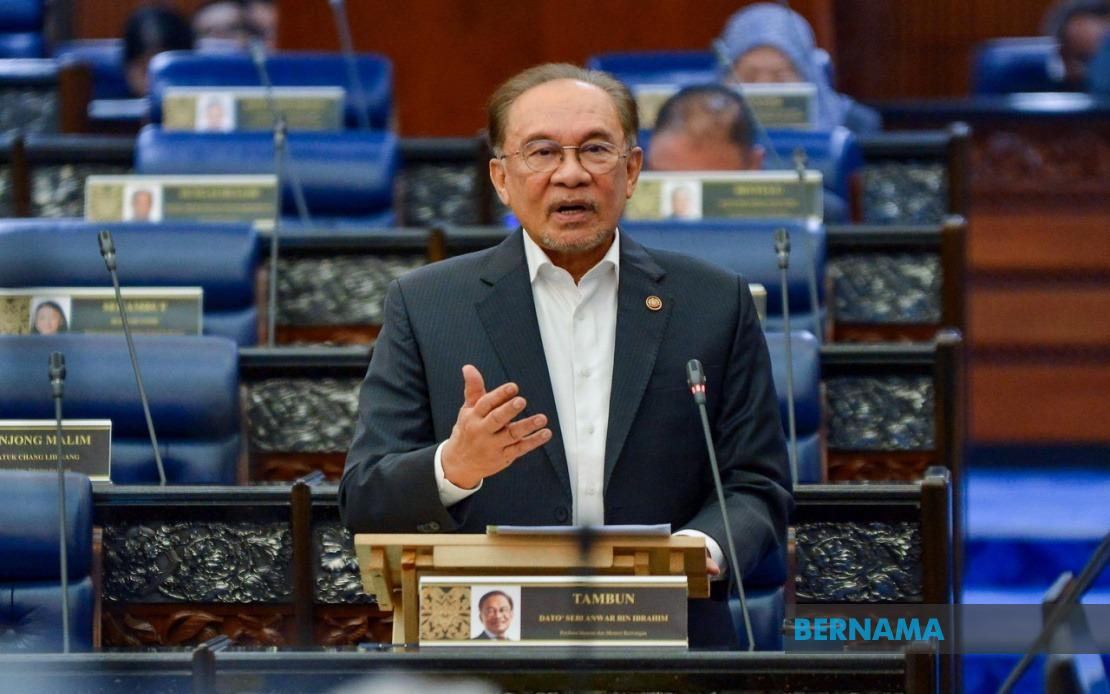
Prime Minister Datuk Seri Anwar Ibrahim has directed the Transport Ministry to open discussions with Thailand regarding the strategic use of ports positioned at the Malaysia-Thailand border and within Penang's jurisdiction. The directive emerges from bilateral conversations between Anwar and his Thai counterpart Prime Minister Anutin Charnvirakul during the latter's recent official visit to Malaysia, signalling a renewed focus on cross-border infrastructure cooperation that could reshape regional trade patterns.
The discussion reflects a broader strategic pivot towards maximizing the economic potential of Malaysia's northern frontier. Rather than viewing the border as a dividing line, both nations appear intent on treating it as an opportunity for integrated development. Anwar's emphasis on port infrastructure alongside rail connectivity and tourism suggests a comprehensive approach to border economic zones that goes beyond simple customs facilitation to encompass multimodal logistics networks.
Among the facilities earmarked for expanded discussion are the Sanglang port and Perlis Inland Port, or PIP, both strategically located to serve the northern border region. These facilities represent investment anchors that, if properly coordinated with Thai infrastructure initiatives on the opposite side, could create a seamless logistics corridor reducing transportation costs and transit times for goods flowing between the two nations and potentially onwards to other Southeast Asian markets.
The Transport Ministry's involvement in these discussions underscores the government's recognition that infrastructure planning cannot remain siloed within national boundaries. Cross-border port utilization requires harmonized operating procedures, integrated scheduling, and potentially shared investment models. Thailand, as Malaysia's closest neighbour and a fellow member of the Association of Southeast Asian Nations, represents both a logical starting point and a complex partner given the geopolitical sensitivities that occasionally characterize bilateral relations.
Rail transport emerged as another significant component of the discussions, indicating that authorities are thinking beyond maritime logistics. A multimodal strategy incorporating rail, road, and sea freight offers flexibility and cost advantages for different cargo types and volumes. The recent inauguration of a new transport route, while not elaborated upon in official statements, suggests tangible progress on infrastructure development that could complement port expansion initiatives.
For Malaysian businesses, particularly those in Kedah, Perlis, and northern Perak, coordinated border port development could provide competitive advantages in supply chain efficiency. Manufacturing clusters in these states could benefit from reduced logistics bottlenecks and improved market access to Thailand and beyond. However, realizing these benefits requires careful implementation planning and agreement on operational standards and tariff structures between the two nations.
The emphasis on economic spillovers from border corridor development indicates that both governments understand the multiplier effects of strategic infrastructure investment. When ports become active hubs rather than dormant facilities, they generate employment, attract logistics service providers, and stimulate ancillary industries such as warehousing, customs brokerages, and transport operations. This ripple effect can meaningfully boost regional development indicators.
Tourism integration into border infrastructure discussions represents an often-overlooked dimension of cross-border cooperation. Improved connectivity can facilitate easier movement of visitors, supporting tourism businesses in border towns and creating opportunities for integrated tourism products spanning both nations. This angle reflects sophisticated thinking about border zones as potential prosperity zones rather than mere control points.
The Transport Ministry's mandate to pursue these discussions carries bureaucratic weight but also practical implications. Translating political agreements into operational reality requires technical work on standardized procedures, investment allocation, and institutional mechanisms for ongoing coordination. The ministry must navigate domestic stakeholder interests—port operators, logistics companies, shipping lines—while simultaneously coordinating with Thai counterparts managing parallel infrastructure investments.
For Southeast Asia more broadly, enhanced Malaysia-Thailand border cooperation through improved port infrastructure contributes to regional supply chain resilience and integration. The Association of Southeast Asian Nations has long emphasized connectivity as essential to regional prosperity, and bilateral initiatives like these, though modest in scale, accumulate to strengthen the overall ecosystem. They also demonstrate that despite occasional political tensions, ASEAN members continue prioritizing economic integration.
The timing of these discussions carries significance against a backdrop of global supply chain disruptions and shifting trade patterns. Nations that can facilitate efficient cross-border movement of goods position themselves advantageously in attracting investment and international commerce. Malaysia's strategic location on key shipping lanes makes border infrastructure efficiency particularly valuable for facilitating both bilateral and pan-Asian trade.
Looking ahead, success will depend on whether preliminary discussions translate into concrete agreements on operational frameworks, investment commitments, and performance metrics. Government-to-government dialogue provides the political foundation, but private sector participation—from shipping companies to logistics operators—will ultimately determine whether these port facilities achieve their economic potential. The Transport Ministry must therefore balance public sector coordination with creating an enabling environment for commercial investment and innovation in border logistics.

