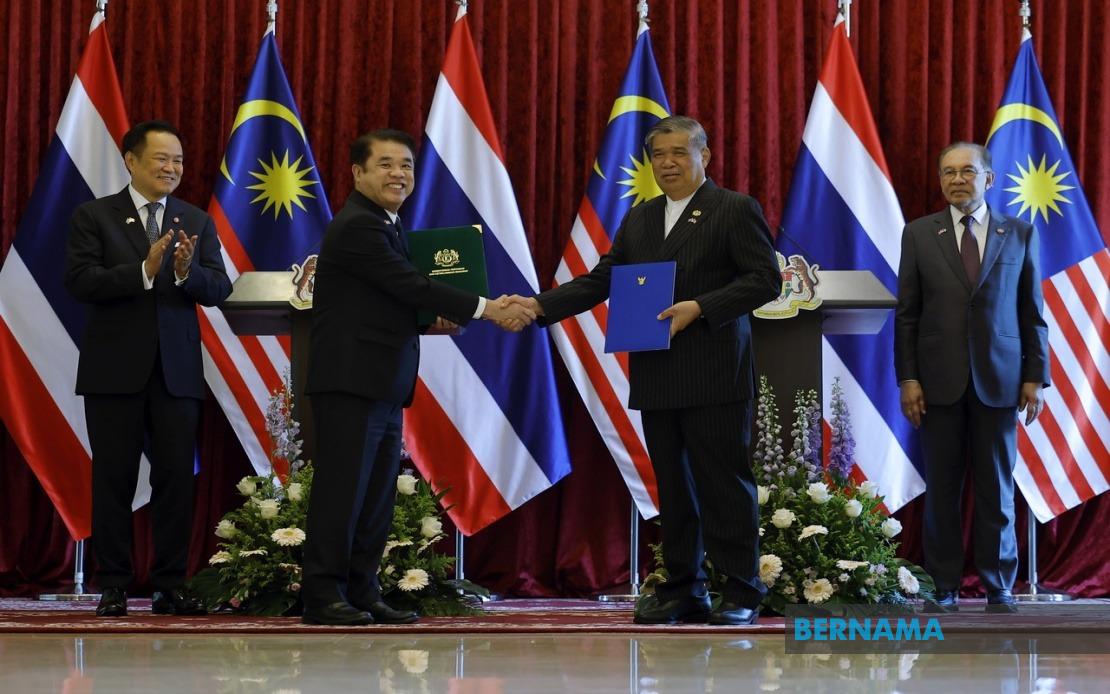
Malaysia and Thailand have moved decisively to settle a contentious fisheries dispute and accelerate bilateral agricultural cooperation, with both nations committing to implement a far-reaching memorandum of understanding within seven days. The breakthrough emerged during Thai Prime Minister Anutin Charnvirakul's maiden official visit to Malaysia, where Malaysian Prime Minister Datuk Seri Anwar Ibrahim and his Thai counterpart oversaw the formal exchange of the agricultural cooperation agreement between their respective agriculture ministers, Datuk Seri Mohamad Sabu and Suriya Juangroongruangkit.
The speed of implementation represents a significant diplomatic victory for Malaysia, which successfully compressed what Thailand had initially sought as a one-and-a-half-month rollout into just seven days. This accelerated timeline reflects both countries' urgent alignment on food security as a cornerstone strategic priority in an era of global supply chain volatility. For Malaysian policymakers, the rapid progress demonstrates the administration's capacity to navigate bilateral negotiations efficiently while maintaining strong regional partnerships essential to Southeast Asian economic stability.
At the heart of the agreement lies resolution of fisheries market access tensions that had simmered between the neighbours. In early June, Malaysia had tightened scrutiny of Thai fisheries imports by mandating Certificates of Analysis for barramundi shipments and temporarily restricting five designated shrimp species. These measures, driven by biosecurity and food safety concerns, had created friction in an otherwise robust agricultural trade relationship. The ministers' commitment to finding "amicable solutions" to these pending cases signals a willingness to address legitimate regulatory concerns while preserving the commercial flow of goods that underpins regional prosperity.
The agricultural cooperation framework itself is deliberately comprehensive in scope, reaching far beyond fisheries to encompass crop production, livestock management, trade facilitation, and marketing infrastructure for agri-food products. Crucially, the agreement incorporates collaborative mechanisms for research and development, capacity building initiatives, and harmonisation of biosecurity standards alongside sanitary and phytosanitary measures. This multi-layered approach acknowledges that lasting trade partnerships require institutional depth—structured channels for ongoing communication, transparent dispute resolution pathways, and proactive problem-solving mechanisms that can address emerging issues before they escalate into formal grievances.
For Malaysian food importers and exporters, the framework promises tangible operational benefits through more efficient coordination between national authorities and streamlined processes for addressing agricultural and agri-food disputes. The emphasis on establishing "structured, transparent and continuous" mechanisms reflects lessons learned from previous friction points, ensuring that both countries maintain regular dialogue to prevent recurrence of the kind of sudden import restrictions that disrupted Thai fisheries exporters in June. Enhanced predictability and communication bolster business confidence on both sides.
The bilateral agricultural trade relationship has proven resilient and expansive, with two-way commerce reaching RM20.33 billion across 2025. Malaysia's export basket to Thailand—anchored by coffee, cocoa, tea, spices, and processed foods—reflects the country's position in premium and value-added agricultural segments. Thai exports to Malaysia, dominated by meat and meat-based products, demonstrate Thailand's strengths in livestock production and processing. This complementary trade structure suggests ample opportunity for deepening integration through the new framework, particularly as both nations grapple with volatile global food markets and demographic pressures on domestic production.
The timing of the agreement carries broader geopolitical significance for Southeast Asia. As regional supply chains face disruption from global tensions and climate variability intensifies agricultural risks, bilateral food security frameworks become instruments of economic resilience. Malaysia's ability to diversify food sources while supporting neighbouring producers aligns with national food security strategies that recognise import dependence as a structural vulnerability. The arrangement allows both countries to coordinate responses to production shocks, share technical expertise in sustainable agriculture, and strengthen regional capacity to buffer global food price volatility.
Prime Minister Anwar's emphasis on the agreement reflecting "both countries' commitment to strengthening food security and expanding bilateral trade" signals that this is not merely a technical administrative accord but a political commitment to deeper integration. Thai leadership's explicit welcome for the framework and its acknowledgment of food security as a "key focus" reinforces the message that agricultural cooperation transcends commodity exchange; it represents a mutual recognition of interdependence and shared vulnerability to external shocks. This rhetorical alignment at the highest levels often translates into smoother implementation when officials navigate inevitable complications.
The resolution of fisheries tensions also carries implications for Malaysia's broader regulatory posture on agricultural imports. The country has faced periodic friction with trading partners over food safety standards, with some exporters viewing stringent requirements as protectionist. By coupling Thai acceptance of Malaysian biosecurity measures with swift implementation of the cooperation framework, Malaysian authorities have demonstrated that rigorous safety standards and open trade need not be contradictory. This approach may serve as a model for future negotiations with other regional partners, balancing legitimate consumer protection with pragmatic commercial relationships.
Looking ahead, the framework's success will depend on translating administrative architecture into tangible outcomes. Critical early tests will involve implementation of the fisheries protocols, resolution of any remaining import certification disputes, and initiation of joint research projects in areas of mutual interest. The seven-day implementation window creates a tight deadline for both governments to operationalise the agreement's mechanisms, test communication channels, and ensure that agriculture ministers' working groups are equipped with adequate resources and clear mandates. Delays or administrative friction during this critical phase could undermine the political goodwill that underpins the accord.
The broader context of Malaysia-Thailand relations warrants attention as well. Beyond agriculture, the bilateral partnership encompasses defence cooperation, maritime boundary discussions, and management of shared water resources. Agricultural agreements, while ostensibly technical, often generate positive spillover effects in diplomatic relationships by building trust, creating regular high-level contact, and establishing precedents for collaborative problem-solving. Success in resolving fisheries disputes and implementing an agricultural framework may incrementally improve the climate for addressing more contentious issues where Malaysia and Thailand hold divergent interests.
For Malaysian consumers and food industry stakeholders, the practical implications are noteworthy. The streamlined coordination mechanisms should reduce uncertainty in Thai agricultural imports, supporting stable food prices and supply availability for key proteins and produce. Malaysian agricultural exporters gain clearer market access conditions in Thailand and platforms for addressing non-tariff barriers through structured dialogue rather than unilateral action. The emphasis on research collaboration and capacity building opens pathways for technology transfer and knowledge sharing that could enhance productivity in both countries' agricultural sectors, ultimately benefiting regional food security.

