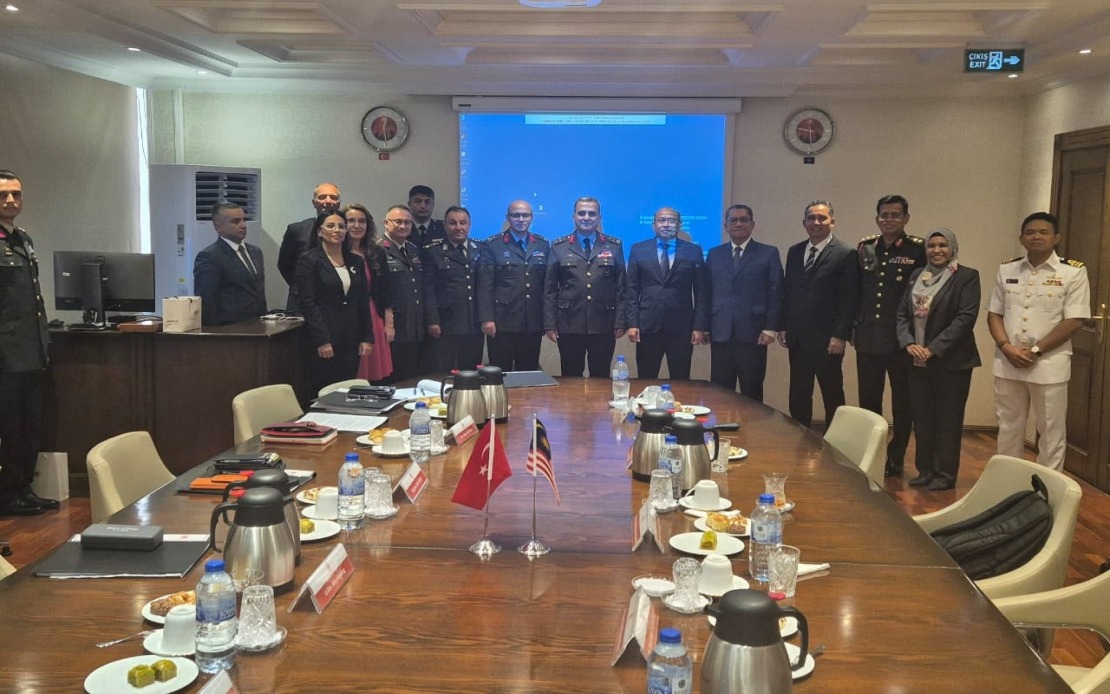
Malaysia and Türkiye have taken a significant step forward in cementing their defence relationship through the launch of a formal policy dialogue mechanism, with both nations committing to structured annual talks aimed at deepening military and strategic cooperation. The inaugural Malaysia-Türkiye Policy Talk convened at Türkiye's Ministry of National Defence headquarters in Ankara on Monday, marking an institutional formalisation of defence ties that reflects both countries' shared interests in maintaining stability across key geopolitical regions.
The Ankara meeting was led by Türkiye's director-general of defence and security Lt Gen Ilkay Altindag, while Malaysia's delegation was headed by MINDEF deputy secretary-general of policy Datuk Yani Daud. The composition of these delegations underscores the policy-level seriousness both governments are according to the engagement, positioning it as more than a routine bilateral courtesy. By involving senior policy architects rather than operational military commanders, both nations signalled an intention to align strategic thinking on defence modernisation, procurement, and long-term security planning.
The discussion agenda encompassed the full spectrum of defence policy architecture, ranging from strategic doctrine and force structure considerations to the mechanics of international defence cooperation networks. Both delegations explored perspectives on emerging geopolitical security challenges affecting their respective regions and the broader Muslim world. This broader framing reflects a shared concern among Kuala Lumpur and Ankara about power dynamics in their neighbourhoods, from Southeast Asian maritime security to Middle Eastern developments, and suggests the dialogue will serve as a platform for coordinating positions on transnational security matters.
A particularly noteworthy element of the discussions involved Malaysia's explicit acknowledgement of Türkiye's role in the West Asian peace process, specifically commending Ankara's involvement in the recent Makkah Pact initiative. This verbal endorsement carries diplomatic weight, as it positions Malaysia as recognising Türkiye's broader regional leadership ambitions beyond its traditional sphere. For Malaysian policymakers, acknowledging Türkiye's peacekeeping efforts signals alignment with a nation that has sought to project itself as a bridge between competing Middle Eastern powers and as a voice advocating for Islamic interests in international forums.
Crucially, both nations formalised the establishment of Terms of Reference for the policy dialogue, creating an institutionalised structure that moves beyond ad-hoc engagement. These terms of reference provide a detailed roadmap for how future cooperation will be operationalised, what defence instruments might be jointly developed or procured, and which specific defence programmes warrant bilateral participation. This bureaucratic scaffolding is essential for sustained partnerships, as it ensures continuity regardless of shifts in political leadership and provides predictability that defence industry partners and military planners require when considering long-term investments and procurement decisions.
Malaysia has formally invited Türkiye to host the second iteration of the Policy Talk in Kuala Lumpur next year, establishing a precedent for alternating venues. This arrangement reflects diplomatic protocol that conveys equality and mutual respect, while also offering both nations an opportunity to showcase their defence establishments and military capabilities to their counterparts. For Malaysia, hosting the 2025 dialogue in Kuala Lumpur will provide an occasion to present its strategic vision to Turkish leadership while simultaneously demonstrating to domestic and regional audiences that Malaysia commands sufficient diplomatic standing to host high-level defence dialogues with a NATO member and regional power.
The strategic partnership articulated through this dialogue aligns with Malaysia's broader defence policy framework, as outlined in the Mid-Term Review of the Defence White Paper. This connection to established national strategy documents suggests the Turkish engagement is not peripheral to Malaysian defence thinking but rather integrated into the country's long-term security planning. The Defence White Paper serves as Malaysia's strategic blueprint for the coming years, and the elevation of the Türkiye partnership within this framework indicates that Kuala Lumpur views deepening ties with Ankara as instrumental to achieving key national defence objectives.
For Malaysia specifically, the partnership offers practical advantages in several domains. Türkiye maintains a substantial defence industrial base, particularly in areas such as unmanned systems, shipbuilding, and military electronics where Malaysian defence planners have identified capability gaps. Additionally, Türkiye's experience in counter-terrorism operations and regional stabilisation efforts in the Eastern Mediterranean and Levant region could inform Malaysian approaches to internal security challenges and maritime threats. From Ankara's perspective, deepening ties with Malaysia strengthens Türkiye's presence in Southeast Asia, a region of growing strategic importance as great power competition intensifies and as maritime trade routes connecting Europe, the Middle East, and Asia acquire heightened geopolitical significance.
The timing of this initiative reflects broader trends in Malaysian foreign policy under current leadership, which has emphasised expanding the country's diplomatic and defence partnerships beyond traditional Commonwealth and Western alignments. By formalising dialogue with Türkiye, Malaysia is part of a wider strategy to build relationships with emerging defence powers and nations that share Islamic governance frameworks or cultural affinities. This approach diversifies Malaysia's defence relationships and reduces potential dependence on any single security partner, thereby enhancing strategic autonomy.
Regionally, the Malaysia-Türkiye defence partnership also carries implications for the wider Southeast Asian security environment. As regional powers increasingly compete for influence and partnerships, Malaysian willingness to engage with external actors like Türkiye demonstrates Kuala Lumpur's agency in shaping its security architecture. It also sends subtle signals about Malaysia's geopolitical orientation, particularly given Türkiye's ongoing tensions with NATO allies and its independent foreign policy stance. For ASEAN cohesion, such bilateral partnerships could either complement regional frameworks if they enhance collective security capacity, or potentially fragment regional unity if they represent competing visions of Southeast Asian security arrangements.
The establishment of annual policy talks represents a long-term commitment rather than a fleeting engagement, suggesting both governments view this relationship as strategically significant and worthy of sustained investment. The mechanism provides flexibility for addressing emerging challenges—whether terrorism, maritime piracy, cyber threats, or great power competition—while maintaining focus on core defence cooperation objectives. As Malaysia continues modernising its armed forces and upgrading defence capabilities, partnerships with dynamic defence innovators like Türkiye offer access to cutting-edge technologies and operational doctrine that can enhance military effectiveness and organisational sophistication.
Moving forward, observers should monitor whether this policy dialogue yields concrete outcomes in defence procurement, joint exercises, personnel exchanges, or technology transfer arrangements. The next gathering in Kuala Lumpur will prove instructive in determining whether this dialogue has matured beyond symbolic engagement into substantive cooperation with measurable deliverables. The success of this bilateral framework may also influence other Southeast Asian nations' approaches to defence partnerships, particularly if Malaysia's engagement with Türkiye produces visible strategic benefits or military modernisation dividends.

