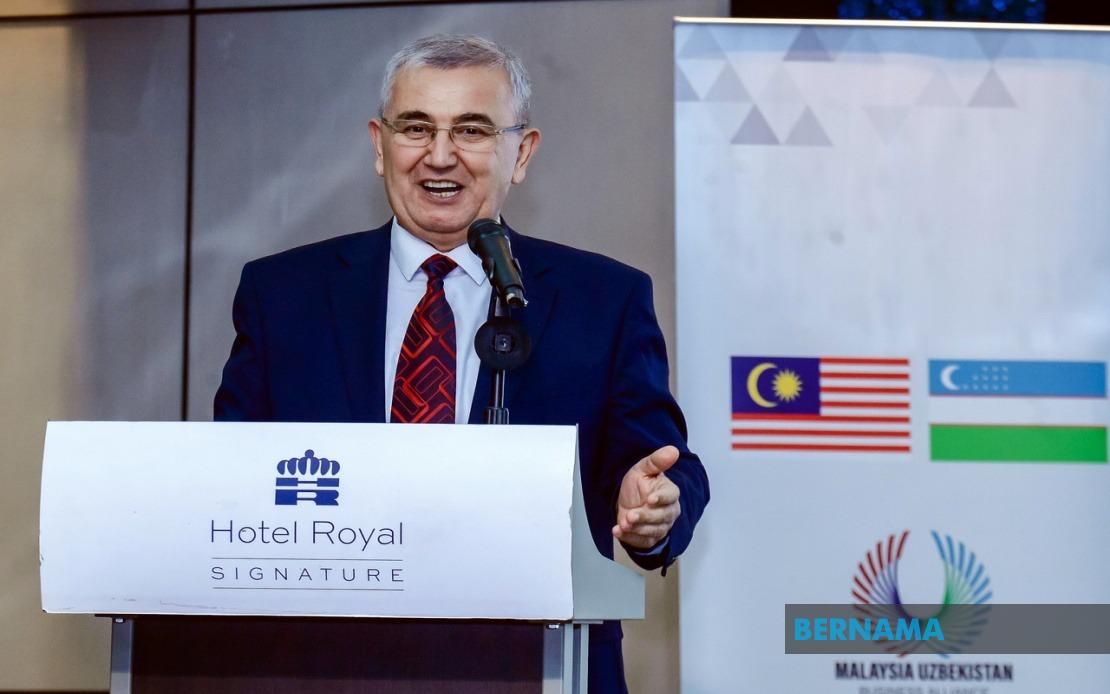
Malaysia and Uzbekistan are positioning themselves to become complementary agricultural partners, leveraging each nation's distinct strengths to address food security challenges across Central Asia and Southeast Asia. The strategic alignment reflects a recognition by both governments that agriculture represents far more than a commodity sector—it is foundational to regional stability and prosperity. Recent high-level visits, including Malaysian Prime Minister Datuk Seri Anwar Ibrahim's journey to Uzbekistan in May 2024 and President Shavkat Mirziyoyev's earlier visit to Malaysia, have cemented the bilateral commitment to deepening agricultural cooperation.
The partnership gains momentum through a complementary division of expertise. Malaysia brings established proficiency in paddy cultivation, aquaculture systems, fisheries management, and advanced agricultural research and development conducted through institutions like the Malaysian Agricultural Research and Development Institute (MARDI). Uzbekistan, meanwhile, contributes decades of experience in irrigation technologies that prioritise energy efficiency, horticultural production, and large-scale agri-food processing. This convergence of capabilities creates opportunities that neither nation could maximise independently, particularly as both confront mounting pressures to enhance productivity while reducing environmental footprints.
Digital transformation and artificial intelligence have become central pillars of the cooperative framework. Both countries recognise that conventional farming methods alone cannot sustain growing populations amidst climate volatility and resource constraints. By integrating smart technologies and AI-driven agricultural systems, Malaysia and Uzbekistan aim to unlock significant productivity gains. Uzbekistan, in particular, views Malaysian technological expertise as essential to modernising its agricultural sector. The introduction of precision farming tools, data analytics platforms, and automated irrigation management promises to address inefficiencies that currently plague Central Asian agricultural production.
Drone technology exemplifies the tangible progress already materialising. Malaysian company Miracule has established Uzbekistan's first agricultural drone showroom, signalling intent to scale operations across the landlocked nation. The roadmap includes assembling sophisticated agricultural drones domestically within Uzbekistan, creating both employment opportunities and reducing reliance on imports. This industrial development mirrors broader trends in Southeast Asia where countries increasingly localise high-value manufacturing rather than remaining dependent on foreign suppliers. For Malaysian technology providers, Uzbekistan represents an expansion market where proven solutions can be deployed across expansive Central Asian territories.
Aquaculture emerges as perhaps the most strategically significant collaboration point. Uzbekistan, despite being doubly landlocked, faces mounting seafood demand from a population approaching 40 million inhabitants. Traditional aquaculture industries cannot bridge this supply-demand gap efficiently. Malaysian expertise in biofloc technology offers a transformative solution—this closed-containment methodology reduces feed costs by approximately 30 per cent while simultaneously increasing productivity and lowering overall production expenses. Malaysian companies have already commenced preliminary investments in shrimp farming and fisheries ventures within Uzbekistan, establishing beachheads for scaled expansion. This technological transfer addresses a genuine bottleneck in Uzbek food security while creating profitable opportunities for Malaysian investors.
Current bilateral trade figures underscore both existing momentum and untapped potential. Agri-food commerce between the two nations reached RM338 million in 2025, with palm oil and palm oil derivatives constituting Malaysia's primary export category. Yet this baseline masks substantial growth capacity. Officials from both sides project that bilateral agri-food trade could double or even triple within five to ten years through strategic infrastructure investments and market development initiatives. Malaysia envisions positioning Uzbekistan as a regional processing hub where crude palm oil undergoes refinement for subsequent distribution throughout Central Asia, creating value-added commercial activity beyond raw material exports.
Uzbekistan, conversely, possesses competitive advantages in premium fresh fruit production and processed food manufacture. Central Asian climate conditions favour the cultivation of high-quality dried fruits, berries, and specialty crops that command premium prices in Southeast Asian markets. By developing supply chains that connect Uzbek producers directly with Malaysian importers and distributors, both nations enhance commercial efficiency whilst reducing intermediary costs. Malaysian companies gain access to reliable, differentiated product sources; Uzbek producers access sophisticated Southeast Asian distribution networks and consumer bases increasingly valuing Central Asian agricultural authenticity.
The agricultural technology transfer extends beyond hardware into institutional knowledge frameworks. MARDI's engagement with Uzbek counterparts facilitates knowledge exchange regarding sustainable farming practices, soil management protocols, crop rotation strategies, and pest management systems adapted to local environmental conditions. This institutional collaboration produces multiplicative benefits—rather than simply selling finished products, Malaysia transfers foundational expertise enabling Uzbekistan to develop indigenous capacity for continuous agricultural innovation. Such capacity building strengthens Uzbek food security independently whilst creating long-term partnerships based on genuine mutual development rather than transactional commercial relationships.
Malaysia's invitation for Uzbekistan to participate in the Malaysia Agriculture, Horticulture and Agrotourism Exhibition (MAHA) 2026 represents a sophisticated marketing and networking initiative. MAHA functions as Southeast Asia's premier agricultural showcase, attracting industry stakeholders, policymakers, investors, and traders from across the region. Uzbek participation enables direct exposure to Malaysian agricultural enterprises, technology providers, and purchasing entities whilst simultaneously introducing Malaysian audiences to Central Asian agricultural capabilities and products. Such platforms historically catalyse commercial relationships and investment commitments that formal diplomatic channels alone cannot generate.
The broader geopolitical context enriches understanding of this partnership's significance. Central Asia represents a frontier region for Southeast Asian agricultural exports and investments, particularly as traditional Southeast Asian markets become increasingly saturated. Uzbekistan's central position within Central Asia makes it a logical entry point for Malaysian companies seeking regional expansion. Conversely, Malaysia's established agricultural innovation ecosystem and export infrastructure offer Uzbekistan pathways toward integrated Asian supply chains rather than continued isolation or over-reliance on Russian or Chinese partnerships. This mutuality provides genuine foundation for sustained cooperation extending beyond politically expedient summit declarations.
Food security considerations transcend bilateral commercial interests, touching upon broader regional stability. Central Asia's landlocked geography traditionally disadvantaged food supply resilience, creating vulnerability to supply disruptions or price volatility in external markets. By developing domestic aquaculture, improving irrigation efficiency through smart technologies, and establishing processing capabilities, Uzbekistan reduces structural food security vulnerabilities. Malaysia, through its expertise and capital contributions, indirectly strengthens Central Asian stability whilst securing reliable agricultural supply sources for its own growing population. This equilibrium of interests—where both partners gain tangible security and commercial benefits—provides psychological foundation for enduring cooperation.
The partnership architecture demonstrates sophisticated understanding of complementary development pathways. Rather than competitive relationships where nations vie for identical resources or markets, Malaysia and Uzbekistan consciously construct frameworks where each nation's competitive advantages reinforce the other's strategic objectives. Malaysia's strength in technological innovation and precision agriculture methodologies directly addresses Uzbekistan's productivity and efficiency challenges. Uzbekistan's vast agricultural territories and established horticultural expertise provide Malaysia with sourcing opportunities and market expansion vectors. Such alignment suggests partnership sustainability beyond individual administrations or cyclical economic conditions, rooted instead in structural economic complementarity and mutual institutional interest.

