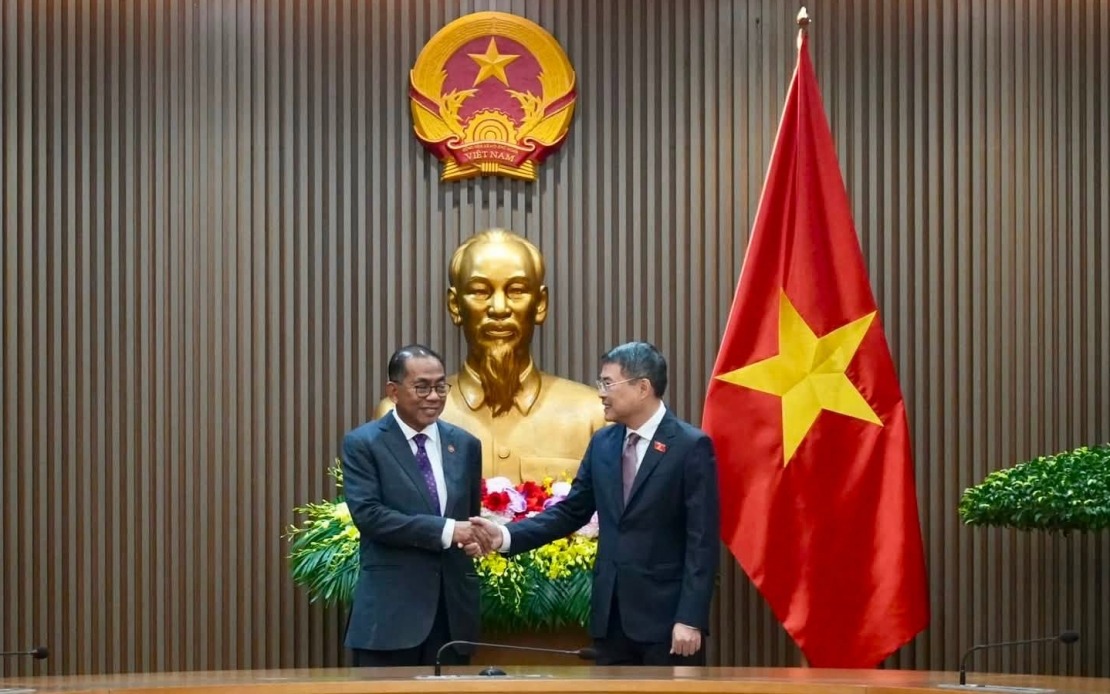
Malaysia and Vietnam are moving to deepen their defence relationship through expanded cooperation across maritime security, technological advancement and industrial collaboration, Defence Minister Datuk Seri Mohamed Khaled Nordin announced following high-level talks during his official visit to Hanoi. The commitment reflects a shared strategic vision between two of Southeast Asia's most important maritime nations, both facing similar security imperatives in an increasingly competitive regional environment.
During his meeting with Vietnamese Prime Minister Lê Minh Hưng, Mohamed Khaled highlighted the depth of existing defence ties between the two nations, describing Vietnam as a trusted and reliable partner for Malaysia's security interests. The discussion centred on broadening practical cooperation mechanisms beyond traditional military engagement, with particular emphasis on building complementary capabilities that strengthen both countries individually and the broader ASEAN region collectively.
The strategic underpinning of this partnership rests on shared commitment to ASEAN principles and a joint belief that dialogue and diplomatic engagement remain the most effective tools for maintaining regional peace and stability. Malaysia and Vietnam, as significant ASEAN members with extensive coastlines and important sea lanes running through their territories, recognise that their security interests are deeply intertwined with the stability of Southeast Asian waters and the broader Indo-Pacific region.
Maritime security emerged as a priority area for expanded cooperation between the two nations. Both countries face common challenges related to protecting their exclusive economic zones, combating transnational maritime crimes, and maintaining freedom of navigation through critical waterways. Enhanced coordination in naval operations, information sharing on maritime activities and joint training exercises could significantly improve their collective capacity to respond to emerging threats in shared waters.
Beyond traditional defence matters, the two nations identified technology and artificial intelligence as crucial frontiers for cooperation. The rise of AI-enabled defence systems, cyber warfare capabilities and information warfare operations has transformed the security landscape fundamentally. Malaysia and Vietnam recognised during their talks that they must collaborate on developing defensive measures against these emerging threats, including cognitive warfare and sophisticated cyber operations that target government and military infrastructure.
Capability development represents another substantive pillar of the expanded partnership. By sharing expertise, conducting joint training programmes and potentially cooperating on defence procurement, Malaysia and Vietnam can achieve greater operational efficiency and reduce duplication of efforts. This approach aligns with broader ASEAN principles of mutual support and burden-sharing in addressing regional security challenges that no single nation can effectively manage alone.
The 2023 Memorandum of Understanding on Defence Cooperation will serve as the foundational framework guiding this expanded engagement. Rather than representing merely symbolic cooperation, this document establishes concrete mechanisms for translating political commitment into practical security outcomes. The MoU provides the institutional structure through which both countries can progressively deepen their defence relationship while maintaining flexibility to address emerging challenges.
Great power competition and grey zone activities featured prominently in discussions between the two defence and political leaders. The region has witnessed increasing tensions as major powers compete for influence and strategic advantage, often employing tactics that fall short of conventional conflict but create persistent instability. Malaysia and Vietnam, as mid-sized powers with limited military capabilities compared to great powers, recognised that collective ASEAN action and enhanced bilateral partnerships provide essential counterweights to destabilising external pressures.
Disruptions to global supply chains, accelerated by geopolitical tensions and the post-pandemic economic environment, have raised concerns about defence industrial resilience in Southeast Asia. By expanding cooperation in the defence industry, Malaysia and Vietnam can develop greater self-sufficiency in critical defence capabilities and reduce dangerous dependencies on external suppliers. This is particularly important for smaller nations that might face supply vulnerabilities during periods of international tension.
The partnership also reflects recognition that regional security challenges demand coordinated ASEAN responses. Neither Malaysia nor Vietnam can effectively address contemporary threats—spanning cyber operations, maritime piracy, human trafficking and transnational terrorism—through unilateral action alone. The strengthened bilateral defence relationship enhances Malaysia's capacity to contribute more effectively to ASEAN's collective security architecture while simultaneously strengthening Vietnam's position within the regional community.
For Malaysian policymakers, this deepened engagement with Vietnam represents a strategic investment in the stability of Southeast Asian waters and the broader Indo-Pacific region. Vietnam's geographic position, naval capabilities and growing security profile make it an essential partner for any comprehensive regional security strategy. The partnership demonstrates Malaysia's commitment to building security relationships based on mutual benefit and shared strategic interests rather than ideological alignment.
The expanded defence cooperation signals both countries' determination to maintain their agency and strategic autonomy in an environment increasingly shaped by great power competition. By strengthening their bilateral relationship and contributing to collective ASEAN resilience, Malaysia and Vietnam are positioning themselves to navigate future regional challenges from positions of greater strength and mutual support.

