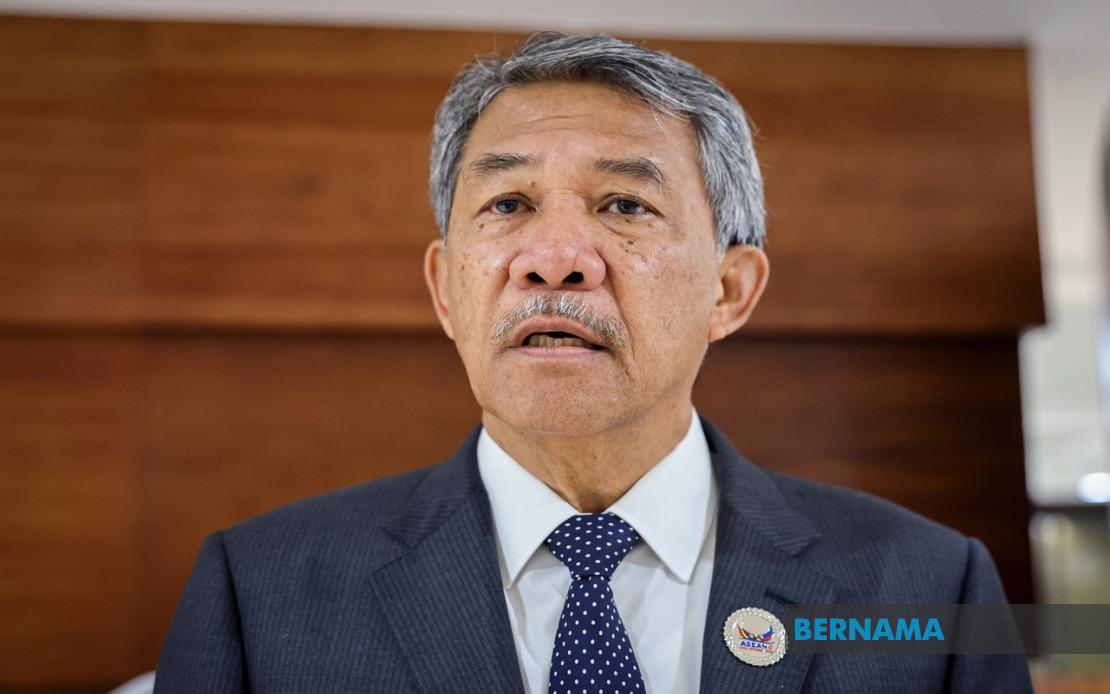
Malaysia has been selected to lead ASEAN's engagement with Turkiye following the regional bloc's acceptance of the Turkish nation as a new Dialogue Partner. The appointment was announced by Foreign Minister Datuk Seri Mohamad Hasan during the 59th ASEAN Foreign Ministers' Meeting held in Manila, where the decision was finalised alongside other significant institutional developments for the region.
The endorsement of both decisions—Malaysia's coordinator role and Turkiye's Dialogue Partner status—occurred during the plenary session of the AMM and Post-Ministerial Conference. This represents a structured expansion of ASEAN's external engagement architecture at a time when the bloc is recalibrating its diplomatic relationships amid shifting geopolitical dynamics. The appointment underscores Malaysia's diplomatic prominence within the regional framework and its capacity to manage cross-cultural and institutional relationships with emerging partners.
Turkiye's journey to becoming an ASEAN Dialogue Partner reflects the rigorous vetting processes that the regional bloc has implemented for new institutional arrangements. Mohamad clarified that ASEAN maintains a formal moratorium on accepting new members and Dialogue Partners, requiring proposals to undergo examination at multiple governmental levels before approval. This deliberate approach ensures that only candidates meeting stringent criteria gain admittance to ASEAN's structured dialogue mechanisms.
Malaysia's advocacy for Turkiye's admission during its tenure as ASEAN Chair in 2025 proved instrumental in securing consensus among member states. The proposal aligned with Malaysia's broader regional strategy to deepen ASEAN's engagement with strategically important nations beyond the traditional Indo-Pacific focus. Turkiye's acceptance signals ASEAN's intent to cultivate partnerships with countries offering valuable perspectives on security, trade, and cultural exchange across different geopolitical zones.
Beyond the Turkiye appointment, ASEAN also took action to strengthen its forum-based architecture by accepting the United Kingdom as a new member of the ASEAN Regional Forum. This parallel expansion demonstrates the bloc's confidence in its institutional frameworks and its selective approach to admitting partners that can contribute meaningfully to regional stability and development discussions.
The meetings held in conjunction with the ministerial gathering provided an opportunity to address ASEAN Community Vision 2045, the successor framework to the ASEAN Community Blueprint. ASEAN Secretary-General Dr Kao Kim Hourn presented updates on implementation progress, though the specific details of developmental priorities and timeline adjustments remain part of the broader strategic conversation. This vision document guides member states' collaborative efforts across political-security, economic, and socio-cultural pillars.
Centrality within the regional order emerged as a dominant theme throughout the ministerial discussions, with participating foreign ministers reaffirming their collective commitment to preserving ASEAN's role as the core driver of regional architecture. Mohamad articulated concerns about external pressures that might dilute this position, emphasising the need for coordinated action to maintain ASEAN's voice in shaping outcomes affecting Southeast Asia. This concern reflects growing anxieties among member states about great power competition and its potential to marginalise smaller nations' agency.
Geopolitical and geo-economic uncertainty featured prominently in the agenda, as regional powers grapple with trade fragmentation, technological competition, and shifting military alignments. ASEAN's capacity to navigate these challenges depends significantly on its ability to maintain internal cohesion and external leverage—precisely the themes that occupied ministerial attention during these meetings. The discussions underscored recognition that regional stability increasingly depends on ASEAN's ability to interface effectively with multiple global actors without compromising its autonomy.
For Malaysian observers and policymakers, the country's elevation to coordinator status for ASEAN-Turkiye relations carries practical implications for bilateral economic, security, and cultural initiatives. Malaysia can leverage this position to facilitate knowledge-sharing on Islamic finance, halal industry standards, and defence cooperation—areas where both nations possess complementary strengths. The appointment also enhances Malaysia's profile as a trusted bridge between ASEAN and non-traditional partners.
The acceptance of both Turkiye and the United Kingdom into different ASEAN frameworks reflects the bloc's calculated expansion of its institutional ecosystem. Rather than diluting ASEAN's effectiveness, this approach allows the organisation to engage multiple partners at appropriate levels of commitment. Dialogue Partners engage in substantive discussions on regional issues but operate outside ASEAN's decision-making structures, preserving member states' control over collective policy.
This series of institutional decisions positions ASEAN at a critical juncture in regional relations. As external pressures mount and internal development needs intensify, the bloc's ability to coordinate responses while expanding beneficial partnerships will largely determine its relevance over the coming years. Malaysia's new coordinator role places it at the forefront of managing one dimension of this complex diplomatic balancing act.

