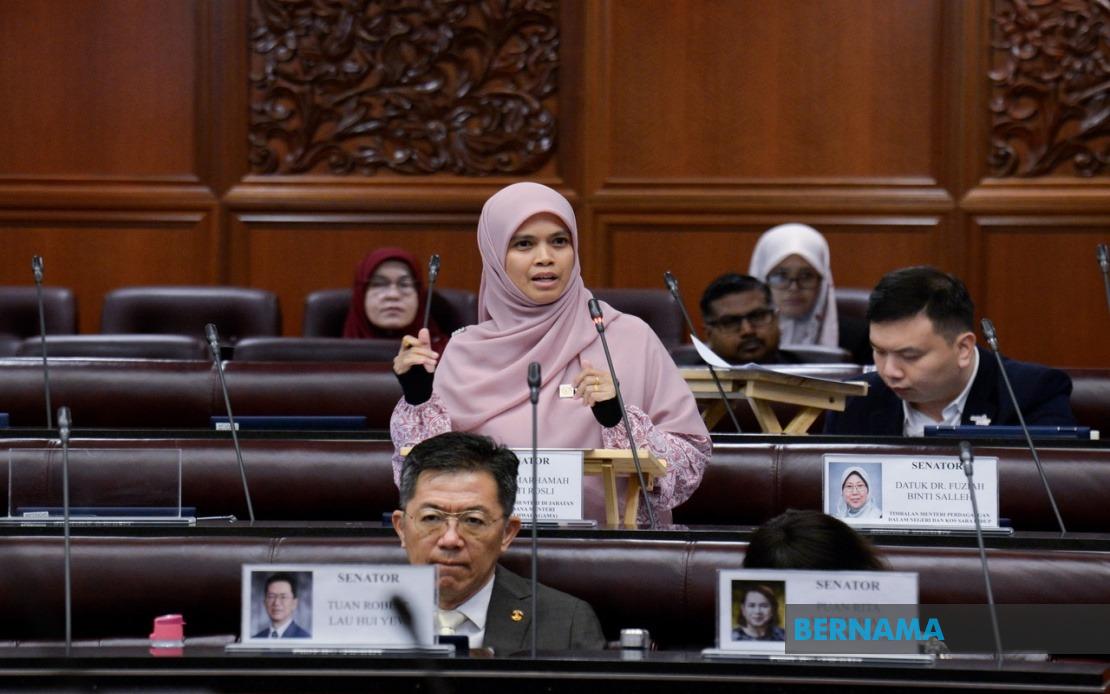
Malaysia's MADANI administration has committed RM160.82 million to construct 92 new mosques across the country since 2023, marking a significant investment in religious infrastructure to serve growing Muslim populations nationwide. Deputy Minister in the Prime Minister's Department (Religious Affairs) Senator Marhamah Rosli announced in the Dewan Negara that the initiative has achieved substantial progress, with 54 projects already completed and another 16 actively under construction. The remaining 22 projects remain at earlier stages, either preparing for implementation or navigating procurement procedures that typically govern such public works.
The approval framework governing these mosque developments reflects a collaborative approach between federal authorities and state governments. Each new mosque project undergoes rigorous evaluation based on recommendations and confirmations from state religious authorities, ensuring decisions rest on concrete demographic and infrastructural needs rather than arbitrary allocations. The assessment considers multiple factors including population growth and concentration of Muslim residents in specific areas, existing mosque capacity and coverage distance, site suitability and land status, plus demonstrated financial commitment from state governments. This multi-layered screening process helps ensure resources target communities facing genuine shortfalls in religious facilities.
Financial responsibility for these projects has been structured as a shared obligation since a landmark June 2022 decision by the 139th Meeting of Menteri Besar and Chief Ministers. Under this agreement, both federal and state governments contribute to development costs, creating a partnership model that distributes the financial burden while encouraging state-level commitment to religious infrastructure. This approach reflects broader Malaysia MADANI principles emphasising collaborative governance between different levels of administration, where both federal and state resources align toward national priorities. The burden-sharing mechanism also ensures that development remains fiscally sustainable without placing excessive strain on either tier of government.
The geographic spread of these 92 projects reveals the administration's recognition that mosque accessibility represents an infrastructure challenge in rapidly urbanising Malaysia. As Muslim populations concentrate in urban centres and expand into developing areas, the spatial distribution of existing religious facilities often fails to keep pace. New construction targets these underserved zones where residents previously relied on distant mosques or inadequate facilities. The RM160.82 million investment translates to an average expenditure of approximately RM1.75 million per project, suggesting a focus on functional, appropriately-scaled facilities rather than architectural monuments, though project costs likely vary considerably based on location and specifications.
Beyond their primary function as places of worship, these mosques increasingly serve as focal points for social welfare initiatives addressing vulnerability in Malaysian society. Marhamah emphasised that Islamic religious institutions collaborate extensively with the Department of Islamic Development Malaysia (JAKIM), state religious departments and councils, and non-governmental organisations to deliver welfare programmes targeting the asnaf categories—specifically the poor, destitute, and other vulnerable populations deserving Islamic charitable support. This multi-stakeholder approach leverages the mosque's position within communities to identify and assist those facing economic hardship.
The welfare services coordinated through these facilities encompass diverse interventions addressing immediate and structural needs. Distribution of financial aid to eligible asnaf groups forms the foundation, but programmes extend to providing food baskets and community kitchen operations that ensure nutritional security. Emergency assistance extends to education support for economically disadvantaged students and short-term financial relief during crises. Beyond material support, initiatives include counselling services addressing psychological and social difficulties, funeral management assistance removing financial barriers to dignified burial practices, and crucially, temporary shelter facilities providing refuge for homeless individuals. This comprehensive approach recognises that religious institutions can become delivery mechanisms for welfare state functions, particularly reaching urban poor and marginalised communities often overlooked by formal government bureaucracies.
The timing and scale of this mosque construction initiative reflects recognition within the MADANI administration that infrastructure serving religious and social needs requires deliberate policy attention. Malaysia's rapid urbanisation and changing demographic patterns have created pockets where existing facilities prove inadequate, while simultaneously concentrating populations of low-income individuals requiring social safety nets. New mosque construction addresses the former, whilst the welfare initiatives coordinated through these institutions tackle the latter. This integrated approach acknowledges that religious infrastructure development and social provision represent complementary priorities rather than competing demands.
For Malaysian Muslim communities, the investment signals governmental commitment to maintaining spiritual accessibility as society evolves. In urban expansion areas and newly developing districts, residents previously faced choices between attending distant mosques or worshipping in temporary facilities. The construction programme brings formal, permanent houses of worship into underserved locations, reducing transportation burdens whilst affirming that religious needs warrant infrastructural investment comparable to secular public facilities. The social welfare dimension adds another layer of value, positioning mosques as institutions supporting community members beyond purely spiritual functions.
From a regional perspective, Malaysia's structured approach to mosque development and mosque-centred social welfare offers a model potentially instructive for other Southeast Asian nations with significant Muslim populations. The emphasis on data-driven site selection, cost-sharing between governance levels, and purposeful integration of welfare services demonstrates how religious infrastructure can be developed systematically rather than haphazardly. The involvement of state authorities ensures decisions reflect local conditions whilst federal standards maintain consistency. This governance architecture may prove replicable across the region where rapid urbanisation similarly strains religious facilities and social safety nets.
The completion of 54 projects within approximately 18 months indicates efficient project management and sustained implementation momentum. Construction timelines for religious buildings typically extend several years from approval to completion, suggesting the administration initiated planning or pre-implementation work prior to formal approval announcements. The pace of delivery suggests either streamlined procurement processes or that projects were carefully sequenced to balance capacity constraints. The significant proportion of projects in pre-implementation or procurement stages also indicates a pipeline of future construction, ensuring the programme extends impact beyond currently visible sites. Altogether, the 92-project initiative represents a substantial commitment to expanding Malaysia's mosque infrastructure while embedding social welfare functions within these institutions, addressing both spiritual accessibility and social vulnerability simultaneously.

