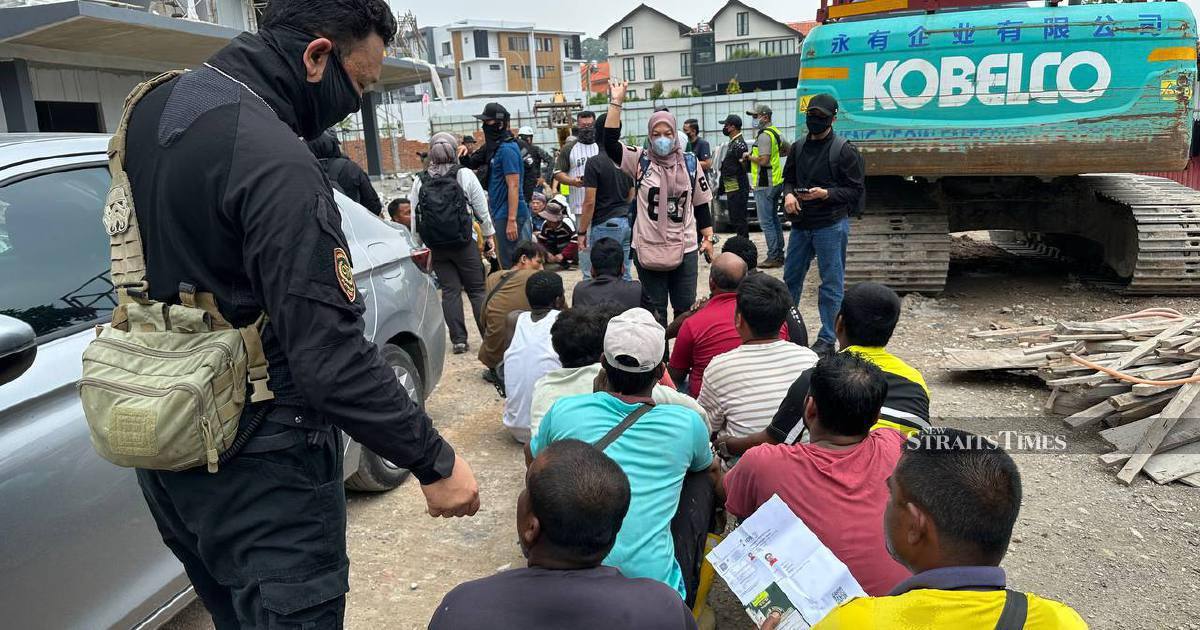
A coordinated nationwide enforcement operation has resulted in the arrest of 528 foreign nationals accused of breaching immigration laws across eight construction sites, marking a significant escalation in Malaysia's efforts to combat irregular employment in the building sector. The multi-agency operation, which concluded today, reflects the government's determination to tighten control over the undocumented and unauthorised labour force working on active construction projects throughout the country.
The construction industry has long been identified as a focal point for immigration violations, with labour shortages and tight project timelines creating conditions where both employers and migrant workers circumvent legal requirements. The scale of today's operation—spanning eight separate sites simultaneously—underscores the systematic nature of the problem and suggests authorities have been conducting extensive preliminary investigations to identify locations harbouring the highest concentrations of irregular workers. The coordinated timing of raids across multiple jurisdictions also prevents word-of-mouth warnings that typically allow suspected workers to flee enforcement operations.
Construction remains one of Malaysia's most labour-intensive sectors, employing hundreds of thousands of foreign workers legally. However, persistent issues around visa overstays, work permit violations, and undocumented entry have made the industry particularly vulnerable to irregular migration. The economic pressures on construction companies to meet deadlines and cost targets sometimes incentivise hiring practices that bypass proper documentation and verification procedures. For migrant workers themselves, the regulatory complexity and costs associated with legal employment pathways can push vulnerable individuals toward informal arrangements that expose them to exploitation and legal jeopardy.
The nature of the specific immigration offences cited in the operation remains undisclosed, though such crackdowns typically encompass multiple violation categories. These commonly include workers employed without valid work permits, individuals whose visas have expired, those engaged in employment sectors different from their authorised work classification, and undocumented migrants lacking any legal immigration status. Some detained individuals may also be flagged for previous deportations or immigration violations, compounding their legal exposure. Each category carries distinct penalties and deportation implications under Malaysia's immigration laws.
From a labour market perspective, the operation raises important questions about workforce stability in the construction sector. Major projects depend on consistent labour availability, and large-scale removals of workers can create project delays and cost overruns. Contractors must now reconcile enforcement pressures with operational realities, potentially incentivising greater investment in compliance systems and formal hiring channels. However, without corresponding improvements in legal labour supply channels and border management, construction companies may continue facing acute worker shortages that tempt them toward informal hiring.
The operation also highlights the role of employer responsibility in migration management. While individual workers face deportation and potential bans on future employment in Malaysia, the companies that hire undocumented or irregular workers often face lighter consequences. Enhanced corporate accountability mechanisms, including substantial financial penalties and potential project suspension for serious violations, could shift contractor incentives more decisively toward compliance. This has proven effective in other developed economies managing migration flows.
For Southeast Asia's broader labour mobility context, Malaysia's approach reflects a region-wide challenge: balancing economic dependence on migrant workers with the political pressure to enforce immigration controls. Countries like Thailand, Singapore, and Indonesia all grapple with similar tensions. Malaysia's periodic crackdowns serve a dual purpose—addressing genuine immigration compliance concerns while responding to public anxieties about population pressure and resource allocation. The timing and scale of enforcement operations often correlate with domestic political cycles rather than fluctuating rates of immigration violations.
The detained workers now face immigration processing that will determine their outcomes. Those found to have violated visa conditions or work permit requirements typically receive deportation orders, often accompanied by re-entry bans lasting several years. The financial and personal costs are substantial, especially for individuals who migrated to support family members in home countries. Without guaranteed legal pathways to employment or appeal mechanisms, many workers end up in protracted administrative detention awaiting deportation, creating humanitarian concerns that have attracted international scrutiny of Malaysia's immigration detention conditions.
This operation comes amid Malaysia's broader efforts to modernise labour importation through the formalised worker recruitment schemes with source countries including Indonesia, Bangladesh, Myanmar, and Nepal. Despite these frameworks, irregular migration persists partly because formal channels involve higher costs and longer processing times than construction employers can accommodate given market pressures. Bridging this gap would require either easing formal channel requirements or imposing genuine consequences severe enough to deter informal hiring, neither of which governments have fully implemented.
Looking forward, the operation's effectiveness will ultimately depend on follow-up enforcement and whether it translates into systemic improvements rather than serving as a temporary deterrent. Construction sites represent easily accessible enforcement targets, making them convenient for demonstrating immigration control. However, preventing recurrence requires addressing underlying factors: streamlining legal worker recruitment, strengthening employer accountability, improving border security, and managing the inherent labour deficit that drives informal hiring. Without these complementary measures, subsequent crackdowns will likely yield similar arrest numbers without fundamentally altering migration patterns in the sector.

