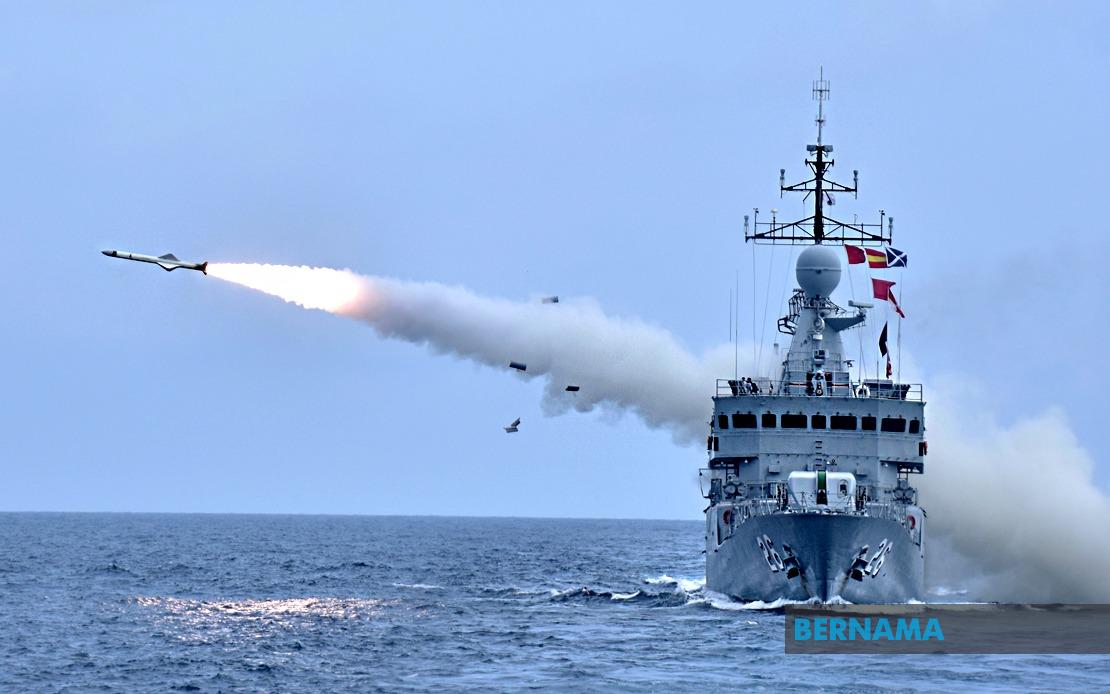
Malaysia's push for substantially higher defence expenditure reflects a fundamental shift in how the government perceives national security challenges, moving beyond traditional military concerns to encompass digital vulnerabilities and information warfare. Defence Minister Datuk Seri Mohamed Khaled Nordin articulated this broader perspective while explaining the rationale behind Prime Minister Datuk Seri Anwar Ibrahim's recent announcement that the country requires hundreds of millions to billions of ringgit in additional defence funding. The minister's comments underscore a growing recognition in Kuala Lumpur that 21st-century threats encompass far more than conventional military posturing.
The strategic environment facing Malaysia has undergone dramatic transformation, with cybersecurity and electromagnetic threats now occupying prominent positions in national security deliberations. Mohamed Khaled specifically highlighted mass misinformation campaigns as a concern requiring robust institutional responses, a development that reflects contemporary challenges facing democracies across Southeast Asia. These non-traditional security concerns demand investment in capabilities that defence planners would have scarcely prioritised a decade ago, reflecting the sophisticated nature of modern conflict. The government's recognition of these threats indicates Malaysia is attempting to build defences against asymmetric attacks that could potentially bypass conventional military deterrence.
Within the regional framework, Malaysia faces a distinctly complicated security calculus driven by intensifying strategic competition among major powers. The minister emphasised that increased military presence and capability demonstrations by various actors have created a more intricate security environment. When powerful nations expand their operational footprint in contested areas, smaller regional players like Malaysia confront difficult choices about maintaining adequate defensive capacity without appearing to align with particular geopolitical camps. This dynamic particularly affects Southeast Asian nations attempting to preserve strategic autonomy while managing relationships with multiple great powers.
The density of military assets operating within the South China Sea and surrounding waters has naturally increased the probability of dangerous miscalculations or unintended escalations. Mohamed Khaled articulated this concern with particular clarity, noting that even minor incidents could spiral into broader confrontations when numerous armed forces operate in relatively confined spaces. This observation carries particular weight for Malaysia, given Sabah's proximity to the southern Philippines and the ongoing security dynamics in that subregion. The potential for localised tensions to metastasise into wider regional instability represents a substantive security consideration justifying preemptive defence investments.
Developments in the southern Philippines and surrounding waters have gained heightened attention from Malaysian security planners, though the minister carefully framed this as a broader stability concern rather than targeting a specific neighbour. Even incidents that do not directly involve Malaysia could generate consequences extending throughout the South China Sea and the wider region, potentially disrupting trade routes, investment flows, and regional confidence. This interconnected security environment means that Malaysia cannot maintain a purely detached posture toward events in adjacent maritime zones. The government's cautious diplomacy reflects awareness that any public suggestion of hedging against Philippine actions could strain bilateral relations.
Kuala Lumpur has simultaneously sought to reassure the Philippines that Malaysian defence preparations are not directed against Manila, while maintaining good bilateral communication channels. Mohamed Khaled explicitly acknowledged the Philippines' sovereign right to determine its own defence arrangements and strategic partnerships according to its security assessments. This diplomatic positioning allows Malaysia to strengthen its own capabilities without appearing confrontational toward neighbouring countries. The statement reflects the delicate balance Southeast Asian nations must maintain while building defence capacity amid great power competition—projecting strength without creating perceptions of hostile intent.
A critical concern animating Malaysian defence policy involves avoiding the appearance of choosing sides in the strategic competition between major powers. Mohamed Khaled emphasised that Malaysia's primary objective remains preserving regional stability and preventing major power competition from creating unintended consequences for ASEAN members. This position reflects Malaysia's long-standing commitment to strategic autonomy and its role as a voice for ASEAN consensus. The government seeks to present its defence modernisation as a self-interested effort to protect Malaysian sovereignty and interests, rather than a response to any particular nation's actions or capabilities.
The planned modernisation of Malaysian Armed Forces represents a continuation of longstanding defence planning objectives rather than a sudden strategic pivot triggered by immediate crises. The government intends to gradually increase defence spending to 1.5 per cent of Gross Domestic Product by 2030, a target that reframes defence investment as a measured, predictable commitment to military capability development. This trajectory suggests Malaysia envisions substantial additional resources flowing toward equipment acquisition, technological upgrades, and human capital development across military branches. The graduated approach allows for budgetary planning while signalling sustained commitment to defence modernisation without creating sudden fiscal shocks.
Special attention to strategically significant locations like Pulau Layang-Layang reflects Malaysia's determination to strengthen capabilities in areas of particular national interest and sovereignty concern. The minister characterised these investments as expressions of national defence priorities rather than responses to specific external actors or competitive positioning. This framing seeks to prevent other regional powers from interpreting Malaysian military activities in contested zones as provocative or destabilising. The careful language surrounding Pulau Layang-Layang suggests Malaysian officials recognise how statements regarding the Spratly Islands can trigger sensitivity among claimant states and broader regional concerns about South China Sea militarisation.
Malaysia's defence strategy explicitly embraces a dual-track approach combining genuine military capability enhancement with diplomatic engagement and restraint advocacy. Mohamed Khaled stressed that maintaining sufficient capabilities to protect sovereignty and national interests must proceed simultaneously with efforts to promote regional stability through dialogue and multilateral cooperation. This balanced perspective aligns with Malaysia's broader ASEAN positioning, which emphasises consensus-building and inclusive engagement over confrontational approaches. The government seeks to signal that defence investments need not undermine collaborative regional mechanisms or peaceful dispute resolution frameworks.
The Code of Conduct negotiations for the South China Sea occupy central importance in Malaysia's regional vision, offering the prospect of establishing clear rules reducing escalation risks. Progress on finalising a binding Code of Conduct would address concerns about accidents or miscalculations while creating predictable frameworks governing military operations. Mohamed Khaled's emphasis on this diplomatic initiative demonstrates Malaysian commitment to preventing arms competition from completely displacing negotiated solutions. Success in these negotiations would vindicate Malaysia's preference for stability-enhancing dialogue over unilateral military buildups.
Ultimately, Malaysia's defence spending expansion reflects the complex security environment confronting a medium-power Southeast Asian nation navigating great power competition while managing regional relationships and non-traditional threats. The government's public positioning reveals sophisticated understanding that defence policy operates within political constraints requiring careful calibration of military messaging. Malaysia appears determined to strengthen its own resilience and sovereign capacity while remaining committed to multilateral cooperation, ASEAN unity, and regional peace mechanisms. Whether these dual objectives prove compatible will significantly influence Southeast Asia's security trajectory over the coming decade.

