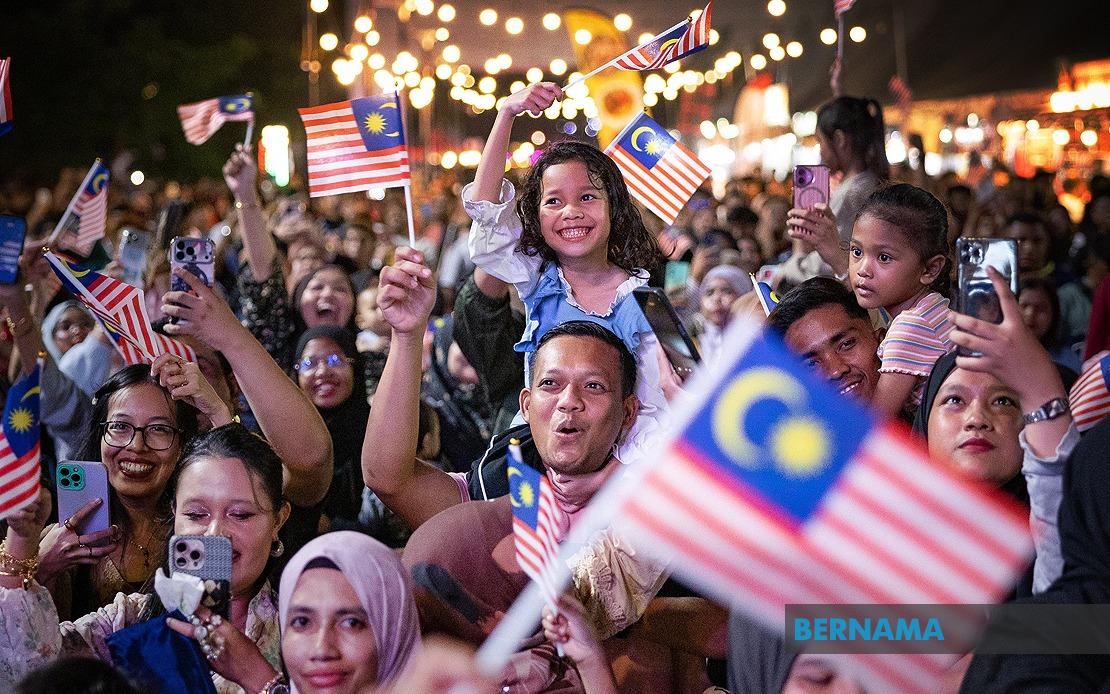
Malaysians across the nation gathered in substantial numbers on National Day Eve, embracing the occasion with visible patriotic enthusiasm as the country prepared to mark 69 years of independence. The most prominent celebrations took place at Dataran Merdeka in Kuala Lumpur, where more than 100,000 visitors descended upon the historic square to participate in the 'Kita Bagi Jadi @ Ambang Merdeka 2026' concert and witness the midnight transition into National Day itself. The scale of participation demonstrated the enduring appeal of these commemorative events across Malaysian society, reflecting the importance citizens place on recognising the nation's journey since independence.
Attendees began arriving at the iconic venue as early as 8 pm, creating a dynamic crowd of all age groups united by the symbolic display of Jalur Gemilang flags against the illuminated backdrop of the Sultan Abdul Samad Building. The setting transformed the administrative heart of Kuala Lumpur into a massive gathering space for collective reflection and celebration. This traditional anchor point for National Day observance has become ingrained in the Malaysian calendar, serving as both a physical symbol of nationhood and a practical gathering place where diverse segments of the population converge around shared national identity.
The evening's centrepiece was a 90-minute concert programme that brought together eight prominent local artistes including Aina Abdul, Aman RA, Nadia Aqilah, Asmidar, Haziq Rosebi, Mimifly, Izen Kong and Pasya. The performance was supported by approximately 350 supporting performers who delivered an integrated showcase combining music, dance and theatrical storytelling focused on Malaysia's historical development and cultural heritage. By incorporating entertainment with historical narratives, the programme aimed to educate audiences while entertaining them, bridging generational divides in how Malaysians understand and relate to their nation's past.
Government representatives lent official prominence to the gathering, with Hannah Yeoh, Minister in the Prime Minister's Department (Federal Territories), and Kuala Lumpur Mayor Datuk Seri Fadlun Mak Ujud both in attendance to underscore the event's significance within the national calendar. The presence of such officials signalled the government's investment in these celebrations as vehicles for reinforcing national cohesion and patriotic sentiment among the population. Their participation also functioned as visible endorsement of the occasion's importance in Malaysia's civic life.
The evening progressed through carefully choreographed moments designed to build anticipation toward the midnight hour. A highlight came when Menteri Besar Datuk Seri Amirudin Shari arrived at 9.20 pm, his appearance marking an escalation in ceremonial significance. The elite VAT 69 Commando unit then executed a dramatic skydiving display, after which the national anthem Negaraku was performed. A procession of decorated vehicles and contingent marches followed, punctuated by special performances from the Fire and Rescue Department, police, and the Malaysian Armed Forces, collectively demonstrating the role of state institutions in affirming national identity.
The midnight countdown represented the emotional apex of the celebrations, with the Menteri Besar leading crowds in sustained shouts of 'Merdeka' that echoed across Dataran Merdeka. This moment was accompanied by coordinated fireworks, elaborate light displays, and a finale concert featuring established artistes including Datuk Ramli Sarip, Datuk Awie, Gerhana Skacinta, Merrah and Wani Kyrie. The confluence of visual spectacle, collective chanting, and musical performance created a multisensory experience designed to forge emotional connections to national identity among participants.
Beyond the central Kuala Lumpur venue, complementary celebrations occurred elsewhere. In Perlis, festivities at a sports complex attracted over 46,000 visitors, indicating that National Day Eve observance extended beyond the federal capital into state-level celebrations. The Perlis event opened with Negaraku and featured martial arts displays, while state leadership including Muhammad Sanusi urged attendees to treasure and actively protect the nation's independence. This decentralisation of celebrations meant that Malaysians in different regions could participate in locally-organised versions of the national commemoration while remaining connected to the overarching national moment.
The Kuala Lumpur venue also hosted diverse complementary activities beyond the main concert, including the Bulatan Sultan Azlan Shah Run, Jualan Rahmah food sales, a thrift market, commercial food stalls, free health screening services, karaoke competitions, the Tantirana Haunted House attraction, and additional live performances. This multipurpose approach transformed the gathering into a broader community festival where celebration, commerce, entertainment, and public service converged. The inclusion of health screenings alongside entertainment reflected an attempt to infuse civic purpose into what might otherwise be purely recreational festivities.
A significant dimension of the evening came through royal messaging. Tuanku Syed Sirajuddin delivered a royal address reminding Malaysians that the independence the nation currently enjoys emerged from prolonged historical struggles, substantial sacrifices, and unity forged across the country's diverse racial communities. The Yang di-Pertuan Agong emphasised that safeguarding this independence required sustenance through knowledge, integrity, continued intercommunal unity, and collective responsibility toward the nation's welfare. This royal intervention positioned National Day Eve not merely as entertainment but as an occasion for serious reflection on the foundations of Malaysian statehood and the ongoing obligations citizens bear.
The celebrations also included plans for post-midnight screenings of the films 'Mukhsin' and 'Sepet' beginning at 2 am, extending the festivities into the early morning hours of National Day proper. By programming film showings featuring Malaysian cinema, organisers created opportunities for citizens to engage with local cultural production, reinforcing themes of national cultural pride embedded throughout the evening's programming. The choice of these particular films suggested an intention to highlight Malaysian creative achievement and storytelling traditions.
These National Day Eve observances occur within a broader context of Malaysian efforts to strengthen national unity and social cohesion, particularly given the country's multicultural composition and occasional tensions along communal lines. The large-scale participation across different demographic groups suggests that patriotic commemoration remains a space where Malaysians of various backgrounds can gather around shared national identity. The symbolic power of moments like the midnight 'Merdeka' chant and the visual spectacle of national insignia and military displays serve psychological functions in binding citizens to national projects and collective identity narratives.

