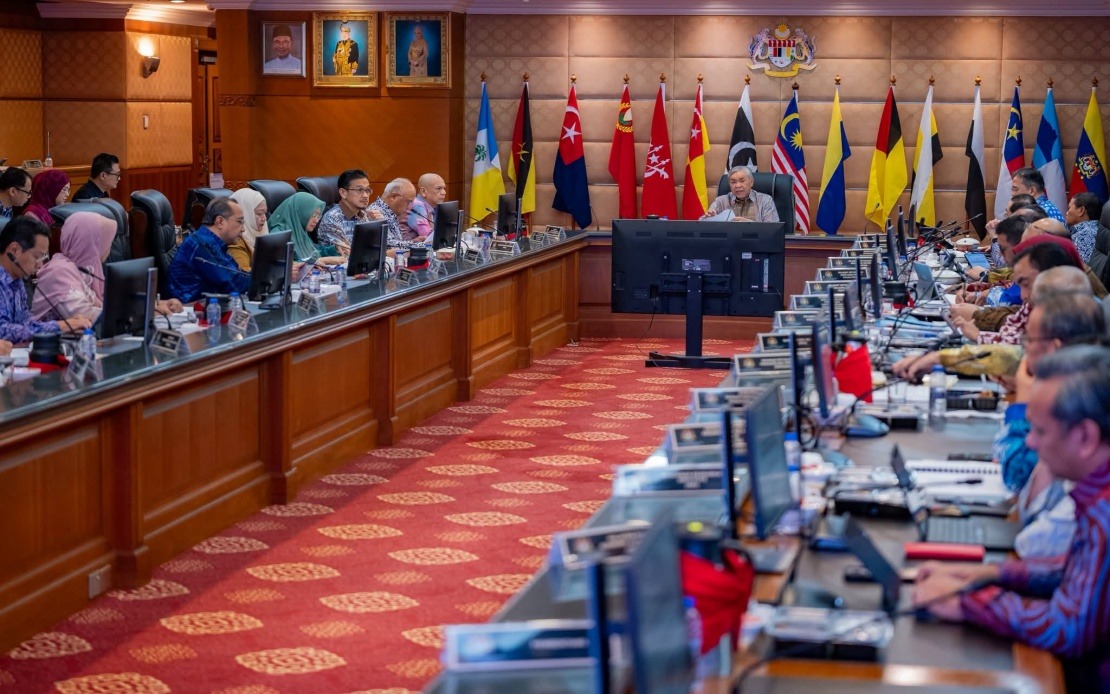
Malaysia's National Cost of Living Action Council (NACCOL) is taking a comprehensive approach to affordability that extends far beyond retail prices, according to Deputy Prime Minister Datuk Seri Dr Ahmad Zahid Hamidi, who led the council's 18th Executive Committee meeting in Putrajaya. The strategy acknowledges that managing household expenses requires simultaneous intervention across agriculture, healthcare, education, and social support systems rather than isolated policy measures. This integrated framework marks a departure from conventional price controls, recognising that sustainable solutions must address underlying production challenges and supply chain inefficiencies that ultimately feed into consumer costs.
At the heart of the council's deliberations sits the local white rice sector, a politically and economically sensitive commodity in Malaysia given its cultural significance and role in household budgets. The committee has developed a transitional roadmap designed to protect vulnerable populations while simultaneously ensuring the viability of domestic farmers and rice producers. Rather than imposing abrupt policy changes that could destabilise agricultural livelihoods or trigger price shocks, the council is proposing a gradual transition supported by subsidised rice distribution to lower-income households. This soft-landing approach reflects recognition that immediate deregulation could create hardship for both consumers and the agricultural sector simultaneously.
A significant expansion of social support emerged from the meeting, with NACCOL proposing to broaden the Sumbangan Asas Rahmah (SARA) assistance programme beyond its current monetary scope. The initiative would incorporate direct provision of fresh produce including fruits, vegetables, and fresh protein sources. This shift from cash assistance to in-kind support carries important implications for food security and nutritional outcomes among vulnerable groups. By guaranteeing access to perishable items that often represent the highest proportional cost in lower-income budgets, the government aims to improve dietary quality while managing household expenditure more effectively than traditional income transfers alone.
The council's attention to healthcare costs reflects growing recognition that medical expenses represent a major budget pressure for Malaysian families. Deputy Prime Minister Ahmad Zahid highlighted the rollout of eleven initiatives under the RESET strategy, which targets private healthcare sector costs while expanding public access to treatment options. Given Malaysia's mixed healthcare landscape where many middle and lower-middle income households depend on private providers due to public system capacity constraints, measures to contain private sector pricing while improving public provision could meaningfully reduce household healthcare burdens. The strategy attempts to balance market dynamics with affordability imperatives, acknowledging that uncontrolled private sector costs can force families to forgo treatment or deplete savings.
Education affordability forms another pillar of the coordinated response, with the government committed to ensuring that financial barriers do not exclude talented students from higher learning. Current data indicates that 62,937 Form Six and university students received assistance totalling RM589.6 million through thirteen tertiary education aid schemes during the previous year. While this represents substantial government investment, the council recognises that demand for higher education support will continue rising as families prioritise qualification acquisition for economic mobility. Reinforcing these mechanisms becomes essential as economic pressures intensify, requiring strategic allocation of resources toward students from disadvantaged backgrounds while managing overall fiscal commitments.
The council's emphasis on production costs and supply chain resilience reflects sophisticated understanding that consumer price inflation often originates upstream rather than at retail level. Logistics expenses, agricultural input costs, import compliance requirements, and subsidy rationalisation measures collectively influence what consumers ultimately pay. By monitoring geopolitical developments and West Asian volatility that affect commodity and energy prices, Malaysia recognises its exposure to external shocks beyond domestic policy control. The council's commitment to continuous assessment of these factors demonstrates awareness that cost of living management requires proactive risk monitoring rather than reactive response after inflation emerges.
Agricultural support mechanisms receive particular attention, with relevant agencies directed to refine existing systems for targeted assistance to farmers and fishermen. These groups operate in sectors characterised by thin margins, weather dependencies, and exposure to price volatility. Strengthening their resilience through improved support structures helps stabilise production costs that eventually determine food prices. For Malaysian agriculture, which competes globally while serving domestic food security requirements, sustainable producer support becomes essential infrastructure for affordability policy rather than charity.
The integration of these initiatives into the overarching Cost of Living Action Plan 2030 represents recognition that affordability cannot be addressed through isolated interventions but requires coordinated effort across multiple government agencies and policy domains. This framework approach contrasts with previous piecemeal efforts that sometimes created unintended consequences or contradictory incentives. By establishing a unified timeline and coordinating objectives across agriculture, healthcare, education, and social support, the government aims to create mutually reinforcing policy effects that amplify impact beyond what individual measures could achieve.
For Malaysian households, particularly those in lower and middle-income brackets, these proposals offer multiple channels of relief. The combination of transitional rice pricing, expanded fresh food assistance, healthcare cost containment, and strengthened education support addresses the major expenditure categories that constrain family budgets. However, the success of this comprehensive approach depends on effective implementation, adequate funding allocation, and coordination among diverse government entities that must translate high-level strategy into operational reality. The council's recognition that cost of living pressures originate from multiple sources and require multifaceted responses represents an important shift toward sustainability, even as immediate relief measures continue.

