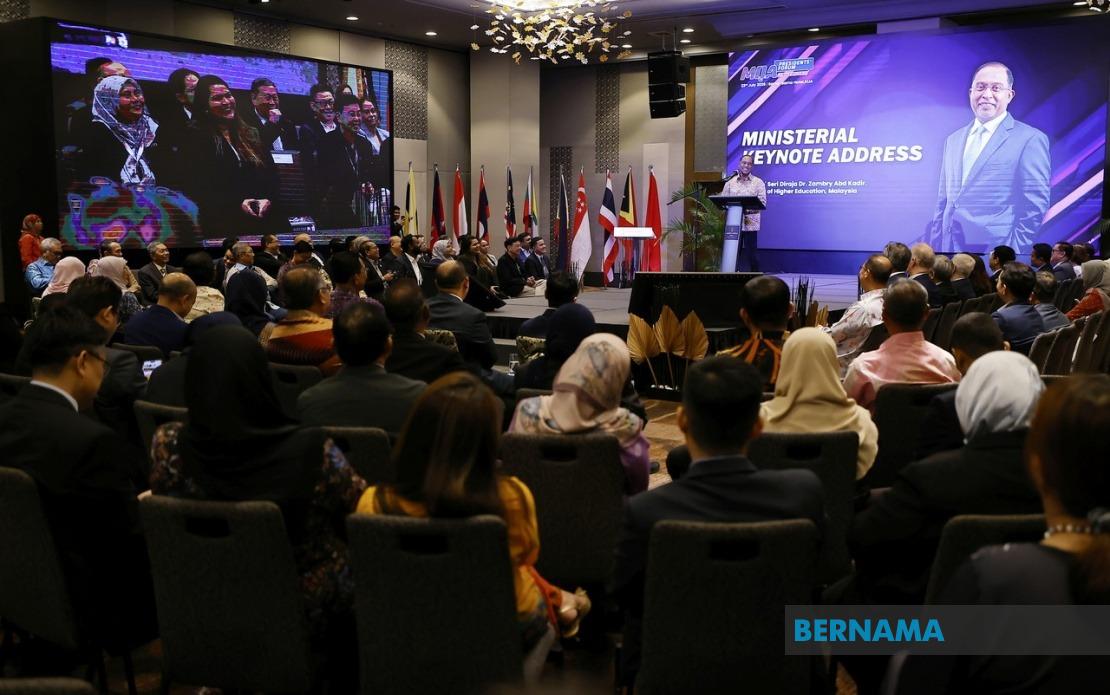
Malaysia's Higher Education Minister Datuk Seri Dr Zambry Abd Kadir has underscored the government's unwavering commitment to protecting academic freedom and cultivating environments where scholarly debate can flourish, signalling the administration's stance on intellectual pluralism within the country's universities during remarks made in Putrajaya.
Addressing attendees at a public lecture by Columbia University's Prof Dr Joseph A. Massad on Muslim Identity in a Globalised World, Zambry articulated a vision of Malaysian higher education institutions as crucibles for rigorous intellectual engagement. He emphasised that universities must function as open forums where competing viewpoints can be examined, debated and refined through sustained dialogue that transcends institutional boundaries, academic disciplines and philosophical traditions.
Central to the minister's remarks was the concept that academic freedom operates within a framework of intellectual responsibility. While universities should actively encourage comprehensive debate and contestation of ideas, such exchanges must occur within parameters of civilised discourse grounded in empirical evidence and mutual respect for alternative perspectives. This framing seeks to balance the protection of uninhibited scholarly inquiry with an emphasis on the quality and integrity of that inquiry.
Zambry highlighted the particular significance of academic freedom within Malaysia's distinctive social context. The country's plural and multicultural character—encompassing diverse religious, ethnic and cultural communities—necessitates that higher education institutions model and promote informed cross-cultural dialogue and reciprocal understanding through scholarly engagement. In this framework, universities become laboratories where Malaysians can practise the delicate art of navigating disagreement while maintaining social cohesion.
The minister acknowledged that divergent opinions are inevitable in contemporary discourse, a reality amplified by technological disruption. The proliferation of artificial intelligence applications and social media platforms has created unprecedented channels for the rapid dissemination of information and ideas, alongside risks of polarisation and misinformation. Within this landscape, Zambry suggested that Malaysia's traditional cultural orientation toward tolerance and mutual respect for differing viewpoints represents a stabilising force.
Zambry articulated a philosophy rooted in accommodation rather than consensus—a recognition that Malaysians may fundamentally disagree on substantive matters while simultaneously sharing commitment to core principles of coexistence. This formulation of "agreeing to disagree" reflects a pragmatic approach to managing intellectual diversity within societies characterised by deep communal divisions.
Beyond domestic considerations, Zambry signalled the ministry's strategic commitment to internationalising Malaysia's higher education sector through scholarly exchange programmes. By actively welcoming prominent academics and intellectuals from international institutions, Malaysia seeks to strengthen its research ecosystem and position itself as a destination for global intellectual collaboration. Such engagements facilitate the cross-pollination of ideas on transnational challenges and contribute to Malaysia's soft power in the knowledge economy.
The invitation extended to Prof Massad, a scholar known for analyses of Islamic identity and geopolitics, reflects the ministry's openness to hosting speakers whose work addresses sensitive and contested topics. This gesture suggests a calculated effort to demonstrate Malaysia's intellectual maturity and freedom of expression, particularly to international audiences who may harbour perceptions of censorship or ideological constraints in Malaysian academia.
The timing and substance of Zambry's remarks merit contextual consideration. Malaysian universities have occasionally encountered restrictions on academic activities and speaker invitations, leading to periodic tensions between institutional autonomy and government oversight. Zambry's reiteration of commitment to academic freedom can be interpreted as an attempt to establish clear governmental parameters around intellectual liberty and to signal that such restrictions are not reflective of broader policy orientation.
The minister's emphasis on responsible discourse reflects awareness that unfettered expression without accompanying norms of evidence-based reasoning and reciprocal respect can fragment rather than advance understanding. This scaffolding of freedom with responsibility mirrors international conversations about academic integrity occurring across universities globally, where institutions balance protection of inquiry with institutional missions and community standards.
Zambry's remarks also underscore the strategic importance Malaysia assigns to higher education as a vehicle for economic development and global competitiveness. Universities that cultivate vibrant intellectual cultures and attract world-class scholars generate research output, innovation and human capital that drive broader developmental objectives. In this regard, safeguarding academic freedom becomes not merely a matter of principle but also instrumental policy aligned with national aspirations.
Looking forward, the Higher Education Ministry's commitment to welcoming international scholars and facilitating cross-border intellectual exchange will likely shape how Malaysian universities position themselves within regional and global academic networks. This orientation may enhance Malaysia's capacity to produce research addressing problems of significance to Southeast Asia and the broader world, potentially strengthening the nation's voice in global knowledge production and policy discourse.

