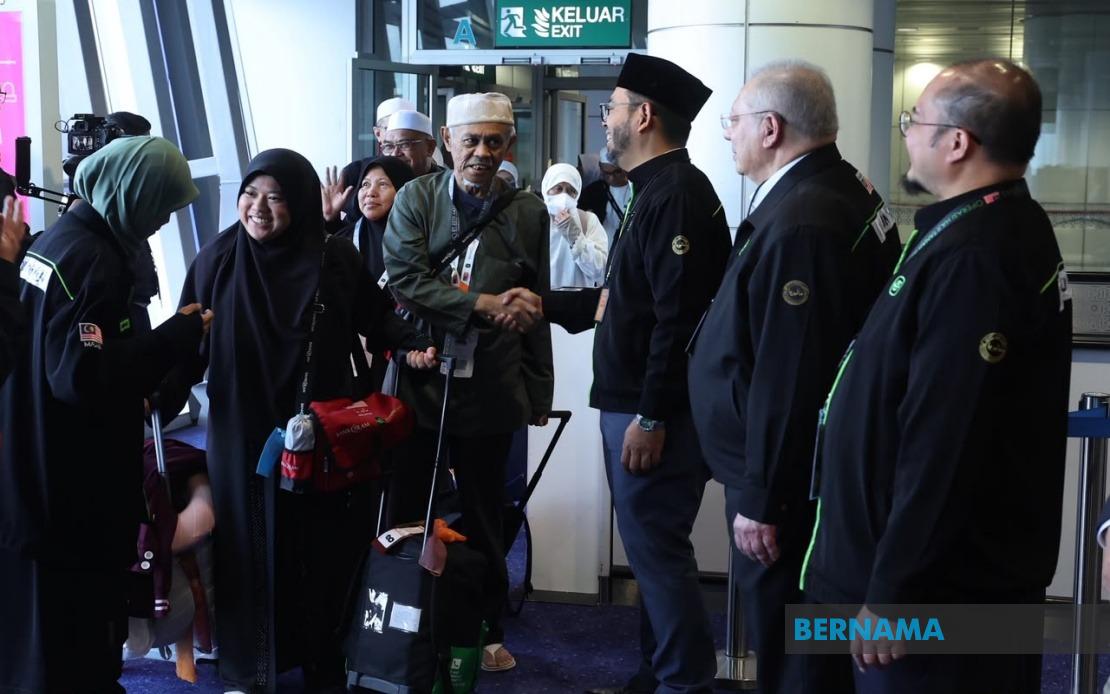
The Islamic calendar year 1447H has drawn to a close for Malaysian pilgrims with the arrival of the concluding contingent of 258 worshippers at Kuala Lumpur International Airport on Tuesday afternoon. Touching down at 12:10 pm after a red-eye flight from Madinah aboard Malaysia Airlines service MH 8385, these pilgrims mark the symbolic end of what officials characterise as a remarkably well-executed haj season that navigated through considerable geopolitical headwinds affecting the region.
Dr Zulkifli Hasan, the Minister in the Prime Minister's Department overseeing Religious Affairs, greeted the returning pilgrims and emphasised that the comprehensive haj programme had reached completion without compromise to pilgrim welfare. His remarks highlighted the significance of achieving full operational closure while maintaining the rigorous standards expected for managing what remains one of the largest coordinated movements of Malaysian citizens abroad each year. The minister's statement underscored an implicit tension that characterised this particular season—the ability to sustain excellence despite external pressures arising from the ongoing conflict in West Asia, which presented logistical and safety considerations unprecedented in recent memory.
The achievement attracted international validation from Saudi Arabia's Ministry of Haj and Umrah, which conferred upon Malaysia the Labbaikum Diamond Award. This highest-tier recognition reflects the kingdom's assessment of Malaysian haj management systems and the overall quality of services extended to pilgrims throughout their journey. For a nation managing upwards of 30,000 pilgrims annually, such an accolade carries substantial weight—it signals that Malaysia's institutional frameworks, personnel training, and coordination mechanisms met or exceeded benchmarks established for global haj operations. The award implicitly acknowledges the complex interplay of factors required to sustain such an operation: security protocols, medical provisions, logistical choreography, and the capacity to respond dynamically to unforeseen circumstances.
Tabung Haji, the statutory body responsible for administering Malaysia's haj programme, and supporting government agencies invested considerable effort in pre-departure preparation. The minister credited intensive educational courses conducted prior to pilgrims' departure as instrumental in fostering the discipline and behavioural standards that contributed to the season's success. This pedagogical approach reflects a recognition that haj operations depend not solely on institutional capacity but fundamentally on the conduct and cooperation of individual pilgrims navigating both spiritual and practical dimensions of their journey. By emphasising preparation and values-reinforcement, Malaysian authorities have essentially attempted to elevate haj from transactional logistical exercise to a more holistic formative experience.
Several procedural and infrastructural enhancements implemented during the 1447H season merit particular attention for their implications regarding future iterations. The deployment of the MyNIISe system streamlined visa processing workflows, reducing administrative friction that historically represents a major pain point in haj management. Upgrading accommodation standards—through provision of sofa beds and improved tent facilities—directly addressed comfort considerations for ageing pilgrims whose numbers increase each season. The introduction of round-the-clock bus services connecting religious sites to lodgings represented a practical response to accessibility concerns that had previously constrained elderly participants' ability to fulfil their obligations.
The presence of Deputy Minister Marhamah Rosli and Tabung Haji chairman Tan Sri Abdul Rashid Hussain at the arrival ceremony signalled the institutional weight attached to this concluding moment. Their attendance reflected not mere ceremonial obligation but rather acknowledgment that haj operations remain a significant policy domain requiring sustained senior-level attention. For Malaysian pilgrims returning from the spiritual pinnacle of Islamic practice, the formal welcome by senior officials subtly reinforced the government's recognition of their undertaking and the national importance vested in their wellbeing.
Looking forward, Tabung Haji has commenced systematic post-operational reviews and evaluations to identify enhancement opportunities for the upcoming haj season. This iterative approach to programme improvement reflects international best practices in large-scale logistical management, where continuous refinement rather than static operations characterises world-class service delivery. By committing to formal post-mortem processes, Malaysian authorities signal that even successful seasons contain lessons warranting examination and implementation in subsequent cycles.
The National Haj Muzakarah, a consultative conference scheduled for August, will serve as the institutional forum for deliberating emerging issues and proposed improvements to haj management protocols. This consultative mechanism—drawing together religious scholars, government representatives, Tabung Haji officials, healthcare providers, and logistical specialists—enables comprehensive discussion of programmatic refinements and policy adjustments. Such conferences represent the Malaysian approach to governance in this domain: inclusive deliberation rather than unilateral decision-making, reflecting Islam's consultative principles within bureaucratic structures.
For Malaysian society broadly, successful haj seasons carry significance extending beyond the immediate experience of participating pilgrims. The programme represents a substantial annual expenditure of foreign currency and governmental resources, making operational efficiency a legitimate public concern. The international recognition bestowed upon Malaysia's management systems affirms that such investment yields dividends not merely in spiritual fulfilment for individuals but in enhanced standing within the Organisation of Islamic Cooperation and broader international communities. That Malaysia executes haj operations at world-leading standards reflects positively on national capacity and institutional competence.
The return of the final batch also signals transition for Tabung Haji personnel and government agencies, who must now shift attention from active operational management to analytical review and contingency planning. Staff involved in the direct delivery of haj services—from medical practitioners to logistics coordinators—require rest and recovery before undertaking the preparatory work for the subsequent season. This rhythm of intense operational activity followed by systematic evaluation and improvement represents the sustainable model through which Malaysia has managed to maintain haj programme excellence across multiple seasons despite rising complexity and external challenges.

