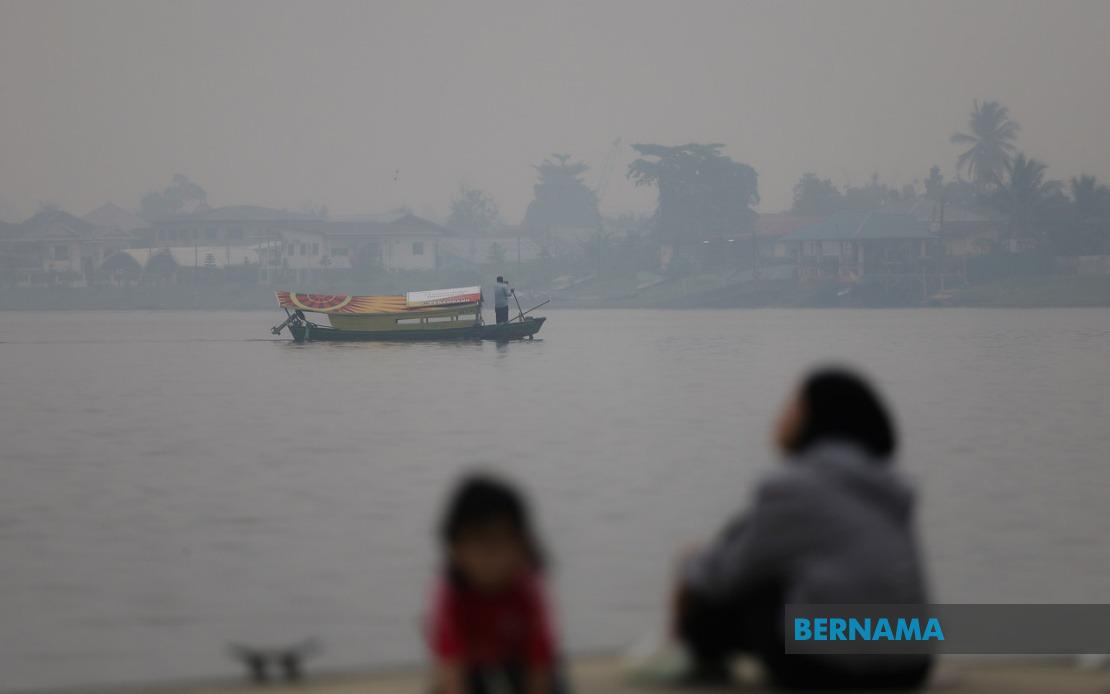
The Malaysian government has activated cloud seeding operations across multiple states to combat the dual challenge of deteriorating air quality and depleting water reserves. Deputy Prime Minister Datuk Seri Dr Ahmad Zahid Hamidi unveiled the initiative at the 2026 Malaysia Agriculture, Horticulture and Agrotourism Show (MAHA) in Serdang on August 30, highlighting the government's coordinated response to environmental pressures affecting both air quality and water security.
Under the scheme, cloud seeding efforts are being concentrated in areas where the Air Pollutant Index (API) exceeds 150, indicating unhealthy to hazardous air quality levels. Additionally, regions experiencing significant drops in water levels at key dam sites have been prioritised for the rain-inducing operations. This dual-focus approach demonstrates recognition that Malaysia faces interconnected environmental challenges requiring simultaneous intervention. The timing is particularly significant given the tropical nation's vulnerability to seasonal haze episodes that can severely impact public health and economic activity across the region.
The Malaysian Meteorological Department (METMalaysia) and the Royal Malaysian Air Force (RMAF) are collaborating on the implementation, representing a multi-agency approach to environmental management. This partnership leverages the meteorological expertise needed to identify suitable cloud formations and the RMAF's operational capabilities for deploying seeding materials. Ahmad Zahid emphasised that such coordinated efforts reflect the government's commitment to maintaining essential services, particularly water supply infrastructure that could be jeopardised by prolonged drought conditions.
Operations commenced in Putrajaya on the day of the announcement, with planned expansions into Sarawak, Kedah, and Perlis scheduled between September 3 and 5. The phased geographical rollout suggests a strategic allocation of resources based on priority assessments of current conditions. Sarawak, in particular, faces acute challenges, with three monitoring stations recording critically high pollution levels. Ahmad Zahid acknowledged the inherent unpredictability of cloud seeding, noting that successful operations depend not merely on the presence of clouds but also on meteorological conditions favouring precipitation delivery to targeted areas.
The environmental context underscores why such interventions have become necessary. Water security represents a growing concern across Southeast Asia as population growth, industrial demand, and climatic variability strain existing reservoirs. Malaysia's dam network, which supplies millions of residents and supports agricultural and industrial sectors, has experienced declining levels during extended dry periods. Allowing further deterioration could trigger water rationing, particularly affecting domestic users and potentially disrupting economic activity. Cloud seeding, while not a permanent solution, offers a tactical tool to replenish supplies during critical periods.
Air quality deterioration adds urgency to the situation. The haze recorded in Sarawak on August 30 exemplified the severity of pollution episodes affecting the region. The Serian Police headquarters monitoring station recorded an API reading of 412, classified as hazardous, while Samarahan reached 332 and Kuching 304. Sri Aman's reading of 228 fell into the very unhealthy category. These figures exceed thresholds posing significant risks to vulnerable populations, including children, elderly persons, and those with respiratory conditions. Visibility reduction also creates safety hazards affecting transportation and outdoor activities.
The decision to prioritise areas with API readings above 150 reflects a public health calculation. API values in this range and higher are associated with increased emergency hospital visits, respiratory complaints, and reduced visibility affecting traffic safety. By focusing cloud seeding on these zones, the government aims to improve air quality through precipitation that helps settle suspended particles. Rain-induced cleansing of the atmosphere provides temporary relief, though the underlying causes driving transboundary haze—primarily forest fires and agricultural burning in neighbouring regions—remain beyond Malaysia's unilateral control.
Climate and seasonal patterns substantially influence the feasibility and effectiveness of cloud seeding. Ahmad Zahid's reference to weather dependencies illustrates the operational complexity involved. Cloud formations must be present and properly positioned relative to wind patterns and topography to ensure seeded moisture condenses and precipitates over intended areas. Timing coordination with meteorological forecasting becomes essential to maximise operational success rates. This technical dimension explains why seeding campaigns cannot be rapidly expanded without corresponding meteorological assessments.
The announcement reflects broader Southeast Asian concerns about transboundary environmental challenges. Haze affecting Malaysia often originates from land-clearing activities across borders, creating diplomatic dimensions alongside technical and public health concerns. Malaysia's regional position—vulnerable to air pollution from neighbouring countries yet responsible for managing domestic environmental quality—shapes policy responses. Cloud seeding represents a domestically deployable measure, though regional cooperation on fire prevention remains essential for long-term solutions.
Water security implications extend beyond immediate supply concerns. Southeast Asia's river systems and shared water resources generate potential sources of bilateral tension as demand pressures increase. Malaysia's proactive approach to maintaining water availability through cloud seeding suggests policymakers view this as strategically important. The region's growing urbanisation and industrial expansion intensify water competition, making alternative supply mechanisms increasingly valuable. Cloud seeding, integrated with existing conservation and management practices, contributes to a broader water security strategy.
The announcement also signals government responsiveness to emerging environmental threats. As climate change alters precipitation patterns and intensifies drought risks across the region, nations are adopting technological interventions previously considered supplementary. Malaysia's investment in coordinated cloud seeding operations indicates recognition that traditional approaches alone may prove insufficient under changing climatic conditions. This reflects a pragmatic acceptance that environmental management increasingly requires technological solutions deployed alongside policy and behavioural adjustments.
Looking forward, the effectiveness of these operations will likely inform future environmental strategies. Data collected during the current campaign will help officials assess whether cloud seeding delivers meaningful improvements in air quality and water availability. Success would strengthen the case for further expansion and institutionalisation of the programme. Simultaneously, parallel efforts addressing root causes—particularly transboundary haze prevention and water conservation promotion—remain essential for sustainable environmental management across Malaysia and Southeast Asia.

