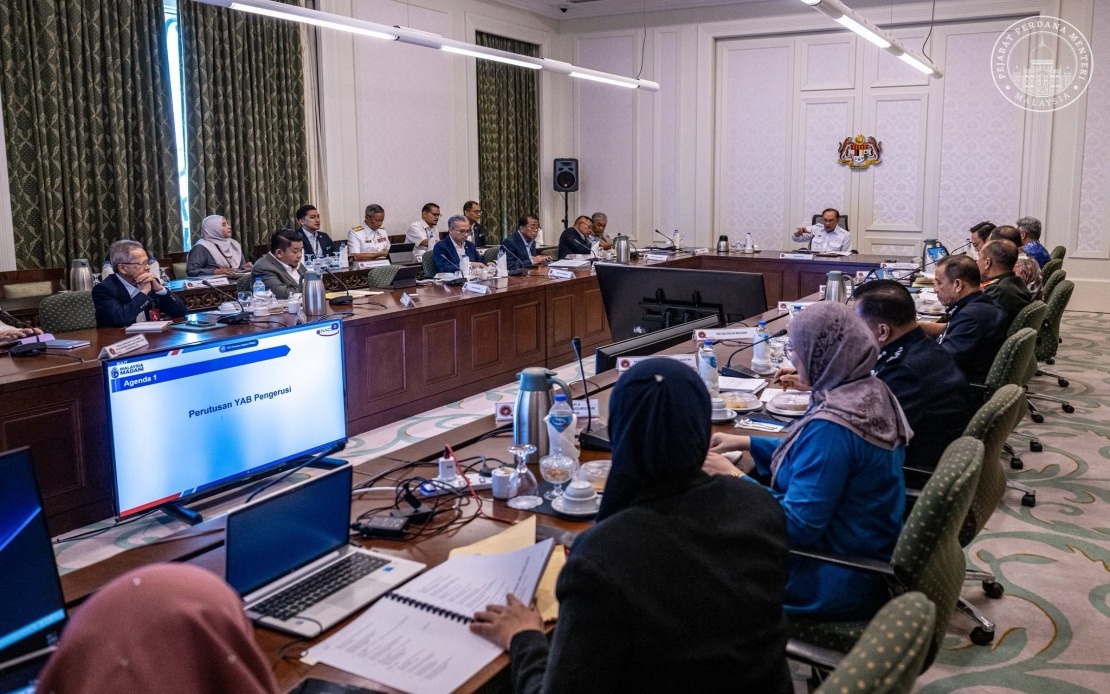
Prime Minister Datuk Seri Anwar Ibrahim has launched the Malaysia Digital 2030 (MD2030) Action Plan, signalling an ambitious transformation of the nation's digital economy over the next five years. The initiative, unveiled at a meeting of the National Digital Economy and Fourth Industrial Revolution Council (MED4IRN), represents a fundamental strategic pivot designed to equip Malaysia for the accelerating adoption of artificial intelligence, automation technologies and data-driven business models reshaping the global economy.
The comprehensive blueprint, scheduled to guide development through to 2030, addresses mounting concerns about Malaysia's competitive positioning as digital innovation accelerates worldwide. Rather than remaining primarily a technology consumer reliant on foreign solutions and expertise, the nation will reorient itself towards developing indigenous capabilities and fostering local innovation ecosystems. This shift carries substantial implications for Malaysia's long-term economic resilience and technological sovereignty in an increasingly interconnected regional economy where digital competitiveness determines industrial success.
According to Anwar, the initiative will fundamentally restructure how Malaysian government agencies operate and deliver services to citizens and businesses. A critical element involves establishing internal capacity for developing government digital infrastructure, with coordination centralised within the Digital Ministry and National Digital Department. This architectural change responds to growing apprehension about relying on external technology providers for critical public sector systems, particularly given the sensitivity of citizen data and government operations to potential security vulnerabilities or geopolitical leverage.
The Prime Minister emphasised that safeguarding national data security and sovereignty represents a core strategic objective underlying the MD2030 framework. By transitioning away from external dependencies and building homegrown digital expertise within the public sector, Malaysia aims to reduce exposure to supply chain vulnerabilities, foreign regulatory pressures and potential security breaches emanating from third-party control of essential infrastructure. This approach aligns with broader regional trends as Southeast Asian nations increasingly prioritise technological self-sufficiency amid rising geopolitical tensions.
Beyond public sector transformation, the MD2030 framework addresses Malaysia's competitive position within the evolving global digital landscape. The initiative acknowledges that nations capable of developing competitive AI capabilities and leveraging data-driven decision-making will command substantial economic advantages in coming decades. By deliberately cultivating homegrown innovation capacity rather than importing finished solutions, Malaysia seeks to capture value creation opportunities within the AI and automation sectors, potentially establishing new export industries and attracting technology-driven investment.
Anwar underscored the importance of implementing the action plan through structured, disciplined mechanisms ensuring tangible benefits reach ordinary Malaysians while simultaneously strengthening business competitiveness. This dual-track emphasis reflects recognition that technological advancement must translate into practical improvements in government service delivery, economic opportunity and quality of life rather than remaining confined to technical metrics. The framing suggests the government views digital transformation as intrinsically linked to the broader MADANI development agenda and social contract renewal.
The initiative also represents a strategic response to geopolitical uncertainty and intensifying global competition within digital economy sectors. As major powers invest heavily in AI research, semiconductor manufacturing and data infrastructure, middle-income countries risk technological marginalisation without deliberate strategies to develop indigenous capabilities. Malaysia's MD2030 framework positions the nation as actively shaping its technological future rather than passively accepting trajectories determined by foreign technology leaders, a posture increasingly expected by both domestic constituencies and regional partners.
Implementing such an ambitious transformation will demand sustained investment, talent development and institutional coordination across government, private sector and educational institutions. The concentration of coordination authority within the Digital Ministry suggests recognition that fragmented approaches have historically limited Malaysia's technology advancement, while centralised direction and resource allocation might accelerate progress. However, implementation success will ultimately depend on execution rigour, adequate budgetary commitment and genuine cross-agency collaboration overcoming bureaucratic silos.
The MD2030 framework also carries implications for Malaysia's regional positioning within Southeast Asia's digital economy. Nations successfully transitioning to AI producers rather than consumers will exercise disproportionate influence over regional technological standards, supply chains and innovation corridors. Malaysia's initiative therefore competes directly with similar strategies being pursued by Singapore, Vietnam and other regional rivals, each seeking to establish technological leadership and attract investment within emerging sectors. The relative pace and effectiveness of implementation across competing economies will significantly shape regional competitive dynamics through 2030.
Looking forward, the MD2030 Action Plan will require ongoing refinement as technological landscapes evolve and implementation challenges emerge. The commitment to an inclusive AI nation by 2030 suggests the government intends developing AI capabilities that benefit all Malaysian communities rather than concentrating advantages among narrow groups, though translating this aspiration into concrete inclusive policies remains an ongoing challenge for technology governance globally. Success will ultimately be measured by whether Malaysia meaningfully reduces its technological dependence, develops sustainable competitive advantages in emerging sectors and improves lived experiences for citizens through smarter, more responsive public and private services.

