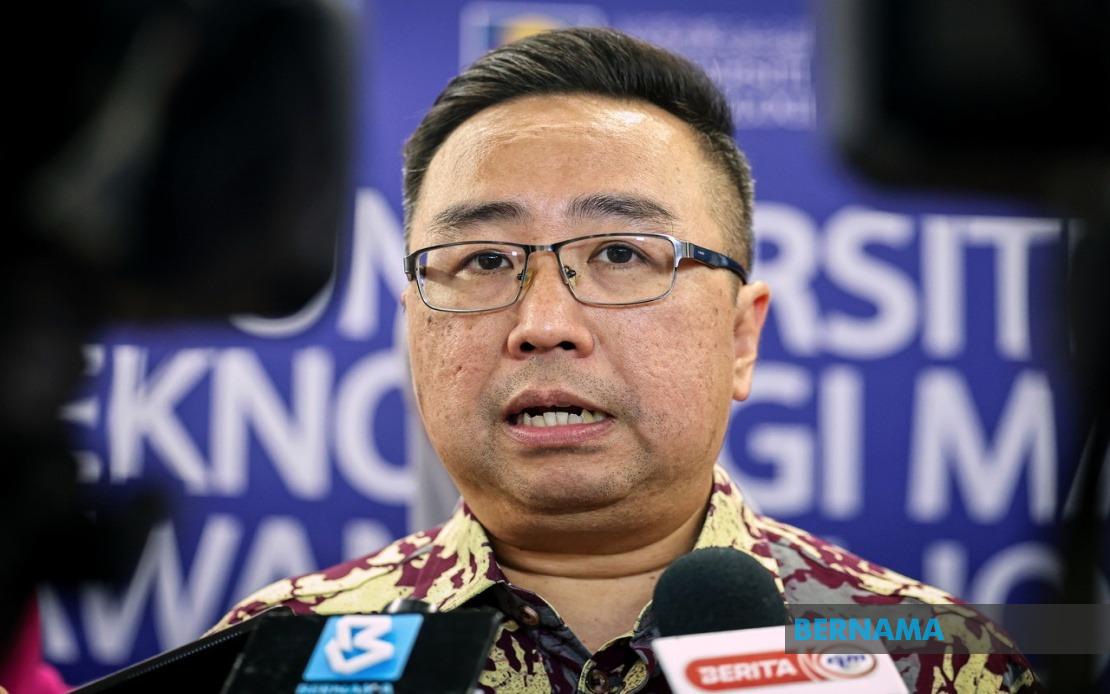
Malaysia is gearing up to host one of Asia's most significant scientific gatherings next year, and the Ministry of Science, Technology and Innovation has signalled that cultivating local talent will be its defining priority during the hosting period. Minister Datuk Chang Lih Kang announced the strategy following the MOSTI TechTalks Series 2/2026 programme, underlining that Malaysia cannot compete effectively for high-technology investments without a skilled workforce ready to support advanced industries. The 23rd ASEAN Ministerial Meeting on Science, Technology and Innovation, or AMMSTI-23, will take place in June 2027, a responsibility Malaysia accepted during the 22nd such gathering in Vientiane, Laos, on June 26 this year.
The decision to prioritise talent development reflects a broader regional understanding that Southeast Asian nations must move beyond competing on labour costs alone. As multinational corporations increasingly seek locations for research, development, and innovation hubs rather than routine manufacturing, the availability of qualified professionals becomes a decisive factor in investment decisions. Malaysia's hosting of AMMSTI-23 provides an opportunity to demonstrate to regional peers and international observers that the country possesses not just aspirations but actionable programmes to build its scientific and technological workforce. This messaging carries particular weight given ASEAN's collective push toward greater economic competitiveness in a global environment where artificial intelligence and advanced manufacturing are reshaping industrial geography.
Beyond workforce readiness, MOSTI has outlined a comprehensive innovation agenda that will likely shape discussions during the ministerial meeting. The ministry's focus areas encompass energy transition—a critical priority as Southeast Asia navigates the move away from fossil fuels—alongside artificial intelligence deployment, widespread digitalisation, advanced materials science, nanotechnology applications, hydrogen technology, and biotechnology development. This portfolio suggests Malaysia is positioning itself not as a follower but as a regional contributor to emerging technological frontiers. The emphasis on energy transition, in particular, aligns with international climate commitments and regional economic pressures, as countries across ASEAN face mounting pressure to decarbonise while maintaining growth.
A particularly noteworthy dimension of MOSTI's strategy involves its commitment to overhauling Technical and Vocational Education and Training programmes across Malaysia, even though TVET formally falls under other ministerial jurisdictions. This cross-agency approach demonstrates recognition that technology ministry leadership cannot operate in isolation from the broader educational ecosystem. The ministry is working with twelve partner organisations, including the Ministry of Education, the Ministry of Higher Education, the Ministry of Rural and Regional Development, and the Ministry of Human Resources, to embed cutting-edge competencies into vocational curricula. This coordination is essential because TVET institutions train the majority of Malaysia's technical workforce, and their relevance directly determines whether young people entering these programmes acquire skills employers actually demand.
The modernisation of TVET offerings reflects a significant philosophical shift within Malaysian education policy. Rather than treating vocational training as a repository for conventional skills in plumbing, welding, and automotive repair, MOSTI is advocating that these programmes integrate robotics, artificial intelligence, and coding alongside traditional technical foundations. This approach acknowledges that future technicians and technologists will work in environments where manual skills and computational thinking intersect—where a worker might programme an industrial robot one moment and diagnose mechanical faults the next. By embedding digital literacy and automation concepts into TVET from the outset, Malaysia aims to create a more adaptable workforce capable of navigating rapid technological change.
The MOSTI TechTalks initiative, which serves as a platform for university engagement, demonstrates how the ministry is attempting to bridge the gap between policy announcements and actual youth mobilisation. These regular programmes, hosted on campus locations across the country, bring current developments in Malaysia's science, technology, and innovation ecosystem directly to students at a formative career stage. The rationale is straightforward: university students who understand the government's STI priorities and see clear pathways between their studies and national development objectives are more likely to pursue careers in these fields rather than emigrating or shifting toward finance and services sectors. Furthermore, early exposure to emerging technologies helps students make informed educational choices, such as selecting research specialisations or postgraduate paths that align with areas where Malaysia seeks competitive advantage.
The timing of this initiative carries strategic significance for Southeast Asia's broader development trajectory. As regional economies mature and per-capita incomes rise, they become vulnerable to the middle-income trap—a situation where they are no longer competitive in low-cost manufacturing yet lack the innovation capacity to compete in high-value sectors. Malaysia, having reached upper-middle-income status, faces precisely this challenge. Investing heavily in talent development and ensuring that emerging technologies are integrated throughout the educational system represents an attempt to escape this trap by building genuine innovation capacity rooted in local human capital rather than simply importing technology and expertise.
The cross-ministerial collaboration coordinating TVET enhancement also signals that Malaysian policymakers recognise education policy fragmentation as a constraint on competitiveness. By bringing together agencies responsible for primary and secondary education, higher learning, rural development, and workforce planning, MOSTI is attempting to create coherence across an educational landscape that has historically operated in silos. This horizontal coordination is notoriously difficult in government structures but essential for systemic transformation. Without alignment between schools preparing students for vocational pathways, institutions delivering TVET, universities offering advanced training, and employers specifying their needs, even the most well-funded initiatives will produce mismatches between qualification and opportunity.
For Malaysia's regional standing, the 2027 hosting of AMMSTI-23 offers an important platform to showcase progress on these fronts. ASEAN ministerial meetings typically include policy discussions, but they also provide opportunities for bilateral engagement, technology showcases, and networking among scientists and innovation leaders across member states. A Malaysia demonstrating tangible progress in talent development, successful integration of emerging technologies into vocational programmes, and visible momentum in frontier areas like artificial intelligence and hydrogen technology would enhance its credibility as a science and innovation leader within ASEAN. Conversely, if implementation lags behind rhetoric, the visibility of the ministerial meeting might expose gaps between aspiration and delivery.
The emphasis on talent development also has implications for Malaysia's attractiveness to foreign direct investment in technology sectors. Multinational technology companies evaluating locations for research and development centres, semiconductor fabrication facilities, or artificial intelligence research hubs assess not only current workforce capabilities but also the trajectory of skills development and the regulatory environment supporting innovation. A government visibly committed to upgrading its scientific and technical workforce through coordinated policy action sends positive signals to investors considering Malaysia as a location for technology operations. Such investments, in turn, create employment opportunities for the graduates that Malaysian educational institutions are preparing, completing a virtuous cycle.
Looking ahead, the success of Malaysia's approach will depend on sustained implementation rather than announcement. The stated priorities—integrating emerging technologies into TVET, developing university-level talent in frontier fields, and coordinating across multiple ministries—are ambitious and require consistency as political cycles and ministerial priorities shift. Additionally, the effectiveness of initiatives like MOSTI TechTalks depends on translating student engagement into actual career transitions; exposure to exciting technologies means little if graduates cannot find employment applying those skills domestically. Nevertheless, the articulation of a coherent strategy linking talent development, technological priorities, and educational modernisation represents a necessary foundation upon which Malaysia can build competitive advantage in the innovation-driven regional economy that ASEAN is becoming.

