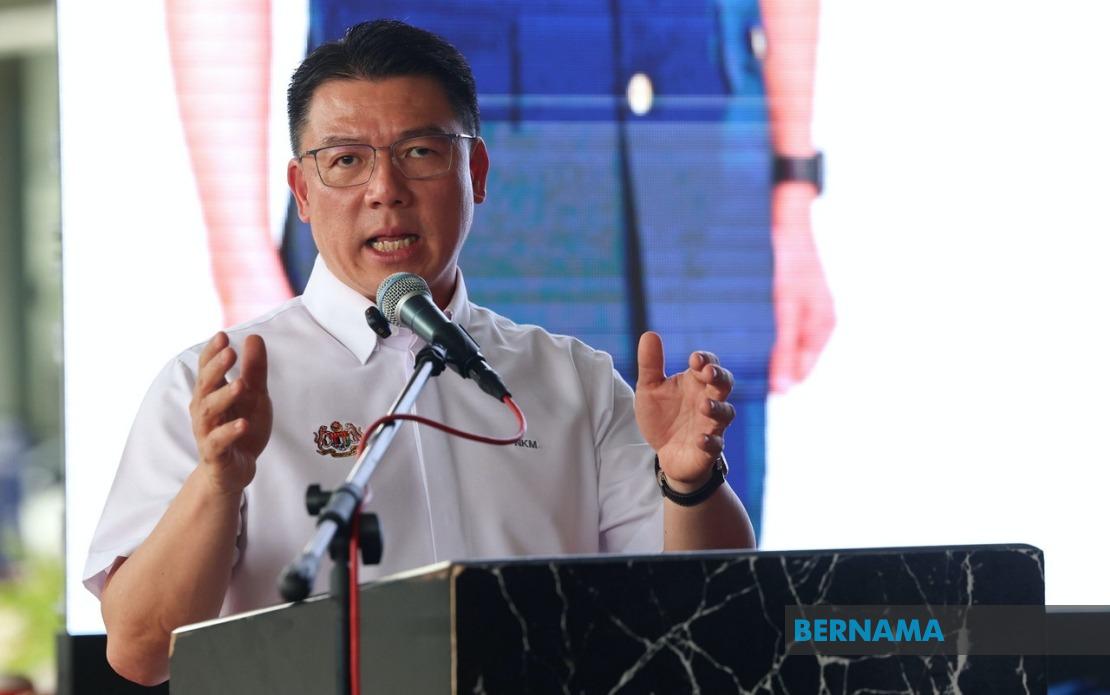
Malaysia is preparing to leverage Japan's decades of experience in waste management as part of a broader push to embed environmental responsibility into everyday practice and accelerate the nation's shift toward a circular economy. Housing and Local Government Minister Nga Kor Ming highlighted the potential benefits of adopting Japanese approaches during discussions with Japanese Ambassador to Malaysia Noriyuki Shikata, signalling that bilateral cooperation in this area could unlock significant progress for both nations.
Japan's reputation for rigorous waste separation at the household level—where citizens meticulously sort refuse into multiple categories before collection—offers Malaysia a tested model that has fundamentally transformed how Japanese society relates to consumption and disposal. Rather than treating waste as a final destination problem, the Japanese approach embeds sorting into daily routines, turning environmental stewardship into a civic norm rather than an administrative burden. For Malaysia, where waste generation continues to climb alongside urbanisation and economic growth, adopting such practices could help reshape public consciousness around resource management.
Nga's remarks underscore a critical insight: meaningful behavioural change in waste reduction cannot rely solely on regulation or top-down enforcement. Instead, he argued, environmental habits must be cultivated from childhood through education and normalisation. By integrating waste separation and recycling concepts into school curricula and family routines, Malaysia can foster an intrinsic cultural commitment to cleanliness and resource conservation. This generational approach represents a departure from punitive or compliance-based strategies, aiming instead for organic, self-sustaining shifts in how Malaysians interact with their environment and consumption patterns.
The two nations are formalising their commitment through a Memorandum of Understanding that was approved by Malaysia's Cabinet last month. This agreement is designed to facilitate structured knowledge transfer, encompassing technical expertise, innovative technologies, and proven operational methodologies across the waste management and circular economy sectors. Such formal partnerships are particularly valuable when crossing cultural and economic contexts, as they create institutional channels for learning and adaptation rather than relying on ad-hoc exchanges.
Malaysia has already begun laying groundwork for its circular economy transition. The National Circular Economy Blueprint provides strategic direction, while the recently established National Circular Economy Council offers coordinating structure for implementing policies across government and industry. Regulatory measures—including mandates for shopping malls to incorporate recycling facilities into their premises and ongoing efforts to eliminate single-use plastic bags—demonstrate a multi-pronged approach combining infrastructure, incentive, and restriction.
Japan's technological sophistication in waste sorting, treatment, and resource recovery also presents opportunities for Malaysian capacity-building. Japanese firms have developed advanced systems for separating mixed waste streams, recovering valuable materials, and converting organic waste into energy. These technologies, when combined with Malaysia's expanding manufacturing base and growing environmental sector, could position the country as a regional hub for circular economy innovation and expertise.
The economic implications for Malaysia are substantial. A circular economy reduces dependency on virgin raw materials, lowering import bills while creating new employment in recycling, refurbishment, and resource recovery industries. For a nation increasingly concerned with trade balances and manufacturing competitiveness, transitioning toward circular models can generate cost savings and new revenue streams while simultaneously reducing environmental footprints.
Ambassador Shikata's invitation to Malaysia to participate in GREEN×EXPO 2027 in Yokohama broadens the partnership's scope beyond bilateral exchange. International exhibitions of this scale offer opportunities to network with other governments, multinational corporations, and technology providers advancing sustainable practices globally. For Malaysian delegates, exposure to cutting-edge solutions and peer experiences from other nations navigating similar transitions could accelerate policy learning and technology adoption.
The timing of this Malaysia-Japan initiative is significant for Southeast Asia more broadly. As the region faces mounting waste challenges from rapid industrialisation, urbanisation, and rising consumer spending, Japan's model offers a proven alternative to the linear take-make-dispose paradigm that has dominated development. Should Malaysia successfully adapt Japanese practices, the country could become a demonstration case influencing neighbours such as Thailand, Indonesia, and Vietnam seeking to balance growth with environmental sustainability.
Cultural adaptation remains the central challenge. Japan's waste management success rests partly on deeply embedded social norms around collective responsibility, public spaces, and long-term thinking. Malaysia's more diverse, plural society with varying regional practices and economic circumstances will require tailored implementation strategies. Educational campaigns, community engagement, and phased policy rollouts may prove necessary to ensure that Japanese innovations take root effectively rather than remaining imported concepts disconnected from local reality.
The emphasis on teaching children reflects understanding that systemic change requires intergenerational transition. If today's schoolchildren internalise waste separation as normal practice, their adult habits will likely sustain the behaviour without ongoing enforcement costs. This patient, forward-looking approach contrasts with quick-fix regulatory solutions and positions Malaysia for sustained progress rather than temporary compliance bursts.
For Malaysian households and businesses, the practical implications involve learning new sorting protocols, accepting minor inconvenience in daily routines, and gradually recognising environmental benefits through cleaner neighbourhoods and reduced landfill pressures. Supermarkets, restaurants, manufacturers, and logistics operators will face compliance requirements and operational adjustments, though proponents argue that efficiency gains from material recovery ultimately offset initial implementation costs.
Successful Malaysia-Japan cooperation on circular economy and waste management could strengthen diplomatic ties while addressing one of Asia's most pressing environmental challenges. As both nations deepen engagement on this issue, the potential exists for a model of South-North knowledge exchange that benefits developing economies seeking sustainable pathways while leveraging advanced economies' technological and institutional experience. The coming years will reveal whether Malaysia can genuinely embed Japan's environmental disciplines into local practice or whether the partnership remains largely theoretical.

