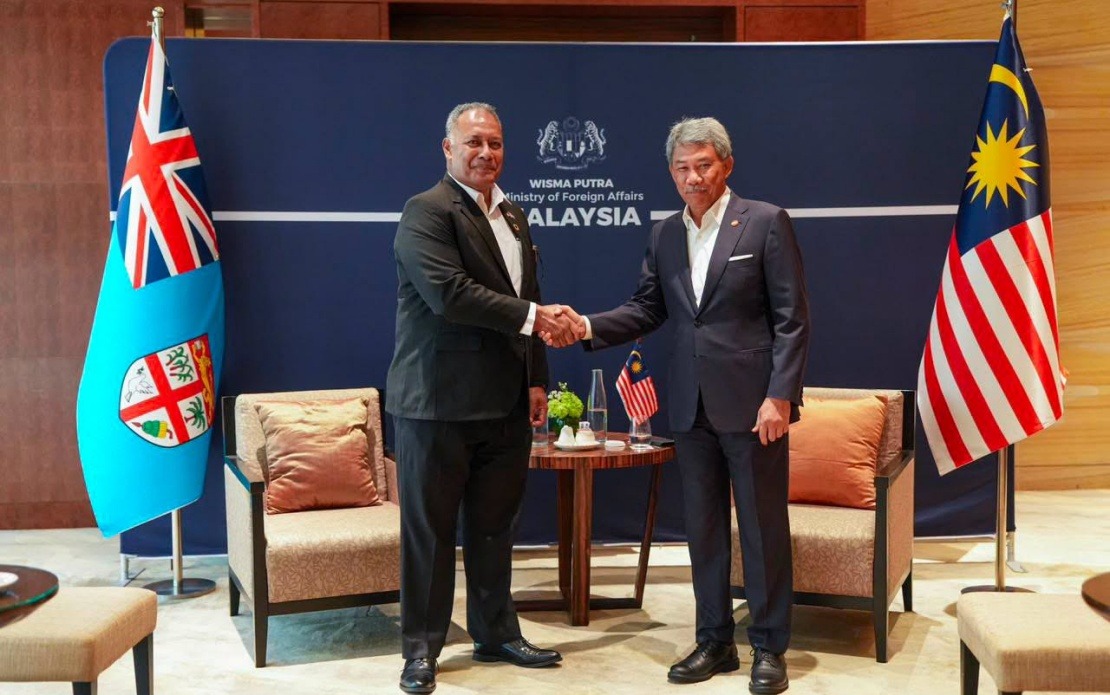
Malaysia and Fiji are charting a new course for their diplomatic partnership, with Foreign Minister Datuk Seri Mohamad Hasan and visiting Fijian Foreign and External Trade Minister Sakiasi Raisevu Ditoka identifying multiple avenues for strengthened cooperation during talks in Kuala Lumpur on Tuesday. The discussions, conducted over a working lunch, reflect growing momentum in the relationship between the two nations and underscore Malaysia's strategic interest in deepening engagement across the Pacific region.
The scope of the proposed collaboration spans several critical economic and developmental domains. Trade and investment feature prominently in the partnership framework, with both ministers recognising the potential for expanded commercial ties. Alongside these economic priorities, Malaysia and Fiji are exploring joint initiatives in human capital development—an area of particular significance for nations seeking to build skilled workforces capable of competing in regional and global markets. The partnership also encompasses forestry cooperation, a sector where Malaysia's experience in sustainable management practices could offer valuable knowledge transfer to Pacific island nations navigating their own resource stewardship challenges.
Renewable energy has emerged as a cornerstone of the bilateral agenda, reflecting broader regional trends toward decarbonisation and climate resilience. As Southeast Asian and Pacific nations grapple with energy security and environmental sustainability, collaborative projects in this space could yield mutually beneficial outcomes. Fiji, positioned in the Pacific with considerable exposure to climate change impacts, stands to gain from technological partnerships and expertise in clean energy development. Malaysia, meanwhile, can leverage its renewable energy experience while positioning itself as a trusted development partner in the region.
Cultural cooperation rounds out the partnership framework, acknowledging the importance of people-to-people connections and soft power in modern diplomatic relations. Such initiatives often provide the foundation upon which more substantial economic and political relationships are built, fostering goodwill and mutual understanding that transcends formal government-to-government engagement.
Ditoka's presence in Malaysia, spanning August 9 to 12, carries particular symbolic weight. On Monday, he officiated the reopening of Fiji's High Commission in Kuala Lumpur—a facility whose restoration signals renewed commitment from both sides to maintaining robust diplomatic infrastructure. The reopening of a high commission is rarely a routine administrative matter; it reflects deliberate policy choices and resource allocation decisions by governments prioritising certain relationships. For Malaysia, this investment in Fiji demonstrates a strategic calculus that values engagement with Pacific island states as part of a broader Indo-Pacific engagement strategy.
Bilateral trade data provides the quantitative backdrop to these diplomatic exchanges. The Foreign Ministry reported that total bilateral trade reached RM880.01 million (US$206.2 million) in 2025, a substantial figure that belies the geographic distance between the nations. Malaysian exports dominated the trade relationship, valued at RM867.92 million (US$203.41 million), while Malaysian imports from Fiji stood at RM12.09 million (US$2.80 million). This imbalance reflects typical patterns between developed and developing economies, yet the absolute volume suggests existing commercial connections that both governments are now seeking to expand.
The asymmetry in trade flows raises interesting questions for potential cooperation architecture. While Malaysia has established export markets in Fiji, the potential for increased two-way commerce remains underutilised. Human capital development initiatives and renewable energy partnerships could catalyse broader economic integration. For instance, technical training in clean energy sectors might create skilled workforces capable of undertaking projects that require Malaysian expertise, thereby generating new export opportunities for Malaysian firms and technologies.
Moreover, the timing of these discussions reflects Malaysia's broader strategic positioning in an era of intensifying great power competition in the Indo-Pacific. Pacific island nations, though geographically distant and individually modest in economic scale, hold geopolitical significance as sovereign voices in regional forums and international organisations. By cultivating closer ties with Fiji and other Pacific states, Malaysia signals its commitment to a rules-based regional order and differentiates itself from approaches that marginalise smaller nations.
The discussion of regional and global issues between Mohamad and Ditoka, mentioned in the minister's public statement, suggests these conversations extended beyond narrow commercial concerns. Pacific island states face distinctive challenges ranging from climate change and rising sea levels to maritime security and resource management. Malaysia's input on regional governance frameworks, ASEAN perspectives on Indo-Pacific affairs, and Southeast Asian approaches to emerging global challenges could prove valuable to Fijian policymakers navigating complex international dynamics.
Fiji's strategic location in the Pacific also positions it as a potential hub for Malaysian engagement with the broader region. The nation hosts significant diplomatic infrastructure and serves as a meeting point for Pacific island states. By strengthening ties with Fiji, Malaysia potentially opens pathways to deeper relationships with other Pacific nations, multiplying the return on diplomatic investment.
The emphasis on human capital development deserves particular attention. Malaysian universities and vocational institutions have established regional reputations, and scholarship or training programme expansions could deepen people-to-people connections while building long-term goodwill. Fijian professionals trained in Malaysian institutions often become advocates for their alma mater nations, creating networks that serve both countries' interests.
Looking forward, the next phase of Malaysia-Fiji cooperation will likely involve translating these broad commitments into concrete programmes and agreements. The reopened High Commission provides the institutional foundation for accelerating this work. Trade missions, technical delegations, and joint studies on specific sectors such as renewable energy and forestry should naturally follow these political-level discussions.
The Malaysia-Fiji partnership, still in its consolidation phase, reflects a deliberate strategy by Kuala Lumpur to extend its diplomatic reach beyond traditional Southeast Asian neighbours. In an increasingly multipolar world where medium powers seek to amplify their influence through strategic partnerships, Malaysia's engagement with Pacific nations represents a calculated expansion of its diplomatic footprint and a hedging strategy against regional uncertainties.

