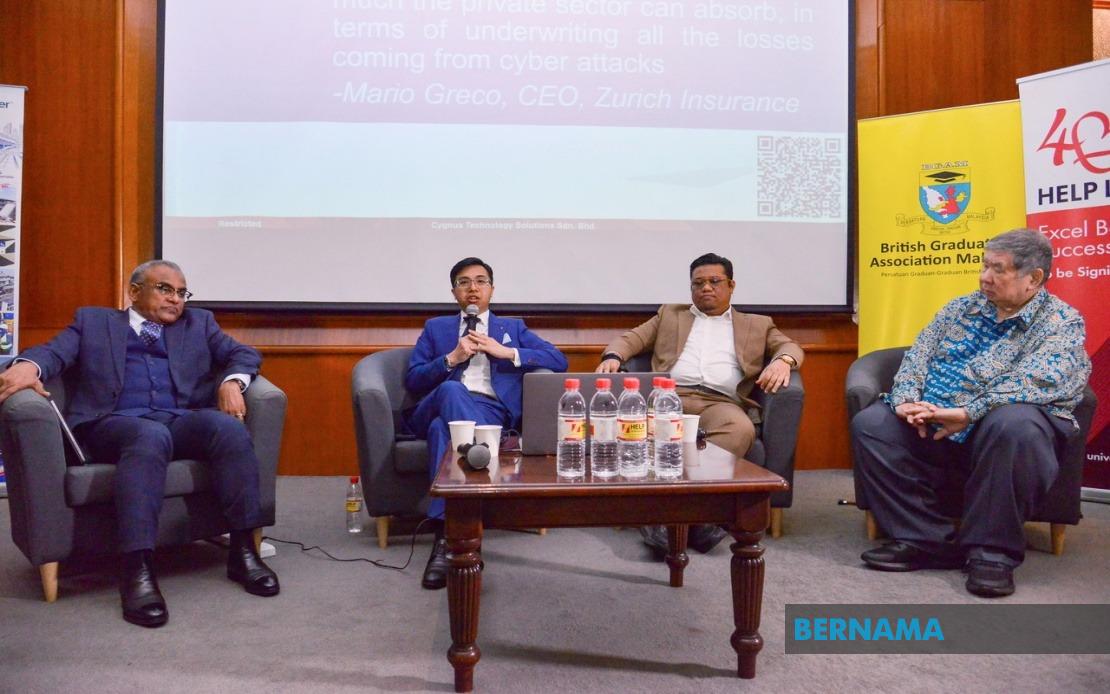
Malaysia's battle against fraud has intensified dramatically, with authorities documenting more than 66,000 scam cases and cumulative losses reaching approximately RM2.97 billion in the past year alone. The scale of this crisis reflects a troubling transformation in how criminal enterprises operate—moving beyond simple deception toward highly coordinated operations that leverage cutting-edge technology and psychological manipulation. Speaking at the BGAM Lecture Series on Scam Awareness 2.0, Datuk Kamarudin Md Ali, an executive member of the Malaysia Crime Prevention Foundation and president of the British Graduates Association Malaysia, characterised the threat as having evolved from isolated criminal incidents into a systemic national challenge that threatens individuals, families and commercial enterprises across all socioeconomic segments.
What distinguishes contemporary scams from their historical predecessors is the sophistication with which criminal syndicates now orchestrate their operations. Rather than relying on crude phishing emails or basic telephone fraud, these networks increasingly deploy artificial intelligence systems capable of generating convincing deepfakes, automate their social engineering campaigns with algorithmic precision, and coordinate across multiple digital platforms simultaneously. This technological advancement has fundamentally altered the landscape of financial crime in Malaysia and the broader Southeast Asian region. Datuk Kamarudin emphasised that addressing this phenomenon demands a shift in public consciousness—transforming every educated citizen into an informed defender against scammers rather than relying exclusively on reactive law enforcement responses after crimes have already victimised people.
The intellectual dimension of contemporary scam activity emerged prominently during the forum discussion, with participants highlighting how fraudsters have essentially weaponised human psychology. Prof Datuk Seri Dr Akhbar Satar, director of the HELP University Institute of Criminology and Criminal Justice, articulated a compelling paradox: scammers do not primarily hack computers, but rather hack human psychology itself. This observation cuts to the heart of why technological solutions alone cannot adequately address the problem. Whether examining corruption cases or elaborate scam networks, the underlying mechanism remains consistent—criminal activity flourishes precisely when integrity deteriorates. The professor argued that universities bear significant responsibility in cultivating digital literacy and reinforcing ethical decision-making frameworks among graduates, positioning educational institutions as frontline defenders in the broader crime prevention ecosystem.
The Southeast Asian dimension of this crisis extends well beyond Malaysia's borders and reveals a deeply concerning regional pattern. Datuk Seri Ramli Mohamed Yoosuf, former director of Bukit Aman's Commercial Crime Investigation Department, presented sobering figures during his keynote address: Southeast Asia has become the global epicentre for commercial crime, with scam losses across the region projected to reach between USD88 billion and USD114 billion in 2025 alone. This staggering figure underscores the magnitude of organised criminal enterprise operating throughout the region. Myanmar, Cambodia, Laos and the Philippines host compound operations dedicated to orchestrating these scams, generating approximately USD40 billion annually through increasingly sophisticated mechanisms including AI-powered deepfakes, cryptocurrency laundering networks, and exploitation of trafficked labour sourced from more than 80 countries.
Malaysia's policy response has accelerated in recent months, reflecting heightened official acknowledgement of the threat's severity. The recently enacted Cybersecurity Act 2024 represents a legislative attempt to strengthen the nation's defensive posture against digital crimes. Simultaneously, Malaysian authorities have enhanced compliance with Financial Action Task Force international standards—critical for combating money laundering and terrorist financing connected to organised scam syndicates. The establishment of the National Scam Response Centre signals commitment to improved inter-agency coordination, enabling more rapid identification and disruption of criminal networks. However, Datuk Seri Ramli cautioned that scam syndicates maintain a persistent capacity for rapid evolution, outpacing regulatory frameworks and necessitating sustained innovation in both technological and organisational responses.
Tan Sri Dr Syed Hamid Albar, former Home Minister and current Asia e University chancellor, reframed the scam crisis as extending far beyond conventional financial crime metrics. In his view, the proliferation of scams represents a broader assault on public trust and social cohesion within Malaysia's digital ecosystem. When citizens lose confidence in the security of digital transactions and online interactions, the consequences ripple across the economy, eroding faith in financial institutions, e-commerce platforms and even government digital services. This trust deficit becomes self-reinforcing—citizens increasingly retreat from digital engagement, fragmenting the nation's transition toward a digital economy. Syed Hamid advocated for a comprehensive, whole-of-society approach to scam prevention, arguing that enforcement mechanisms alone—however robust—invariably arrive too late, after damage has already been inflicted on victims and economic productivity lost.
Education emerges as the critical preventive lever across multiple expert contributions to the forum. Rather than waiting for law enforcement to respond after crimes occur, proactive development of digital literacy and critical thinking skills can substantially reduce a population's vulnerability to manipulation. This preventive paradigm represents a fundamental shift from reactive policing toward community-based resilience building. Universities play a particularly vital role in this ecosystem, not merely by teaching technical cybersecurity skills but by instilling ethical reasoning and promoting informed decision-making among future professionals and leaders who will shape Malaysia's institutional responses to financial crime.
The organisational structure of the scam prevention forum itself—bringing together government leaders, law enforcement specialists, cybersecurity professionals, academics, industry practitioners and civil society representatives—reflects recognition that fragmented institutional responses cannot adequately address a threat operating across multiple domains simultaneously. Datuk Yong Soo Heong, president of the Malaysian Press Institute, moderated substantive discussions with panellists including MCPF executive Eugene Teow and Rahmat Fitri Abdullah from the Malaysia Anti-Scam Community Organisation. These conversations navigated emerging scam typologies, investigative methodologies, digital trust frameworks and practical protective measures available to both individuals and organisations. The deliberate inclusion of media leadership acknowledges that public awareness campaigns and media literacy represent essential components of population-level defense.
The Malaysian case study offers instructive lessons for other Southeast Asian nations confronting similar challenges. Regional coordination mechanisms remain underdeveloped, allowing criminal syndicates to exploit jurisdictional fragmentation and varying regulatory standards. Cross-border intelligence sharing, harmonised definitions of cybercrime offences, and coordinated prosecution frameworks could substantially complicate the operational environment for organised scam networks currently exploiting geographical dispersion to avoid capture. The phenomenon of trafficked labour in scam compounds particularly demands regional attention—these operations effectively constitute modern slavery alongside financial criminality, necessitating responses integrating labour rights, anti-trafficking enforcement and financial crime investigation.
Looking forward, Malaysia's institutional capacity to address scams will likely depend on sustained commitment to the whole-of-society model articulated at the forum. Technological innovation will remain necessary but insufficient without parallel investment in public education, ethical reasoning and strengthened institutional integrity. The projected growth in AI-generated deepfakes and cryptocurrency-enabled money laundering suggests that scam sophistication will continue accelerating. Maintaining an effective defensive posture requires treating scam prevention not as a temporary crisis response but as a permanent institutional priority commanding resources, expertise and leadership attention. The convergence of criminal innovation and technological capability means Malaysia must essentially build organisational muscles capable of continuous adaptation, learning and strategic adjustment—a fundamentally different challenge from managing conventional crime categories.

