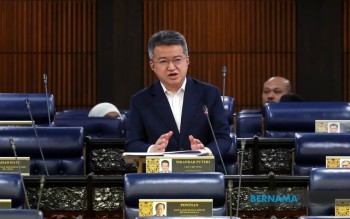
Deputy Finance Minister Liew Chin Tong has signalled that the government will not adjust its fiscal framework for Budget 2027 despite mounting pressures from elevated global crude oil prices, which have triggered a spike in fuel subsidy spending. Speaking during parliamentary oral questions on July 15, Liew indicated that Malaysia's first-half 2026 financial performance does not yet warrant a reassessment of the budget targets being prepared for presentation in October, though officials will maintain close scrutiny of economic conditions in the interim.
The decision to hold steady on fiscal projections reflects a carefully calibrated approach by the Finance Ministry. Liew acknowledged that surging oil prices have forced an additional RM40 billion in government subsidy expenditure, a substantial sum that underscores the vulnerability of Malaysia's public finances to commodity price swings. This figure demonstrates the direct transmission mechanism linking global energy markets to domestic fiscal pressures—a persistent challenge for oil-dependent economies in Southeast Asia.
However, the ministry appears to be banking on a countervailing benefit: rising petroleum revenues. According to Liew, each US$1 increase per barrel in world crude oil prices generates approximately RM300 million in additional petroleum-related government revenue. While this offset does not eliminate the subsidy burden entirely, it significantly softens the fiscal impact. Liew was careful to note that this calculation excludes dividends from Petronas, the national oil corporation, which could further cushion the blow should crude prices remain elevated.
The fiscal resilience being demonstrated here reflects a broader confidence within Malaysia's economic policymaking establishment about the government's capacity to absorb external shocks without dismantling its medium-term consolidation strategy. Rather than abandoning or deferring targets, the government has chosen to implement what Liew described as immediate, comprehensive, and structured intervention initiatives designed to keep overall expenditure within manageable bounds. This suggests officials believe they can navigate current pressures through existing policy tools and fiscal discipline.
Monitoring mechanisms have been activated to track both revenue performance and economic conditions more closely. Liew highlighted the role of a crisis management task force operating under the National Economic Action Council (NEAC), which convenes weekly to assess energy security, supply chain vulnerabilities, and the availability of basic goods. This institutional machinery reflects growing concern about spillover effects from the West Asia conflict, which has created additional uncertainty beyond simple oil price movements. The task force's ongoing engagement serves both as an early warning system and a coordination platform for cross-agency responses.
The revenue collection performance has become critical to the government's ability to finance spending without enlarging the deficit. Officials are monitoring tax compliance and collection efficiency with particular attention, recognising that revenue performance in the first half of 2026 will substantially influence the fiscal numbers announced alongside Budget 2027. This revenue focus reflects a shift in recent fiscal strategy away from expenditure cuts alone and toward more balanced approaches combining spending restraint with revenue mobilisation.
Liew's parliamentary statement addressed concerns raised by Mohd Syahir Che Sulaiman (PN-Bachok) about potential new taxation measures to offset subsidy pressures. While Liew did not explicitly rule out new taxes, the framing of the government's position emphasised existing intervention mechanisms and expenditure restructuring rather than immediate revenue enhancements. This rhetorical stance may reflect political sensitivity around taxation announcements, but it also suggests the government believes current measures suffice for now.
The strategy hinges on what officials describe as targeted subsidies and restructured expenditure priorities. These euphemisms likely refer to ongoing discussions about means-testing fuel subsidies and reallocating resources away from less critical areas. The government has invested political capital in subsidy rationalisation over several years, and Liew's comments suggest this programme remains active. Improved spending efficiency across the federal government forms another pillar of the consolidation strategy, though measuring such efficiency gains independently is difficult.
Global economic uncertainties and geopolitical tensions in West Asia create a backdrop of genuine volatility that complicates fiscal planning. The fiscal position Malaysia is defending—with a stated commitment to medium-term consolidation—must be understood within this context. A full reassessment might prove premature if officials believe current pressures are transient. Yet postponing difficult decisions until Budget 2027 is tabled risks being overtaken by events if conditions deteriorate further in coming months.
For Malaysian taxpayers and businesses, the government's apparent confidence in maintaining existing fiscal targets carries mixed implications. On one hand, it suggests policymakers have confidence in the economy's underlying resilience and the effectiveness of existing intervention mechanisms. On the other hand, it may reflect an unwillingness to confront the possibility that structural adjustments—including potentially contentious tax changes or deeper subsidy reforms—might become unavoidable. The October tabling of Budget 2027 will reveal whether this confidence was well-placed or whether events forced a recalibration after all.

