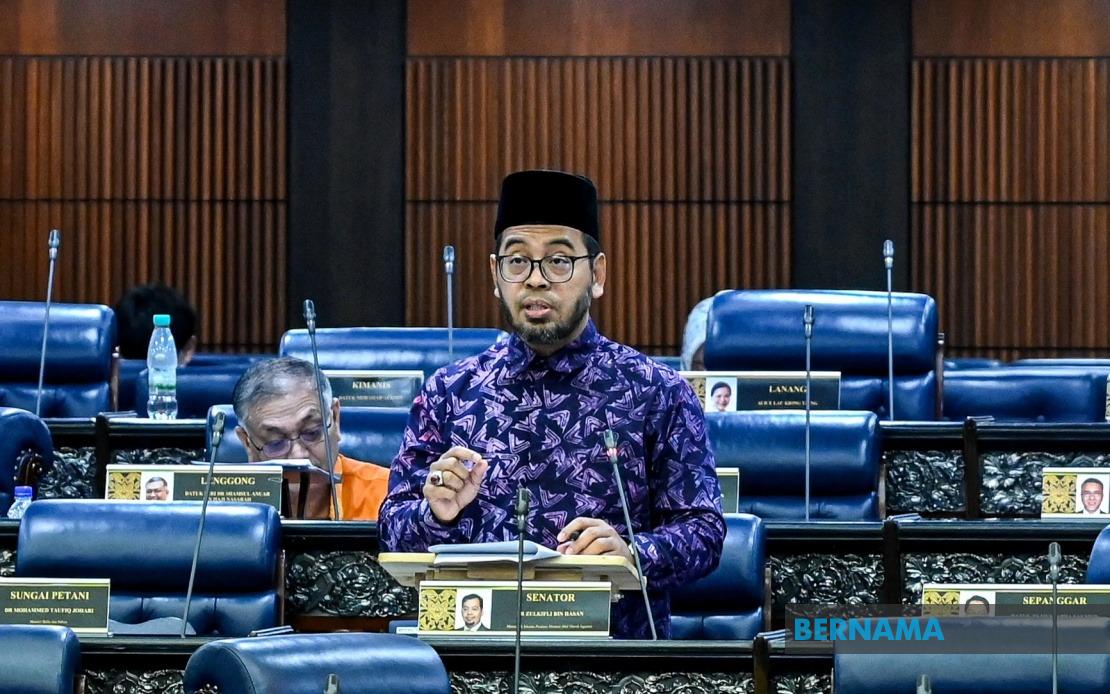
The Malaysian government is mounting a comprehensive, multi-agency response to counter the proliferation of Islamic teachings deemed deviant, which are exploiting digital platforms and cross-border communications to reach audiences. Minister in the Prime Minister's Department (Religious Affairs) Dr Zulkifli Hasan revealed during parliamentary proceedings that authorities are treating this as a systemic challenge requiring coordinated intervention across the public service, signalling the seriousness with which policymakers view the issue.
The shift in methodology employed by groups spreading unorthodox doctrines represents a fundamental challenge to traditional enforcement approaches. What once transpired through closed-door gatherings has now migrated to encrypted messaging applications, social media platforms, and online forums, making detection and intervention considerably more complex. These teachings are frequently packaged within ostensibly benign frameworks—personal development courses, charitable work, alternative wellness practices, and informal religious study circles—allowing them to evade immediate scrutiny while establishing footholds among Malaysian communities.
Dr Zulkifli highlighted that proponents of these teachings employ sophisticated persuasion techniques drawing on motivational rhetoric, spiritual narratives, psychological frameworks, and conspiracy theories, often amplified by influential figures with significant followings. This multimedia approach exploits cognitive vulnerabilities and appeals to identity-seeking individuals, particularly young people seeking spiritual meaning and community belonging. The deliberate adoption of mainstream presentation styles demonstrates strategic awareness among organisers of how to navigate regulatory environments while cultivating adherent networks.
The enforcement response involves an unprecedented coordination mechanism spanning the Department of Islamic Development Malaysia (JAKIM), state Islamic religious authorities, the Royal Malaysian Police, the Malaysian Communications and Multimedia Commission, the National Security Council, municipal governments, the Immigration Department, and the National Registration Department. This orchestrated approach reflects recognition that fragmented institutional responses prove insufficient against decentralised, digitally-enabled movements. Recent operations underscore the scale of the challenge: authorities detained 288 Ahmadiyya Qadiani followers in Sabah on May 31, and apprehended 226 foreign nationals during a raid targeting a Syiah centre in Petaling Jaya, demonstrating that both domestic and transnational networks require simultaneous attention.
Beyond enforcement, the government is implementing preventative interventions designed to strengthen religious conviction among vulnerable populations. These measures include targeted counselling for individuals and leaders already influenced by unorthodox teachings, Syariah court-mandated placement in faith rehabilitation facilities, and structured programmes supervised by Islamic authorities aimed at consolidating orthodox religious understanding. This rehabilitative dimension acknowledges that enforcement alone cannot address underlying factors driving individuals toward heterodox movements, requiring instead holistic engagement with affected persons.
The establishment of the National Steering Committee to Address Threats to Faith represents institutional recognition of the necessity for sustained, coordinated policy formulation. This committee brings together representatives from the Ministry of Education, Ministry of Higher Education, Ministry of Home Affairs, JAKIM, and other agencies, positioning religious resilience-building as a cross-portfolio priority rather than isolated concern. The structure signals commitment to preventative approaches alongside enforcement, embedding religious orthodoxy-strengthening into national institutional architecture.
Educational initiatives form a cornerstone of the preventative strategy. The Institut Pemantapan dan Perkaderan Akidah Malaysia (IPHAM) operates dedicated programmes, whilst the My Insaniah Programme and Rakan Masjid Programme, developed in collaboration with the Ministry of Youth and Sports, extend outreach activities into community settings. These initiatives attempt to counteract the appeal of unorthodox movements by offering competing narratives of spiritual development and community engagement rooted in recognised Islamic institutions.
Particular emphasis has been placed on youth engagement through curriculum strengthening. The KAFA 2.0 programme, focusing on Quranic learning and foundational Islamic principles, has been redesigned to cultivate stronger religious identity and resilience among young Malaysians. By fortifying orthodox religious understanding during formative educational periods, policymakers aim to establish psychological and doctrinal foundations resistant to alternative interpretations circulating online.
The Malaysian approach reflects broader Southeast Asian patterns of governments grappling with the intersection of digital connectivity and religious heterodoxy. Unlike geographically isolated populations of previous decades, contemporary youth maintain simultaneous exposure to multiple theological perspectives through transnational digital networks. This presents unprecedented challenges for states attempting to maintain religious orthodoxy, requiring adaptation of traditional enforcement mechanisms to digital contexts where conventional surveillance and restriction prove ineffective.
The cross-border dimensions of these movements complicate national responses. Foreign nationals detained in operations suggest international networks supporting unorthodox teachings within Malaysia, necessitating coordination with immigration authorities and international partners. This transnational element transforms what might initially appear as domestic religious matters into questions of border security and national sovereignty, explaining the involvement of security-focused agencies alongside purely religious authorities.
For Malaysian citizens and residents, these developments carry significant implications. The intensification of monitoring activities, whilst positioned as protective, inevitably affects digital freedoms and privacy expectations. The broad categorisation of teachings as deviant creates potential for mission creep in surveillance activities, with borderline cases potentially subjected to scrutiny. Understanding official definitions of deviance becomes crucial for individuals engaging with Islamic content online or participating in religious study groups.
The effectiveness of this comprehensive approach remains uncertain. Digital platforms provide unprecedented obstacles to enforcement, with decentralised networks potentially reconstituting rapidly following disruptions. Educational interventions require sustained commitment and demonstrable superiority over alternative offerings to prevent susceptible individuals from seeking meaning elsewhere. The long-term success of Malaysia's strategy will depend upon maintaining institutional coordination, continuously adapting surveillance capabilities to evolving digital tactics, and ensuring preventative programmes genuinely address underlying psychological and social drivers attracting individuals toward unorthodox movements rather than merely offering competing institutional alternatives.

