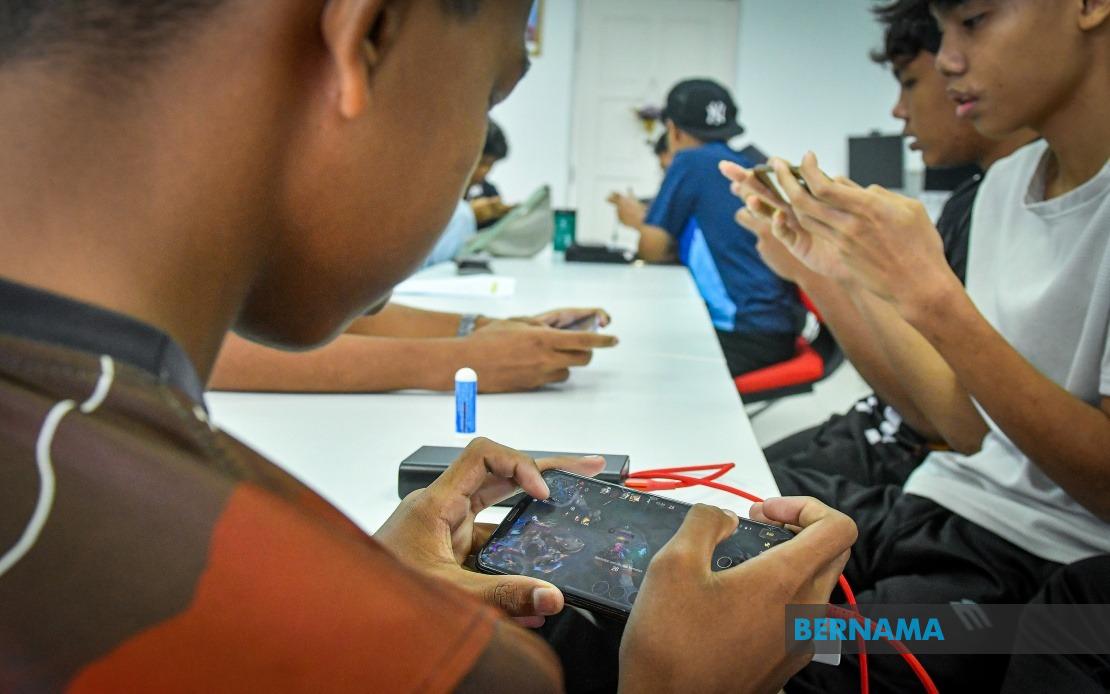
The Malaysian government is ramping up public education efforts to ensure parents understand and enforce the ban on social media accounts for children under 16 years old, Deputy Communications Minister Teo Nie Ching announced during the fourth installment of the Safe Internet Campaign in Johor Bahru on August 22. The initiative represents a broader push to position parental responsibility at the centre of child digital safety, rather than relying solely on prohibitive measures or platform compliance.
The core thrust of the campaign centres on shifting the narrative away from outright restrictions towards active parental engagement and digital literacy at the household level. While the MADANI Government's policy explicitly forbids social media accounts for minors aged 16 and below, authorities recognise that enforcement cannot succeed without buy-in from families themselves. Teo stressed that the message to parents transcends simple prohibition—instead, it emphasises the need for education, guidance, and ongoing dialogue about safe online behaviour. This approach acknowledges that many children will eventually encounter digital platforms and requires them to develop critical thinking skills about their online presence and interactions.
A critical nuance in the government's stance is that parents retain the legal ability to register digital accounts on behalf of their children for legitimate purposes, such as educational applications or family communication tools. However, this allowance comes with a responsibility to implement preventive measures and establish self-regulation protocols within the home environment. The distinction is important: the policy does not eliminate parents' discretion but rather places the burden of oversight and decision-making squarely on guardians. Parents are expected to monitor which applications their children access, how much time they spend online, and whether devices are being misused for purposes contrary to the age-restriction policy.
Enforcement mechanisms are being coordinated through the Malaysian Communications and Multimedia Commission (MCMC), which handles reports of account misuse involving minors. When violations are identified, the MCMC submits requests to social media platform operators to remove the accounts in question. This collaborative approach recognises that platform cooperation is essential to making age restrictions meaningful in practice. Since June 1, 2024, Malaysia has operated under the Child Protection Code and Risk Mitigation Code, which mandate age-verification procedures using official identity documents including the MyKad, passport, or MyDigital ID. This regulatory framework, enacted pursuant to the Online Safety Act 2025, represents one of the region's more stringent approaches to protecting minors from premature social media exposure.
The Safe Internet Campaign itself has achieved considerable reach across Malaysia's education system. The Johor event served primarily to galvanise parent-teacher associations, recognising them as crucial intermediaries between schools and families. To date, the campaign has been rolled out across 5,946 primary schools, 2,416 secondary schools, 1,285 Chinese-language schools, and 524 Tamil-language schools. The expansion into tertiary and vocational institutions—reaching 68 universities, 67 sixth-form and vocational colleges, and six teacher training institutes—indicates an attempt to engage young adults and future educators in understanding the rationale behind age restrictions and digital responsibility.
Geographically, the campaign remains in mid-rollout, having moved beyond peninsular Malaysia to target Sabah in September and Sarawak in October. This phased expansion suggests a recognition that digital safety concerns are not uniform across the nation and that regional engagement is necessary to address local contexts and parental demographics. Sabah and Sarawak, with distinct demographic profiles and varying internet penetration rates, require tailored messaging to ensure the campaign resonates effectively.
For Malaysian parents and educators, the campaign signals a government commitment to shaping the digital environment for minors through a combination of regulatory requirement and community education. The emphasis on parental agency reflects an understanding that legislation alone cannot protect children; rather, it provides a framework within which families must actively engage. Parents who view the age-16 restriction as governmental overreach should consider the policy's foundation in evidence from developmental psychology and research into adolescent brain development, which suggests that young teenagers are particularly vulnerable to social media's psychological effects, including anxiety, sleep disruption, and disordered social comparison.
The policy also creates potential friction points for Malaysian families with international connections, as relatives abroad may question why their young cousins cannot maintain accounts on platforms used for global communication. However, the policy allows for legitimate supervised use through parental accounts, potentially offering a middle ground for families seeking to balance isolation from digital tools with safety concerns.
From a Southeast Asian perspective, Malaysia's approach sits between the permissive regulatory models of some countries and the more draconian approaches of others. The emphasis on parental verification and account removal rather than blocking platforms entirely suggests a pragmatic middle path. Nevertheless, the policy's success depends heavily on whether parents themselves possess sufficient digital literacy to implement monitoring effectively. Many Malaysian parents, particularly in older demographics, may lack the technical knowledge to supervise their children's device use comprehensively, potentially undermining the policy's intentions.
Teo's emphasis on prevention and self-regulation at the household level also hints at potential resource constraints in government enforcement capacity. By delegating primary responsibility to parents and schools, authorities acknowledge that centralised monitoring of millions of accounts is neither feasible nor proportionate. This decentralisation places significant burdens on families and educational institutions, which may not be equally equipped to manage the task. The campaign's roadshow approach attempts to address this gap by building awareness and providing guidance, but its long-term effectiveness remains contingent on sustained parental commitment and cultural shifts in how Malaysian families approach their children's digital engagement.

