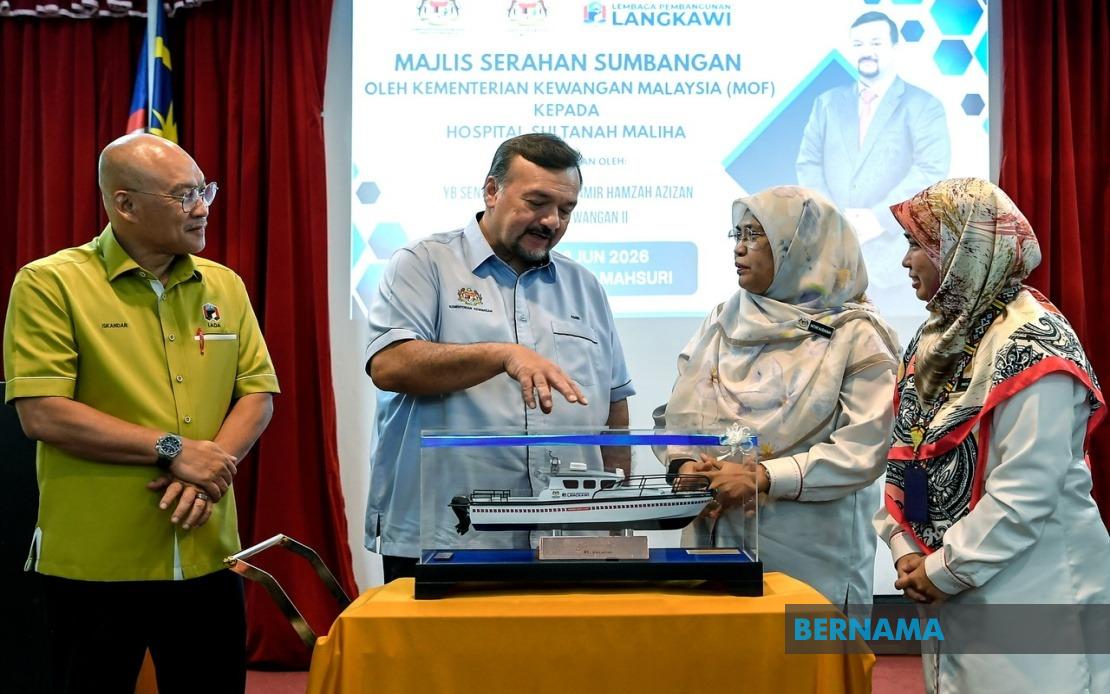
Malaysia's Ministry of Finance has committed RM5.5 million to establish a dedicated sea ambulance service for Langkawi, marking a significant investment in improving emergency medical care for the island's residents and millions of annual visitors. Finance Minister II Datuk Seri Amir Hamzah Azizan announced the initiative is designed to strengthen healthcare accessibility by providing faster and more efficient emergency response, with the service expected to commence operations early next year. The vessel will be operated by Hospital Sultanah Maliha, the principal healthcare facility on the island, and represents a major upgrade to Langkawi's existing medical infrastructure.
Current patient transfer arrangements present substantial operational challenges that the new service aims to resolve. Presently, individuals requiring urgent medical attention must rely on conventional passenger ferry services to reach mainland referral hospitals, a process that becomes increasingly problematic when ferry schedules are reduced or suspended due to weather conditions. These constraints prove particularly acute during genuine medical emergencies when speed is paramount, leaving hospital administrators and patients' families with limited options for rapid transport. The dedicated ambulance vessel will eliminate this dependency on civilian maritime services, enabling medical personnel to manage patient movement according to clinical priorities rather than commercial ferry timetables.
The vessel itself is purpose-built to accommodate emergency medical requirements and patient dignity. According to specifications outlined by Amir Hamzah, the sea ambulance can transport up to two stretcher cases simultaneously, with a crew capacity of twelve personnel including medical and support staff. This configuration ensures patients receive continuous clinical monitoring and intervention throughout the journey to the mainland, while dedicated medical equipment and controlled environments protect patient privacy and comfort during what can be a distressing transition. The inclusion of proper medical facilities aboard addresses a critical gap in current practice, where patients enduring ferry journeys must rely on basic facilities not designed for acute medical care.
Beyond the ambulance procurement itself, the Finance Ministry is simultaneously strengthening Hospital Sultanah Maliha's overall capacity through a RM700,000 equipment package. This complementary investment reflects a comprehensive approach to upgrading Langkawi's healthcare system, targeting both emergency transportation and hospital-based clinical capabilities. The equipment allocation spans medical devices essential for diagnosis and treatment, alongside modern information technology infrastructure that connects the island facility with broader Malaysian health networks. These additions directly enhance the hospital's ability to deliver contemporary healthcare standards comparable to major urban facilities, particularly important given Langkawi's role as a premier tourist destination welcoming millions of international visitors annually.
Digitalisation emerges as a critical component of this healthcare modernisation effort. The Electronic Medical Record system represents a fundamental shift in how Langkawi's medical teams document and access patient information, replacing traditional paper-based systems with integrated digital platforms. Hospital Sultanah Maliha will receive specially designed mobile workstations allowing clinical staff to input patient data directly into the EMR system during ward rounds and consultations. This technological infrastructure not only streamlines administrative processes but crucially enables real-time information sharing between Langkawi's hospital and referral centres on the mainland, ensuring doctors and specialists have complete, current medical histories immediately available when treating transferred patients.
The practical benefits of this connectivity extend far beyond administrative convenience. When a patient arrives at a mainland hospital following sea ambulance transfer, receiving physicians immediately access comprehensive medical records, recent test results, medication histories, and clinical notes from Hospital Sultanah Maliha. This seamless information flow eliminates dangerous delays inherent in traditional inter-hospital coordination, allowing specialist teams to begin definitive treatment without the dangerous interval currently required to physically transport and verbally communicate patient details. For time-sensitive conditions such as cardiac emergencies, stroke, or severe trauma, these minutes of information acceleration can fundamentally alter clinical outcomes and patient survival rates.
Langkawi's geographic isolation has historically constrained healthcare delivery despite the island's economic importance and tourism prominence. As a designated Federal Territory operating under the Langkawi Development Authority framework, the island requires specialised attention to infrastructure deficiencies that isolation creates. The approximately 100-kilometre distance to mainland referral hospitals transforms routine medical transfers into complex logistical undertakings, particularly when weather or technical factors disrupt ferry operations. This investment represents tacit government recognition that treating Langkawi's healthcare challenges requires targeted, tailored solutions distinct from peninsular approaches, acknowledging how island geography fundamentally reshapes healthcare delivery parameters.
The timing of this initiative reflects broader Malaysian healthcare policy priorities emphasising emergency response acceleration and service modernisation. Successive governments have identified emergency medical capacity as essential to health system performance, with rapid patient access to advanced facilities recognised as critical to reducing preventable mortality and morbidity. Langkawi's sea ambulance programme aligns with national objectives to standardise emergency capabilities across diverse geographic contexts, ensuring that island residents and visitors receive equivalent access to urgent medical intervention regardless of location-based isolation. This represents a meaningful commitment to healthcare equity across Malaysia's more remote and insular communities.
Tourist health considerations further justify this investment. Langkawi annually attracts millions of international visitors engaging in water sports, diving, and other activities carrying embedded injury risks. The existing ferry-dependent system places international tourists in vulnerable positions when medical emergencies occur during their island stay, potentially creating diplomatic complications when citizens require emergency medical evacuation. A dedicated sea ambulance service substantially improves response capacity for tourist-related medical incidents, demonstrating Malaysia's commitment to visitor safety and professional emergency management. This capability enhancement protects both individual wellbeing and Malaysia's reputation as a safe, well-serviced tourist destination.
The operational commence date of early next year establishes a defined timeline for procurement, vessel construction or acquisition, and staff training. Hospital Sultanah Maliha must develop operational protocols, establish crew competencies in maritime emergency medicine, and integrate the sea ambulance into broader emergency response procedures linking island facilities with mainland networks. This preparatory period requires significant administrative coordination between the hospital administration, Ministry of Health colleagues operating referral centres, maritime authorities regulating vessel operations, and Finance Ministry oversight bodies managing the capital investment. Successful implementation demands meticulous planning extending well beyond vessel deployment to encompassing training, protocols, and systems integration ensuring the service functions effectively when activated during genuine emergencies.
For Malaysian healthcare observers, this investment demonstrates expanding government recognition that geographic challenges demand proportionate resource allocation. Remote communities historically received reactive rather than proactive infrastructure investment, with facilities developed only after acute service failures generated political pressure. Langkawi's sea ambulance programme reverses this paradigm by prospectively identifying geographic vulnerabilities and addressing them through sustained capital commitment. This preventive approach potentially establishes precedent for other isolated Malaysian communities facing comparable healthcare access constraints, suggesting broader institutional awareness that equitable health outcomes require tailored solutions acknowledging diverse geographic and demographic contexts across the nation.

