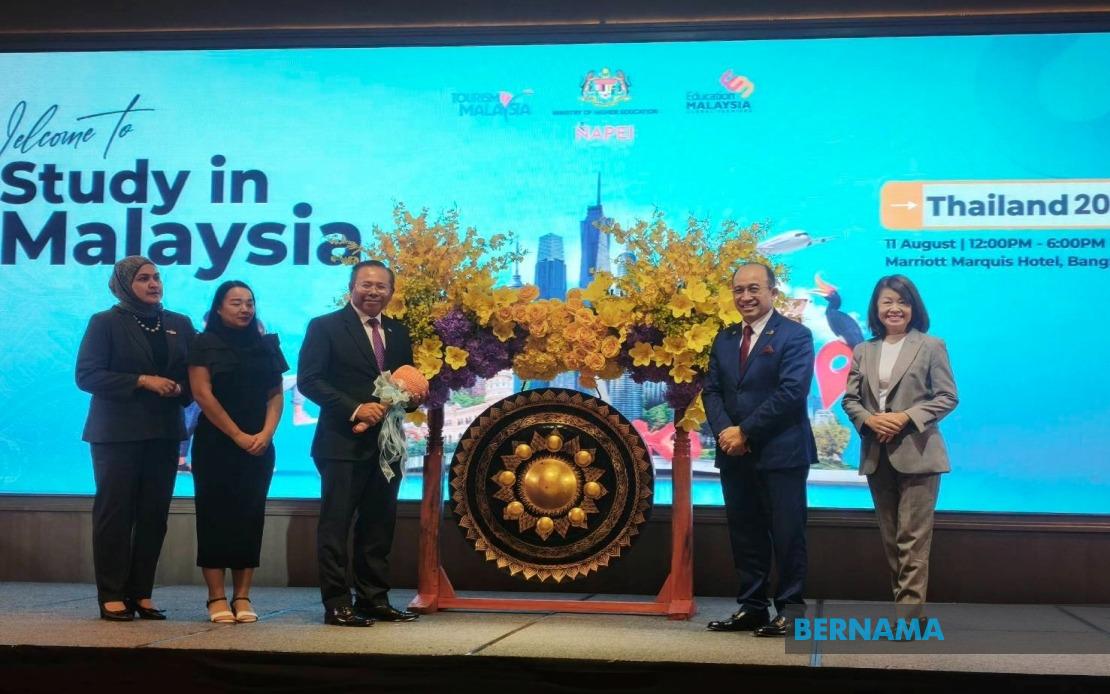
Malaysia is mounting a concerted campaign to draw a substantially larger cohort of Thai students into its higher education system, with officials banking on the nation's geographical advantages and economic competitiveness to overcome regional rivals. The strategy reflects a strategic recognition that Thailand represents an accessible and growing market for Malaysian institutions, particularly given the relatively short distances between major Thai cities and Malaysian education hubs. Officials have set their sights on exceeding a 20 per cent increase in enrolments from across the Thai border, signalling ambition to reshape the regional education landscape and strengthen people-to-people ties between the two Southeast Asian neighbours.
Education Malaysia Global Services, the government agency tasked with internationalising Malaysian higher education, has placed Thai market expansion at the centre of its growth agenda. Novie Tajuddin, the organisation's chief executive, articulated a vision of tapping into Thailand's established education consultant network to amplify awareness of Malaysian universities among prospective students. The agency has forged a partnership with the Thai International Education Consultants Association, which boasts 78 active members serving as gatekeepers to student information flows across Thailand. This collaborative approach recognises that education agents remain influential intermediaries in shaping student choices, and enlisting their support could unlock access to otherwise hard-to-reach segments of the Thai student population.
The statistical backdrop reveals both opportunity and momentum. During 2025, Malaysia was hosting 634 Thai students spread across its universities, with the majority pursuing undergraduate qualifications while a significant minority pursued postgraduate credentials. The trajectory showed encouraging growth: enrolments had climbed from 300 students in 2024 to 360 in 2025, representing a 20 per cent year-on-year increase that appears to have formed the baseline for the current push. This existing foundation suggests that the conditions favouring Thai student migration to Malaysia are already resonating, and that targeted promotional efforts could amplify the effect beyond current trajectories.
The Malaysian government has identified three core attractions that position its universities competitively against international alternatives. Geographical proximity eliminates the expense and logistical complications associated with studying in distant countries, allowing Thai families to maintain closer connections and potentially reducing total out-of-pocket costs. Affordability constitutes a second pillar, with Malaysian tuition fees and living expenses positioned below comparable offerings in Western nations or even some Southeast Asian counterparts. The quality of education delivered by both public research universities and increasingly sophisticated private institutions has matured sufficiently to credibly challenge perceptions that regional alternatives necessarily mean compromising academic standards.
Beyond the three-year undergraduate or postgraduate journey, Malaysia offers a tangible post-study employment pathway that transforms the proposition from temporary education into potential longer-term opportunity. The Graduate Pass scheme permits international graduates, including Thai nationals, to remain in Malaysia for one year following degree completion and work within permitted economic sectors. This provision addresses a critical anxiety among families investing in overseas education: whether their children will enjoy genuine career prospects in a foreign country or be forced to repatriate upon graduation. The scheme effectively extends the return on educational investment and signals Malaysian commitment to retaining talented graduates within the domestic labour market.
The recruitment strategy has taken concrete form through a series of regional education fairs coordinated across Thailand's principal population centres. The Study in Malaysia Education Fair unfolded across three locations: Chiang Mai on August 9, Bangkok on August 11, and Hat Yai on August 13, demonstrating strategic targeting of northern, central, and southern Thailand respectively. The fairs represent a collaboration spanning Education Malaysia Global Services, the national tourism authority, and the National Association of Private Educational Institutions, pooling institutional resources and credibility to create comprehensive showcase events. The inclusion of Tourism Malaysia alongside education bodies suggests a broader positioning of Malaysia as an attractive destination rather than solely an academic option, appealing to the lifestyle and experience dimensions that increasingly influence student decision-making.
Diplomatic engagement has reinforced the commercial recruitment efforts. Datuk Wan Zaidi Wan Abdullah, Malaysia's Ambassador to Thailand, launched the education fair initiative and subsequently proposed that Malaysian universities establish dedicated scholarship schemes specifically targeting Thai students. The ambassador's intervention elevates the initiative beyond routine marketing into an expression of bilateral governmental commitment to deepening educational and cultural exchange. Scholarship offerings would address a significant barrier to Thai student mobility—family financing constraints—and symbolically underscore Malaysian willingness to invest in Thai talent development, potentially fostering goodwill that extends beyond the immediate enrolment calculations.
The institutional framework supporting this push reflects Malaysia's broader positioning as an international education hub. Education Malaysia Global Services operates under the Ministry of Higher Education's authority and shoulders the dual responsibility of streamlining visa processing for foreign students whilst projecting Malaysia as a destination for global talent acquisition. This ministerial backing ensures that student recruitment efforts align with national economic objectives around skills development, foreign exchange generation, and international competitiveness. The agency's central coordination role prevents fragmented institutional efforts and instead channels Thai recruitment through coherent national branding.
The Malaysian government has simultaneously invested in deepening bilateral educational relationships through official channels. Education Malaysia Global Services works closely with the Thai Embassy in Malaysia to coordinate student engagement initiatives and sustain dialogue around educational cooperation between the two nations. This diplomatic infrastructure suggests that expanding Thai student mobility ranks among formal bilateral priorities rather than representing isolated commercial competition between institutions. Such governmental coordination can facilitate regulatory streamlining, mutual qualification recognition, and institutional partnerships that ultimately facilitate student movement.
For Malaysian universities themselves, the Thai recruitment drive carries significant implications. Undergraduate and postgraduate programmes would benefit from increased international diversity in student cohorts, enriching learning environments through cross-cultural exposure and perspectives. Thai students, sharing Buddhist cultural heritage and geographic proximity with Malaysia's substantial Thai and Muslim populations, would contribute to campus pluralism whilst remaining relatively close to home. The economic implications are equally substantial: international student fees typically exceed domestic charges by substantial margins, and expanded Thai enrolments would diversify revenue streams beyond Malaysian government appropriations.
The broader Southeast Asian education landscape provides context for Malaysia's strategic choices. Thailand itself operates several universities of international repute, yet capacity constraints, language barriers, and perceived quality inconsistencies motivate many Thai families to seek overseas tertiary options. Malaysia's proximity and cultural similarity position it as a more accessible alternative than traditional migration destinations like Australia, the United Kingdom, or the United States. Regional competitors including Vietnam and Indonesia operate their own international recruitment campaigns, creating genuine competition that Malaysian officials recognise must be met through sustained, coordinated effort.
The initiative also reflects demographic realities. Thailand's population growth has slowed substantially, creating a shrinking cohort of tertiary-age students within Thailand itself. Simultaneously, middle-class Thai families increasingly internationalise their children's education as a marker of status and global competitiveness. Malaysia's geographic and economic accessibility aligns perfectly with this emerging demand pattern. By positioning itself now, Malaysian universities can capture market share during a formative period when Thai families are beginning transnational education journeys, building institutional relationships and alumni networks that sustain enrolment flows across decades.
Longer-term, the Thai student initiative embeds Malaysia within Southeast Asia's regional human capital strategies. Graduates who study in Malaysia may develop professional networks, business relationships, and personal connections that bridge the two countries. Some may eventually establish themselves in Malaysia, contributing to foreign direct investment, trade relationships, and cultural exchange. The educational investment thus functions as a soft power tool, building constituencies within Thailand that hold favourable views of Malaysia and possess personal stakes in bilateral cooperation. For policymakers in Kuala Lumpur, the 20 per cent enrolment target represents not merely an accounting exercise but a strategic gambit to deepen Malaysia's influence and integration within the Southeast Asian region.

