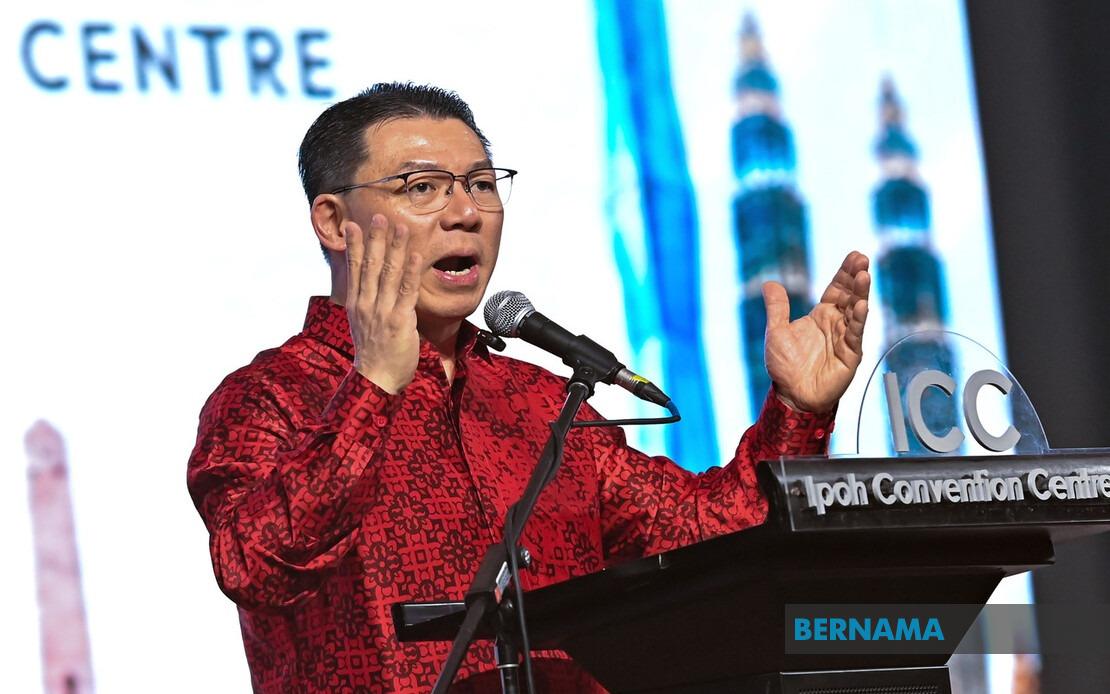
Housing and Local Government Minister Nga Kor Ming has unveiled an ambitious plan to revamp Malaysia's public spaces through the MY Public Space initiative, a partnership between the ministry's National Landscape Department and UN-Habitat that aims to bring global best practices to domestic urban development. Unveiled at the 2026 National Landscape Day Celebration in Melaka, the initiative represents a strategic response to the need for higher-quality, more accessible public spaces that reflect Malaysia's growing urbanisation and commitment to sustainable development.
The collaboration between KPKT and UN-Habitat carries significant weight given Malaysia's current role as President of the UN-Habitat Assembly, positioning the country to lead regional efforts in achieving the Sustainable Development Goals through improved urban planning and infrastructure. This alignment demonstrates how domestic policy initiatives can be calibrated to support Malaysia's international diplomatic commitments while addressing tangible local challenges in how communities access and use shared spaces. The initiative's connection to UN-Habitat provides access to global expertise and frameworks that have been tested and refined across different urban contexts worldwide, allowing Malaysia to adopt proven methodologies rather than reinventing approaches.
Four strategic pillars will anchor the MY Public Space framework going forward. First, the initiative will establish a national recognition system aligned with the Rosa Sinensis Award, creating clear standards for quality public space development. Second, a pilot toolkit will be rolled out across selected sites to test implementation approaches before wider deployment. Third, public space management practices will be strengthened through capacity building and institutional coordination. Finally, the toolkit will be integrated into national landscape guidelines and policies, essentially embedding these standards into how future public spaces are designed and managed at all levels of government.
For Malaysian readers, this institutional embedding is particularly significant because it transforms what might otherwise remain a well-intentioned but isolated initiative into a permanent framework that shapes all subsequent public space investments. By making international standards part of Malaysia's formal planning guidelines, the ministry ensures that quality public spaces become the default expectation rather than an occasional achievement. This approach has proven effective in other countries where similar integration has substantially raised the baseline quality of municipal infrastructure.
Paralleling this broader initiative, the government continues its aggressive rollout of MADANI Parks, having delivered 217 recreational parks during 2024 and 2025, nearly double the original target of 100 parks per year. The ambitious goal of establishing 1,000 MADANI Parks by 2035 reflects recognition that Malaysian urban communities have experienced a deficit of accessible green spaces relative to rapid metropolitan expansion. With 10 of these parks already located in Melaka and three more planned in Ayer Keroh and Masjid Tanah, residents across income levels and geographic areas will gain proximity to quality recreational facilities designed to enhance physical activity, mental wellbeing, and social cohesion.
The economic dimensions of this public space initiative extend beyond immediate community benefits to encompass significant industrial development opportunities. Malaysia recorded landscape product exports valued at RM534.3 million in 2025, reaching destinations as diverse as Singapore, Japan, Australia, and the United States. The ministry projects that the entire landscape industry could contribute up to RM40 billion to Malaysia's GDP by 2035, a trajectory requiring substantial increases in both export volumes and domestic investment. This economic narrative reframes public space development as not merely a social investment but as a catalyst for job creation, technology advancement, and export revenue.
To achieve this economic potential, KPKT is preparing the Malaysian Landscape Industry Blueprint, a comprehensive strategic document addressing several interconnected challenges. Workforce capacity building represents the first pillar, recognising that scaling up quality landscape work requires trained designers, engineers, and managers equipped with contemporary methods and sustainable practices. Industry standard coordination will ensure that local practitioners meet international expectations, enabling them to compete for contracts outside Malaysia. Green technology innovation will be supported to help Malaysian companies develop distinctive capabilities in sustainable landscape solutions. The blueprint also commits to strengthening the entire value chain from raw material production through installation and maintenance, helping local businesses retain more value rather than functioning merely as subcontractors.
These initiatives carry particular resonance for Southeast Asia, where rapid urbanisation and migration to cities have often outpaced infrastructure development. Malaysia's experience with public space deficits mirrors challenges across Thailand, Indonesia, and Vietnam, where similar pressures on urban amenities have emerged. By establishing robust frameworks and demonstrating scalable implementation approaches, Malaysia can serve as a regional model, potentially opening opportunities for Malaysian landscape firms to bid for projects elsewhere in Southeast Asia where governments seek to improve urban quality.
Prime Minister Datuk Seri Anwar Ibrahim's presence at the launch ceremony signals central government commitment to the initiative, suggesting that resource allocation and inter-ministerial coordination will flow to support implementation. Melaka Chief Minister Datuk Seri Ab Rauf Yusoh's participation reflects the important reality that public space development requires alignment across federal and state authorities, both of which control land and budgets. This vertical coordination, often challenging in Malaysia's federal system, appears to be functioning effectively for this initiative.
The MY Public Space initiative ultimately addresses a fundamental requirement of modern urban living: ensuring that public realms serve all residents regardless of income level, offering safety, accessibility, and aesthetic quality. As Malaysia continues urbanising, with an increasingly affluent middle class expecting world-class amenities, public spaces represent the great equaliser where all citizens share facilities. By adopting international best practices and committing to systematic implementation, the ministry is investing in the social fabric that determines whether rapid urban growth creates inclusive, liveable communities or widening disparities between privileged and underserved populations.

