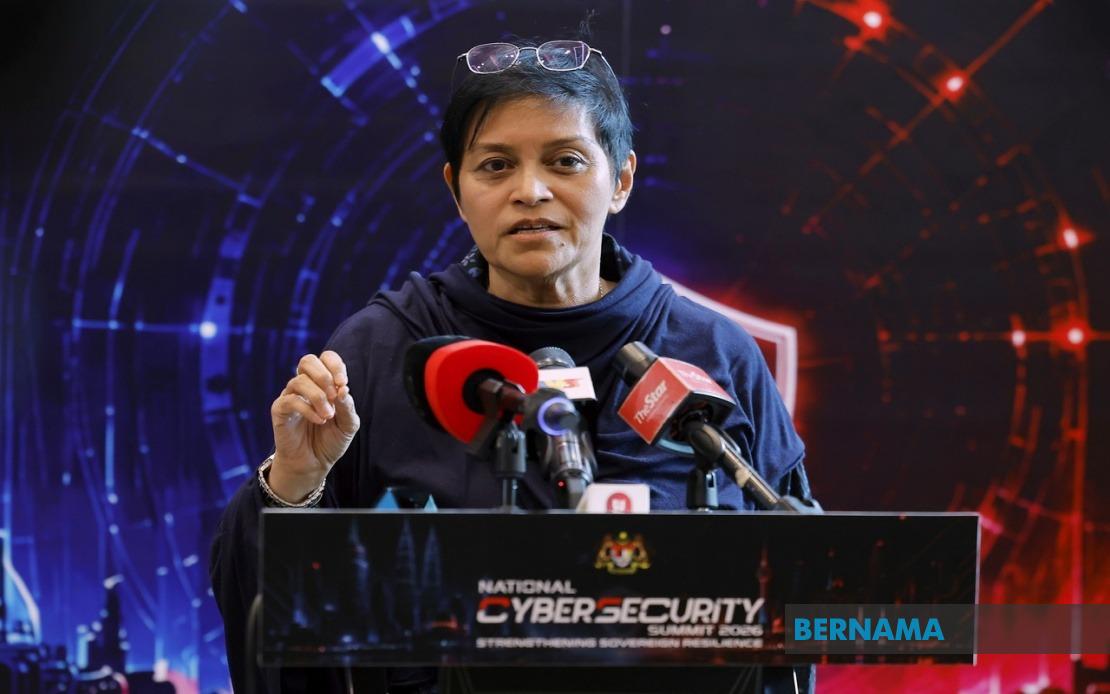
The Malaysian government is undertaking a comprehensive examination of how to better protect citizens who fall victim to cybercrime, with particular focus on mechanisms that would help recover lost funds and impose stiffer sentences on offenders. Datuk Seri Azalina Othman Said, the Minister in the Prime Minister's Department (Law and Institutional Reform), disclosed the initiative at a press briefing in Putrajaya following her participation in the National Cyber Security Summit (NCSS) 2026. The Legal Affairs Division (BHEUU) is spearheading the investigation, which represents a recognition that Malaysia's current approach to digital crime has left many victims with limited recourse beyond filing police reports.
The scope of this examination extends well beyond simply prosecuting offenders under existing statutes. While Malaysia's Penal Code and Criminal Procedure Code provide frameworks for bringing perpetrators to justice, the government now acknowledges that these laws focus disproportionately on enforcement and punishment rather than victim recovery. The study will evaluate what types of penalties might serve as greater deterrents, with Azalina noting that certain jurisdictions employ more severe consequences than Malaysia currently permits. Singapore's approach, which incorporates caning as part of sentencing for cybercriminals, exemplifies the range of enforcement mechanisms being considered for adaptation to the Malaysian context, though implementing such measures would require careful constitutional and legislative consideration.
A critical gap in Malaysia's current framework concerns the availability of funds to compensate victims for their losses. In many cybercrime cases, particularly online scams orchestrated through sophisticated networks, victims have no effective way to recover money transferred to fraudsters' accounts. This stands in sharp contrast to approaches used in developed economies, where banking institutions bear certain responsibilities for protecting consumers. Azalina highlighted the United Kingdom and Australia as models where victims of online fraud may obtain refunds from their banks under specified conditions, recognizing the financial sector's role in both prevention and remediation. Bank Negara Malaysia has not yet established a similar framework, but the institution is now considering whether such a mechanism could be introduced as part of broader consumer protection reforms.
The BHEUU's investigation will involve detailed comparative analysis of how different countries structure victim protection. This comparative approach is essential because cybercrime operates across borders, and frameworks developed elsewhere can often be adapted to address Malaysia's distinct legal, financial, and social contexts. Countries such as the United Kingdom and Australia have invested significantly in victim support systems that go beyond mere criminal prosecution, recognizing that effective cybercrime policy must balance deterrence with remediation. By studying these international approaches, Malaysia can identify which elements are transferable and which require modification to align with local circumstances and existing legal structures.
One significant finding that will emerge from this study concerns the reality facing current victims. Many Malaysian citizens who report cybercrime discover that their prospects for recovering lost money are minimal once investigations conclude. This creates a perverse incentive structure where victims are encouraged to report crimes to police primarily for documentation purposes, without realistic expectations of financial recovery. Such outcomes erode public confidence in the justice system and may discourage reporting, meaning many cybercrimes remain unrecorded and their perpetrators face no consequences. A victim-centered approach that prioritizes recovery would fundamentally alter this calculus.
The government's decision to commission this study reflects growing awareness that cybercrime represents one of the most prevalent threats to Malaysia's digital ecosystem and household finances. Online scams have proliferated across Southeast Asia, with Malaysian citizens increasingly vulnerable to sophisticated schemes that exploit social engineering and financial technology. The problem is not merely a law enforcement issue but a systemic one involving banks, telecommunications providers, regulatory bodies, and legal frameworks that were designed before digital transactions became ubiquitous. Addressing it comprehensively requires exactly the kind of interdisciplinary examination that BHEUU is undertaking.
Azalina acknowledged during the press conference that no timeline has been established for completing the study, suggesting this is a methodical process rather than a rushed initiative. This deliberate pace may actually be appropriate given the complexity of the issues involved. Any changes to victim protection mechanisms, penalty structures, or bank responsibilities will need to be carefully calibrated to avoid unintended consequences such as excessive reporting burden on financial institutions or loopholes that sophisticated criminals could exploit. The study phase allows for stakeholder consultation, empirical analysis, and careful consideration of implementation challenges.
The inclusion of online harms and digital offences in BHEUU's mandate alongside cybercrime represents a broadening of focus beyond traditional computer hacking and fraud. Online harms encompass a wider spectrum of digital misconduct, from harassment and defamation to the distribution of exploitative content. This holistic approach recognizes that criminal activity in digital spaces often blurs traditional categories and that comprehensive victim protection requires examining the full range of ways technology can be weaponized against individuals. Such an expansion of analytical scope is consistent with trends in other jurisdictions that have moved toward comprehensive digital harm legislation.
For Malaysian citizens and businesses, this study carries immediate practical implications. The current state of cybercrime victim protection leaves many without adequate recourse, particularly small business owners and individuals of limited means who lack resources to pursue civil remedies. A reformed system that incorporated mechanisms for fund recovery and increased penalties would strengthen Malaysia's position as a digitally secure nation, potentially attracting more foreign investment and e-commerce activity. It would also align Malaysia more closely with international standards in financial sector regulation and consumer protection.
The study also addresses an implicit gap in Malaysia's regulatory framework regarding the financial industry's responsibility for cybercrime losses. In jurisdictions with victim refund mechanisms, banks serve as both a gatekeeper against fraud and a backstop for losses that slip through preventive measures. This creates incentives for banks to invest in fraud detection and prevention, since they bear some financial cost of failures. Malaysia's banking sector has not operated under similar incentive structures, potentially reducing urgency in implementing advanced fraud detection technologies. BHEUU's examination of international banking practices may lead to recommendations that reshape how Malaysian financial institutions approach cybersecurity and customer protection.
The National Cyber Security Summit where Azalina announced this initiative provides important context for the policy shift. Such gatherings bring together government, private sector, and civil society participants to discuss emerging threats and coordinate responses. The prominence of victim protection discussions at NCSS 2026 suggests that there is broad stakeholder recognition that Malaysia's approach to cybercrime must evolve. Industry representatives, civil society organizations, and victims' advocates presumably contributed perspectives that informed the government's decision to commission this comprehensive study.
As the study progresses, it will likely explore not only punitive and compensation measures but also preventive education and victim support services. Countries with mature cybercrime prevention frameworks typically combine strict enforcement with public awareness campaigns that teach citizens how to recognize scams and protect their digital assets. Malaysia could benefit from such a multifaceted approach that treats cybercrime prevention as a shared responsibility among government, financial institutions, technology companies, and the public itself.
The government's commitment to this study signals that cybercrime victim protection will be an evolving policy area in Malaysia. While BHEUU conducts its examination, citizens and businesses should remain vigilant in protecting themselves against scams and fraud. However, the ultimate goal of these reforms is to create an environment where falling victim to cybercrime does not mean automatic financial loss, where offenders face meaningful consequences that deter participation in criminal enterprises, and where Malaysia's digital economy can flourish with stronger protections for all users.

