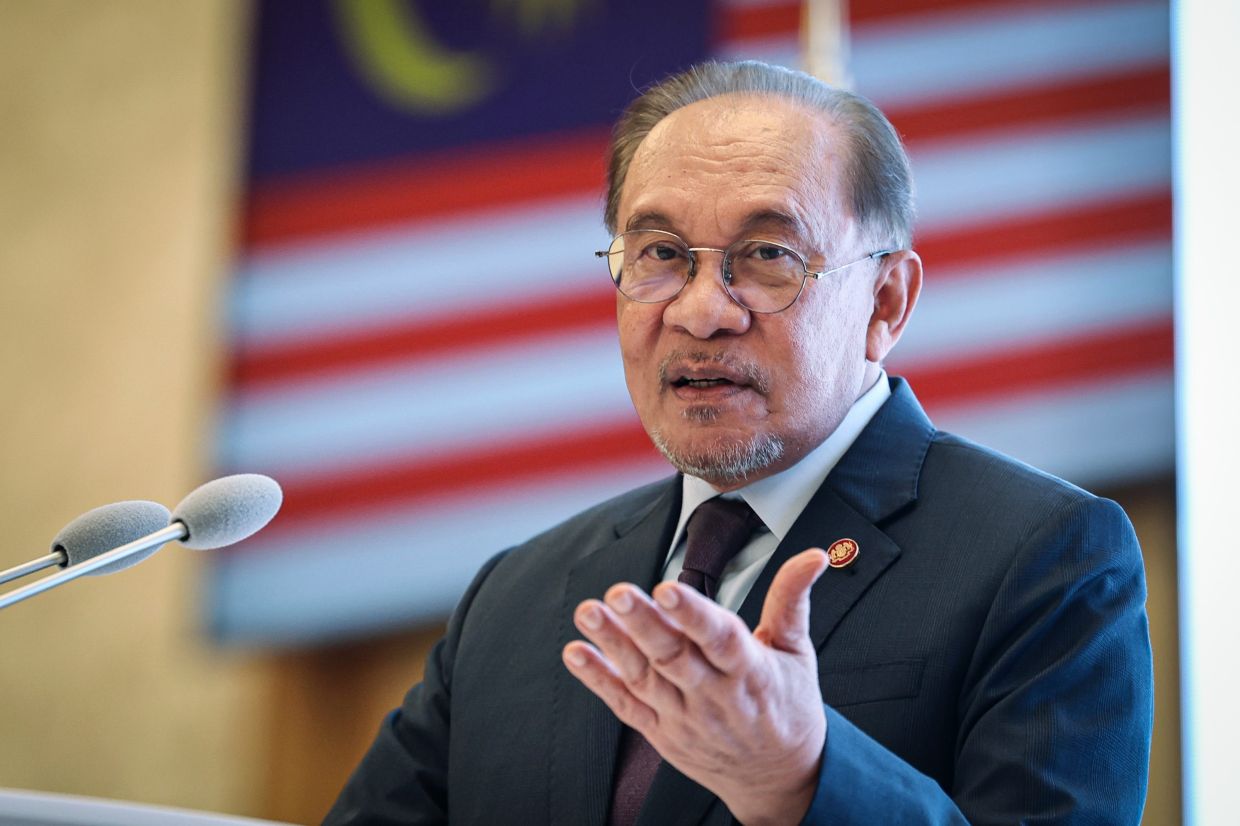
Malaysia's geographical advantage as a nation straddling critical global trade corridors positions it as a natural hub for economic diplomacy, Prime Minister Datuk Seri Anwar Ibrahim said at the 39th Asia-Pacific Roundtable in Kuala Lumpur. Speaking in his capacity as both premier and Finance Minister, Anwar framed the country's role within interconnected supply chains as intrinsic to how Malaysia conducts its international economic relations and advances its broader strategic interests.
The government has consistently worked to strengthen bonds with longstanding trading and investment allies through multilateral frameworks and bilateral engagements. Anwar pointed to Malaysia's active participation in major trade mechanisms—the ASEAN Free Trade Area, the Regional Comprehensive Economic Partnership (RCEP) and the Comprehensive and Progressive Agreement for Trans-Pacific Partnership (CPTPP)—as evidence of its commitment to dismantling trade barriers and creating conditions for fairer market access. These agreements reflect Malaysia's belief that open, rules-based commerce serves regional prosperity and individual national interests simultaneously.
Despite international uncertainties and shifting geopolitical alignments, Anwar stressed that ASEAN centrality remains fundamental to Malaysia's foreign policy orientation. He acknowledged existing reservations about the bloc's effectiveness in some quarters, yet maintained that ASEAN provides the most appropriate platform through which Malaysia can pursue its economic objectives while contributing to broader regional peace and stability. This emphasis on collective decision-making within Southeast Asia suggests Malaysia views its own prosperity as inseparable from the bloc's coherence and development.
Recognising the limits of traditional partnerships, Malaysia is now systematically cultivating economic relationships with emerging markets previously underexplored or underprioritised. The government is targeting West Asia, Central Asia, Latin America and Africa as growth markets where Malaysia can establish mutually beneficial arrangements without existing competitive pressures or historical baggage. This geographic diversification reflects a sophisticated understanding that over-reliance on traditional trading partners creates vulnerability to external shocks and policy shifts.
Anwar articulated an approach that merges economic pragmatism with geopolitical awareness, describing how Malaysia identifies complementary industries and sectors where both parties possess genuine competitive advantage or unmet demand. The halal industry exemplifies this strategy—Malaysia's Islamic credentials and expertise position it as a natural leader in a sector with expanding global consumer appeal across multiple continents. Similarly, digital economy development, agricultural modernisation and green technology adoption offer platforms for genuine collaboration rather than extractive or zero-sum arrangements.
Energy cooperation emerged as particularly strategically significant in Anwar's formulation. During a recent official visit to Turkmenistan, Malaysia's national oil and gas company Petronas formalised agreements to explore and develop two substantial gas fields, marking concrete progress in hydrocarbon partnerships. Beyond energy extraction itself, Malaysia and Turkmenistan signed a comprehensive long-term hydrocarbon development framework encompassing knowledge transfer and capacity-building in human and technical domains. These arrangements demonstrate how Malaysia approaches partnerships—not merely as transactional exchanges but as long-term collaborations building institutional capacity and mutual expertise.
The portfolio of new arrangements Anwar described reflects a deliberate strategy to insulate Malaysia from potential disruptions in any single market or partnership. Rather than viewing diversification purely as an economic optimisation exercise, the Prime Minister characterised it as essential national policy in an era of pronounced global uncertainty. Supply chain vulnerabilities exposed during recent international crises have demonstrated the risks inherent in concentrated economic relationships, making geographic and sectoral breadth a practical necessity rather than mere preference.
Malaysia's evolution as an economic diplomat involves balancing multiple competing interests and constituencies. The government must maintain robust relationships with long-standing partners while simultaneously pursuing opportunities in less familiar markets where Malaysia may lack established networks or deep institutional knowledge. This requires developing new expertise, building political relationships and demonstrating commitment to partnerships that may yield returns across longer timeframes than traditional bilateral arrangements.
The articulation of this strategy at the Asia-Pacific Roundtable, organised by the Institute of Strategic and International Studies (ISIS) Malaysia, signals the importance Malaysia places on communicating its economic orientation to regional and international audiences. By framing trade and investment policy as central to Malaysia's national strategy rather than peripheral economic management, Anwar positioned economic diplomacy as equivalent in importance to traditional diplomatic and security concerns. This elevation reflects contemporary realities where economic interdependence and resilience increasingly determine national wellbeing and international influence as much as conventional geopolitical factors.
The forum ran from June 30 to July 2 and attracted participants concerned with regional strategic questions and economic futures. Malaysia's presentation of itself as a sophisticated economic actor capable of managing diverse partnerships simultaneously reinforces its positioning within ASEAN as a developed economy with both regional responsibilities and global ambitions. The government's emphasis on partnership quality over quantity, and on finding genuine collaborative ground rather than pursuing all opportunities indiscriminately, suggests a maturing approach to international economic relations that prioritises sustainability and mutual benefit.

