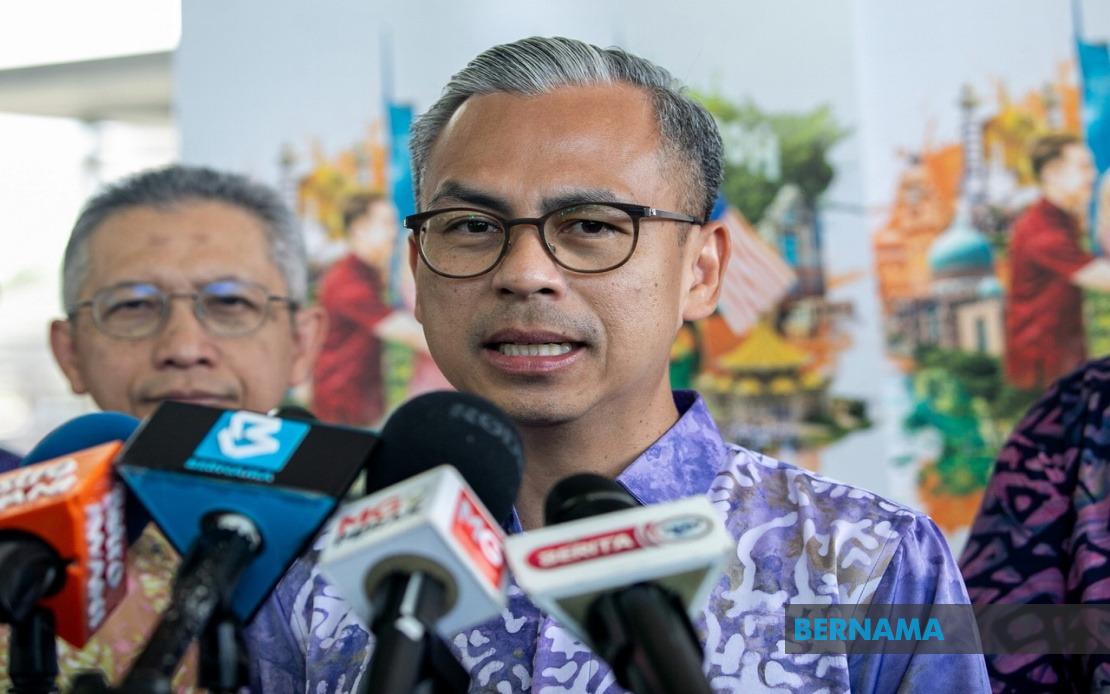
The Communications Minister has unveiled the thematic direction for the 2026 National Day and Malaysia Day celebrations, placing emphasis on the principle that Malaysia's continued advancement must reach every segment of society. Datuk Seri Fahmi Fadzil announced at the launch event in Ipoh that the chosen theme, 'Malaysia MADANI: Kesejahteraan Dinikmati', encapsulates the administration's fundamental pledge to distribute the fruits of national growth across all communities without exception.
The framing of this theme carries significant policy implications beyond ceremonial consideration. Fahmi elaborated that the government's conception of shared prosperity transcends mere economic metrics and gross domestic product figures. Instead, the vision encompasses tangible improvements in living standards, the creation of genuine opportunities accessible to people from all walks of life, and the deliberate structuring of development outcomes so that benefits flow equitably rather than concentrating among privileged groups.
This messaging arrives at a critical juncture for Malaysia's governance narrative. The MADANI administration, which assumed office with reform-oriented pledges, is using the national celebration framework to reinforce its positioning as an inclusive government determined to bridge disparities that have persisted across demographic and geographic lines. The emphasis on leaving no community behind—regardless of ethnicity, faith, location, or socioeconomic background—represents an attempt to anchor the administration's legitimacy in demonstrable commitment to equitable development policies.
The launch proceedings, held at the Sultan Azlan Shah Ministry of Health Training Institute in Tanjung Rambutan, drew senior government figures including Prime Minister Datuk Seri Anwar Ibrahim, who officiated the event. The presence of National Unity Minister Datuk Aaron Ago Dagang and Perak Menteri Besar Datuk Seri Saarani Mohamad underscored the multi-level governmental coordination underpinning the national month campaign. This alignment across federal and state leadership demonstrates the administration's intention to present a unified front on its core development philosophy.
Fahmi reinforced the connection between Malaysia's foundational pluralism and the imperative for continued cohesion. He characterised the nation's ethnic, religious, and cultural diversity not as a challenge requiring management but as a historical asset and foundation stone for contemporary unity. This framing—treating diversity as an inherent strength rather than a problem demanding resolution—reflects a deliberate rhetorical choice that shapes how the government positions national identity during a period of significant social and economic adjustment.
The minister articulated that preserving this legacy of harmony and mutual respect constitutes a collective responsibility shared across all Malaysians. He positioned safeguarding national sovereignty and maintaining Malaysia's standing internationally as outcomes dependent on sustained domestic cohesion. This linkage between internal unity and external respect subtly reinforces the notion that fragmentation carries costs extending beyond domestic peace to encompass the nation's international standing.
The celebrations will feature several programmatic elements designed to activate public engagement with patriotic themes and unity-building initiatives. The 'One House, One Jalur Gemilang' campaign seeks to localise national symbolism at the household level, while the Kembara Merdeka Jalur Gemilang convoy programme will physically move national identity markers throughout the country. These grassroots-oriented activities acknowledge that abstract policy commitments require visible, participatory expression to take on meaning in public consciousness.
The information dissemination strategy for the 2026 celebrations leverages multiple channels, with the Merdeka 360 portal serving as a central information repository and the Information Department's social media presence providing accessible updates. This multi-platform approach reflects contemporary understanding that sustained public engagement requires meeting audiences across various information ecosystems rather than relying on traditional media alone.
For Malaysian readers and regional observers, this thematic emphasis warrants careful attention to implementation trajectories. National day celebrations function as more than ceremonial occasions; they serve as periodic moments when governments articulate and reinforce their governing philosophies and policy priorities. The consistent elevation of 'shared prosperity' across multiple campaign elements suggests this concept will likely feature prominently in budgetary allocations, subsidy structures, and social programme design leading into 2026. The extent to which tangible policy adjustments align with this celebratory messaging will ultimately determine whether the theme represents substantive governmental reorientation or symbolic positioning ahead of potential electoral considerations.
For Southeast Asian neighbours watching Malaysia's trajectory, the emphasis on inclusive development and unity amid diversity carries implications extending beyond national boundaries. Malaysia's success or struggles in delivering equitable prosperity amid pluralistic demographics offer instructive lessons for other regional democracies navigating similar tensions between development distribution, community cohesion, and democratic participation. The 2026 celebrations will thus merit observation not merely as a Malaysian domestic event but as a barometer of how the administration reconciles its reform commitments with the complex realities of implementing inclusive governance frameworks across a geographically dispersed, economically differentiated population.

