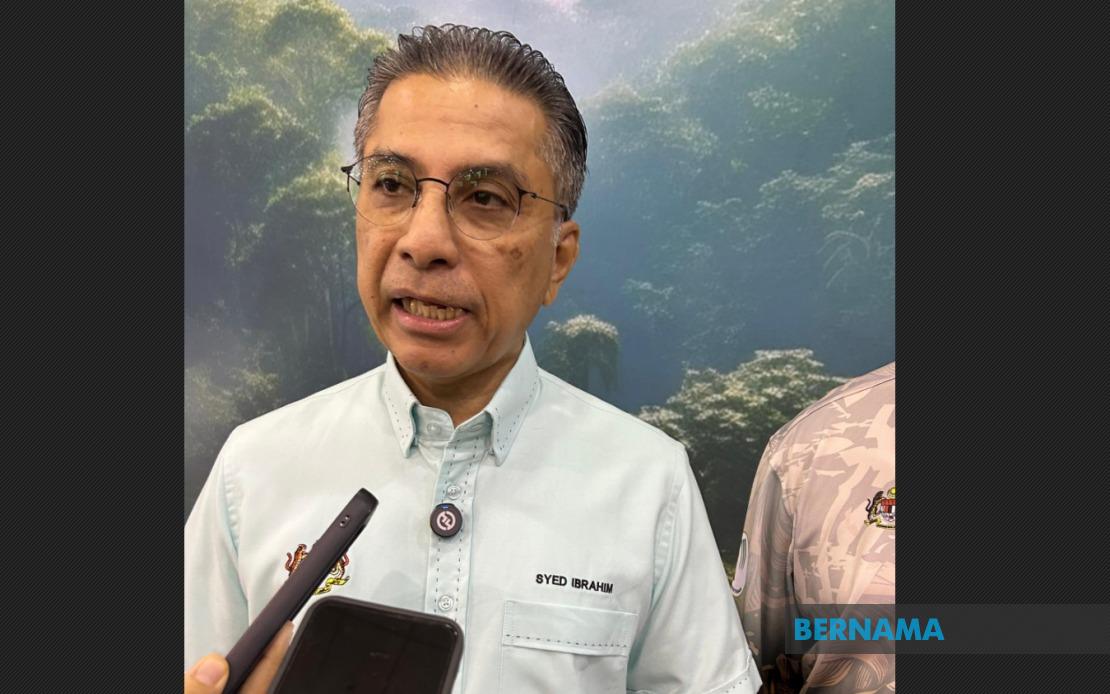
The Malaysian government is maintaining tight oversight of three Asian elephants currently housed at Tennoji Zoo in Osaka, following their relocation from domestic facilities in March. Deputy Minister of Natural Resources and Environmental Sustainability Syed Ibrahim Syed Noh confirmed the monitoring initiative during parliamentary proceedings, emphasising that the welfare of the animals—named Dara, Amoi and Kelat—remains a priority throughout their adjustment to the Japanese facility.
The three elephants' placement at Tennoji Zoo represents a significant bilateral arrangement between Malaysia and Japan, structured as a 25-year strategic ex-situ conservation cooperation programme jointly managed by Taiping Zoo and Night Safari (ZTNS) and the Japanese institution. This framework reflects broader regional trends in wildlife management, where Southeast Asian nations increasingly engage in formal partnerships with international zoos to support species preservation and genetic diversity programmes. Such arrangements typically involve detailed agreements on animal care standards, breeding protocols, and knowledge exchange between participating facilities.
Before the animals were transported, Malaysia's Department of Wildlife and National Parks (Perhilitan) undertook rigorous evaluation procedures designed to verify that Tennoji Zoo met international wildlife management standards. The assessment encompassed both physical health metrics and psychological well-being indicators, recognising that relocation can create significant stress for large mammals accustomed to established environments. This pre-transfer vetting process underscores the government's commitment to preventing the kind of welfare issues that have occasionally marred international animal transfers in the region.
To facilitate the elephants' acclimatisation process, seven trained mahouts from Perhilitan accompanied the animals to Japan on a rotating basis immediately following the March transfer. These skilled handlers, who possess intimate knowledge of the elephants' individual temperaments and care requirements, provided continuity and expertise during the critical early weeks of adjustment. The mahouts' presence served multiple functions: ensuring proper feeding and enrichment routines, monitoring behavioural changes, and building familiarity with Japanese zoo staff who would assume primary care responsibilities.
Recognising that the acclimatisation phase extends beyond the initial two months, the government deployed two additional mahouts to Tennoji Zoo for the month of June. This follow-up deployment represents a pragmatic acknowledgment that long-term adaptation involves ongoing monitoring and intervention. The staggered approach to mahout support demonstrates sophisticated understanding of animal welfare science, which emphasises that relocation stress may manifest gradually over extended periods rather than immediately after transfer.
The monitoring initiative became the subject of parliamentary inquiry when legislator Young Syefura Othman raised concerns about government accountability mechanisms for animals sent abroad. Her question reflected growing public and civil society scrutiny of Malaysia's international wildlife placements, a development that has intensified following previous controversies surrounding animal welfare in cross-border arrangements. The parliamentary forum provided Syed Ibrahim an opportunity to articulate the government's defensive rationale while addressing broader anxieties about exported animals.
When confronted with calls from non-governmental organisations and public figures demanding the elephants' repatriation, the government adopted a measured stance emphasising diplomatic pragmatism. Syed Ibrahim articulated that any decisions regarding the animals' future placement must balance welfare considerations against Malaysia's broader relationship with Japan and contractual commitments to Tennoji Zoo. This positioning suggests that while animal welfare concerns are acknowledged as legitimate, they operate within a hierarchical framework where diplomatic relations and legal obligations assume significant weight in policy formulation.
The government indicated willingness to accommodate independent observers or NGO representatives visiting the facility, conditional upon mutual agreement between both zoos and existing contractual provisions. This conditional openness represents a compromise between transparency demands and institutional autonomy, allowing for external scrutiny without surrendering management authority or unilaterally modifying established arrangements. However, the caveat that such visits require bilateral consensus effectively grants both institutions veto power over external monitoring.
Disputes have emerged regarding the historical record of Malaysian elephants sent overseas, with some NGOs claiming that 19 animals were previously exported. The government disputed these figures, contending that unofficial tallies misrepresent the actual data. According to official Perhilitan records, only 10 elephants have been exported since 1977—a significantly lower figure that reshapes the scale of international placements when evaluated over a 46-year period. This discrepancy between official and unofficial counts reflects broader challenges in wildlife documentation and highlights how data interpretation can substantially influence public perception of government animal welfare policies.
The current arrangement with Tennoji Zoo represents Malaysia's continued engagement with international wildlife conservation frameworks, positioning the country as a participant in globalised animal management strategies. This approach carries both advantages and risks: participation in international programmes facilitates genetic management for endangered species, provides opportunities for Malaysian expertise sharing, and generates revenue or research benefits. Conversely, international placements create distance between Malaysian authorities and day-to-day animal welfare decisions, complicating accountability and requiring sustained diplomatic engagement to ensure standards compliance.
For Malaysian conservationists and animal welfare advocates, the elephants' placement in Japan embodies broader tensions between domestic conservation priorities and international cooperation imperatives. The government's careful monitoring framework, while substantively serious, also reflects defensive positioning against rising public expectations for transparency and direct intervention. As Malaysia continues negotiating its role in regional and global conservation networks, experiences with high-profile cases like the Tennoji Zoo placement will likely inform future policies governing international wildlife transfers and the balance between diplomatic considerations and animal welfare principles.

