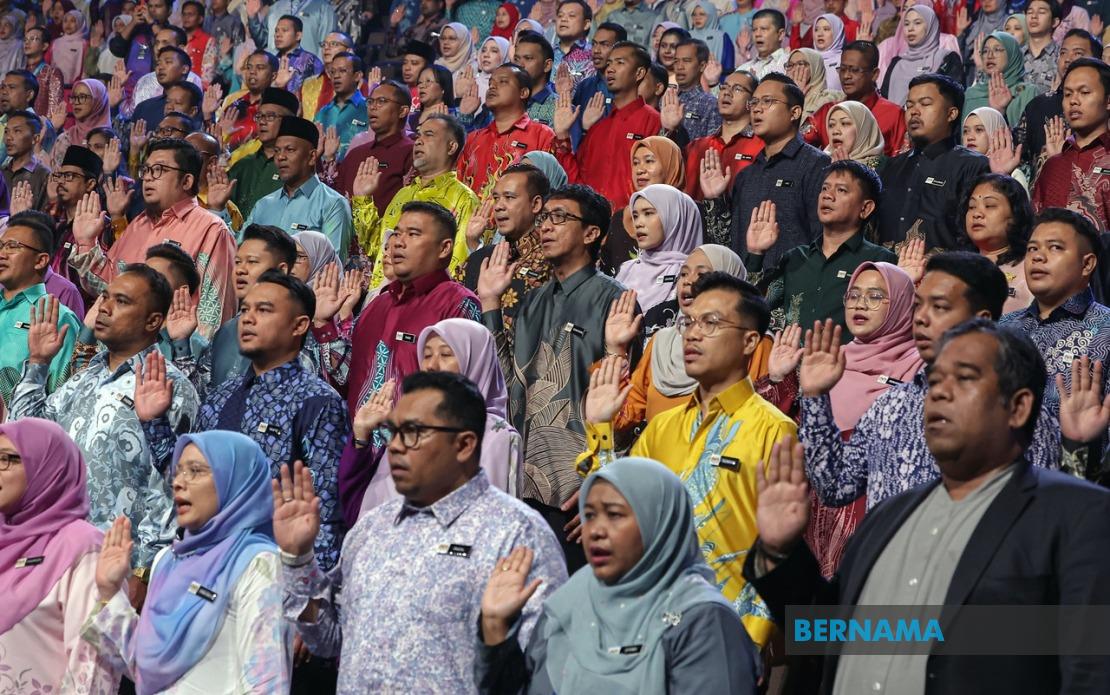
The Malaysian government has firmly rejected proposals to raise the mandatory retirement age for civil servants, with Communications Minister Datuk Fahmi Fadzil announcing on July 8 that the age will remain fixed at 60. The decision, made during a Cabinet meeting, signals the MADANI Government's preference for maintaining existing retirement frameworks despite potential pressures to extend working years among ageing populations across Southeast Asia.
Fahmi's announcement addresses a debate that periodically surfaces within Malaysian public administration circles. Proponents of raising the retirement age often argue that longer working lives would ease labour market constraints, boost productivity, and reduce pension liabilities as life expectancy increases. However, the Cabinet's decision reflects competing priorities, including job availability for younger generations entering the workforce and the fiscal implications of extended public sector employment.
The stability of Malaysia's civil service retirement structure contrasts with evolving trends across the region. Several Southeast Asian neighbours have begun contemplating or implementing gradual increases in retirement ages as demographic shifts create labour shortages and pension pressures. The Malaysian government's choice to maintain the status quo at 60 suggests confidence in current workforce planning mechanisms and a judgment that the present arrangement adequately balances economic and social considerations.
Civil servants and their unions have closely monitored discussions around retirement age reforms. Any extension would have substantial implications for career planning, pension calculations, and intergenerational employment opportunities within the public sector. The Cabinet's decision provides clarity that allows government agencies to maintain established retirement protocols without requiring extensive policy recalibration or negotiation with organised labour groups representing civil servants.
Paralleling the retirement age announcement, the government took action on workplace protections through a separate Cabinet decision affecting the Social Security Organisation's coverage scheme. Prime Minister Datuk Seri Anwar Ibrahim raised concerns about implementation of the LINDUNG 24 Jam programme, which requires employees to contribute 0.75 per cent of their salary toward non-work-related accident insurance managed by PERKESO.
The shift from mandatory to voluntary contribution represents a significant policy reversal that directly responds to workforce feedback. LINDUNG 24 Jam, despite offering valuable protection against injuries sustained outside employment, encountered resistance from employees who viewed the contribution as an additional financial burden. This feedback apparently resonated sufficiently within Cabinet discussions to prompt immediate policy modification, demonstrating governmental responsiveness to labour market sentiment.
The voluntary framework for PERKESO contributions aligns with broader trends in Southeast Asian social protection policy, where countries increasingly balance comprehensive coverage with employee choice. Malaysia's approach allows workers to opt into protection rather than imposing universal participation, potentially increasing public acceptance even if uptake rates remain uncertain. This flexibility may prove particularly important for lower-income workers who face competing demands on limited salaries.
Implementation of the voluntary arrangement will fall to the Ministry of Human Resources (KESUMA), which will issue detailed guidance clarifying administrative procedures, contribution mechanics, and eligibility requirements. Clear implementation directives prove essential, as voluntary schemes depend on effective communication to ensure eligible workers understand programme benefits and participation mechanisms. Confusion or poor publicity could substantially reduce coverage rates, potentially undermining the social protection objectives that LINDUNG 24 Jam was designed to achieve.
The timing of these announcements reflects ongoing government attention to public sector employment conditions and worker welfare. Both decisions prioritise administrative continuity while responding to specific stakeholder concerns—maintaining established retirement frameworks whilst removing perceived financial impositions on employees. This dual approach suggests effort to sustain civil service stability whilst demonstrating sensitivity to workforce grievances.
For Malaysian businesses and organisations, these decisions carry operational implications. The confirmed retirement age framework enables long-term workforce planning without uncertainty regarding policy shifts, while the voluntary PERKESO contribution structure may influence employee benefits packages and competitive positioning in labour recruitment. Employers may leverage enhanced social protection offerings to attract talent, particularly if they actively promote LINDUNG 24 Jam participation through education and subsidisation.
Regional observers watching Malaysian labour policy will note the government's preference for incremental adjustment over structural overhaul. Rather than implementing comprehensive retirement system reform, the Cabinet opted for targeted modifications addressing specific implementation challenges. This approach prioritises pragmatic problem-solving, though it potentially defers longer-term questions about retirement adequacy and workforce sustainability as demographic trends intensify across Southeast Asia.
The Ministry of Human Resources announcement on PERKESO implementation details will prove crucial for programme success. Comprehensive guidance addressing employer responsibilities, worker communication strategies, and compliance mechanisms will determine whether voluntary participation achieves meaningful penetration among Malaysia's diverse workforce across sectors ranging from manufacturing and services to agriculture and construction.

