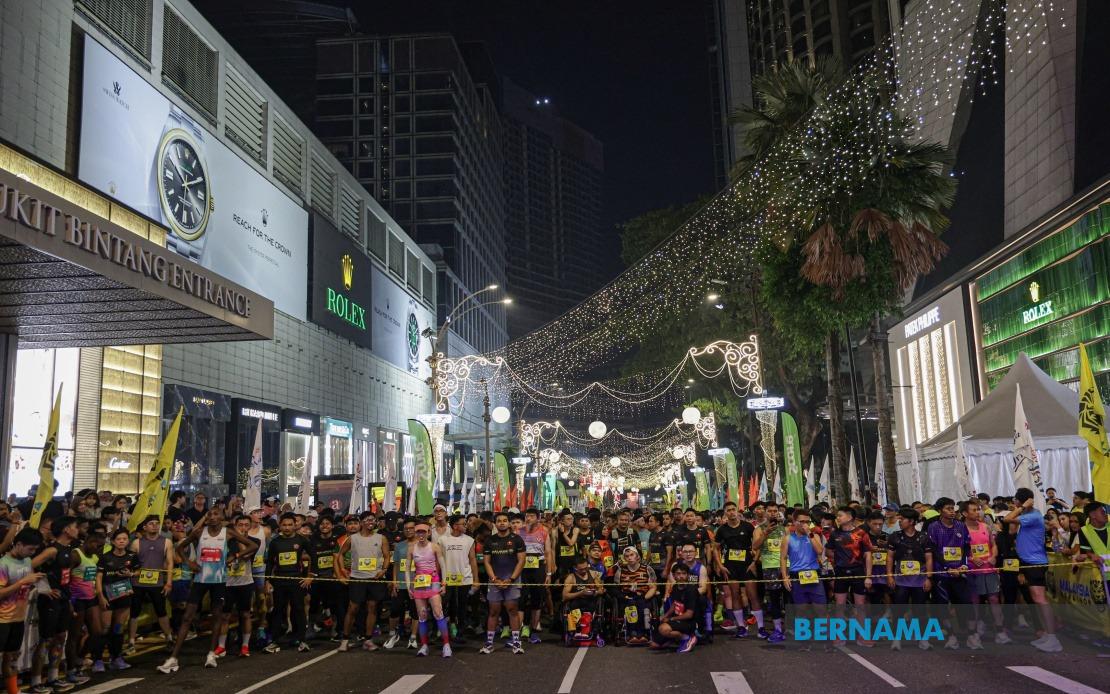
The Malaysia Marathon 2026 launched in the predawn hours of August 30, establishing itself as a marquee event intertwined with Malaysia's 69th National Day celebrations. Presided over by Minister of Tourism, Arts and Culture Datuk Seri Tiong King Sing at Pavilion Kuala Lumpur, the flagship 42-kilometre Full Marathon category drew the starting gun at 12:30 am, mobilising 2,000 elite and recreational athletes for what organizers positioned as a landmark sporting endeavour. The event's comprehensive scope ultimately encompassed 25,000 competitors distributed across four distinct racing formats, each calibrated to different fitness levels and schedules throughout the overnight and early morning period.
The staggered start times reflected careful logistical planning, with the 21-kilometre Half Marathon following at 2:00 am and attracting 8,000 runners. Subsequently, the 10-kilometre category commenced at 3:30 am with 5,000 participants, whilst the 5-kilometre Fun Run, positioned as the most accessible entry point, began at 7:30 am with 10,000 competitors. This cascading structure allowed race organisers to manage crowd flows and street congestion whilst creating multiple entry pathways for both serious athletes and casual fitness enthusiasts. The extended competition window also accommodated international runners alongside local participants, fostering a cosmopolitan competitive atmosphere that reflected Malaysia's positioning within global sports networks.
A distinctive feature distinguishing this inaugural edition involved the relocation of the finishing point to the Kuala Lumpur City Centre precinct, departing from the conventional conclusion at Dataran Merdeka. This geographical pivot transformed the symbolic geography of the event, anchoring the race's climax within the capital's commercial and architectural heartland rather than its traditional political epicentre. The decision carries implications for urban activation strategies and the integration of major sporting events within contemporary city-centre renewal initiatives that characterise Malaysian urban planning.
The Full Marathon route proved deliberately challenging, incorporating a 900-metre elevation gain as participants traversed the Ampang-Kuala Lumpur Elevated Highway, thereby testing endurance beyond mere distance. This technical complexity elevated the event from a straightforward urban circuit race into a mountainous trial that demanded genuine athletic conditioning. The choice of terrain suggested organisers' commitment to establishing competitive credentials recognised by serious distance runners rather than positioning the marathon as purely recreational or celebratory.
Worldwide athletics governance bodies conferred legitimacy upon the event, with World Athletics, the international sport's regulatory authority, extending formal recognition. This accreditation carries practical significance for elite competitors whose race performances gain official ratification for ranking and qualification purposes. The endorsement also signals Malaysia's capacity to host competitions meeting stringent international technical and organisational standards, enhancing the nation's reputation within global athletic circles and potentially attracting future international sporting calendars.
The integration of emerging technology constituted an unanticipated dimension when organisers announced that an HONOR-manufactured humanoid robot would participate alongside human competitors in the 10-kilometre category. This symbolic gesture toward technological advancement and innovation planted Malaysia's marathon firmly within contemporary discourses surrounding automation, artificial intelligence, and the blurred boundaries between human and machine capability. The robotic participant competed amongst international athletes from Japan, Nigeria, and elsewhere, creating a genuinely novel narrative element that transcended typical race reporting.
The security and traffic management apparatus necessitated by this massive simultaneous mobilisation of humanity across the capital reflected the event's scale and urban footprint. Kuala Lumpur Police orchestrated phased road closures and diversions beginning overnight and extending through the following afternoon, fundamentally reshaping traffic patterns across major arterial routes. Jalan Bukit Bintang, Jalan Ampang, Jalan Sultan Ismail, and Jalan Raja Chulan, alongside the AKLEH and SUKE highways, all experienced strategic closures, requiring metropolitan commuters to navigate alternative pathways and anticipate disruptions to daily movement patterns.
The timing of Malaysia Marathon 2026 represented a deliberate synchronisation with National Day observances, embedding sporting achievement within broader nationalist frameworks. By positioning elite athletic performance as a companion celebration to the nation's birthday, organisers merged two distinct cultural moments—patriotic commemoration and bodily human exertion—into a unified narrative of national accomplishment and vitality. This thematic coupling transforms the marathon from merely a sporting competition into a patriotic theatre where physical endurance mirrors national resilience and collective aspiration.
For Malaysian and Southeast Asian sport administrators, the event demonstrates how major metropolitan centres can stage internationally recognised competitions whilst navigating the complex logistics of urban infrastructure, traffic management, and large-scale crowd coordination. The Malaysia Marathon 2026's successful execution contributes to Malaysia's growing portfolio of mega-sporting events and reinforces Kuala Lumpur's status as a capable host city within regional and global sporting hierarchies. The event's layered complexity—combining elite competition, recreational participation, technological innovation, and nationalist symbolism—positions it as illustrative of how contemporary sporting events can transcend athletic competition to become multidimensional cultural phenomena reflecting broader aspirations and capabilities.

