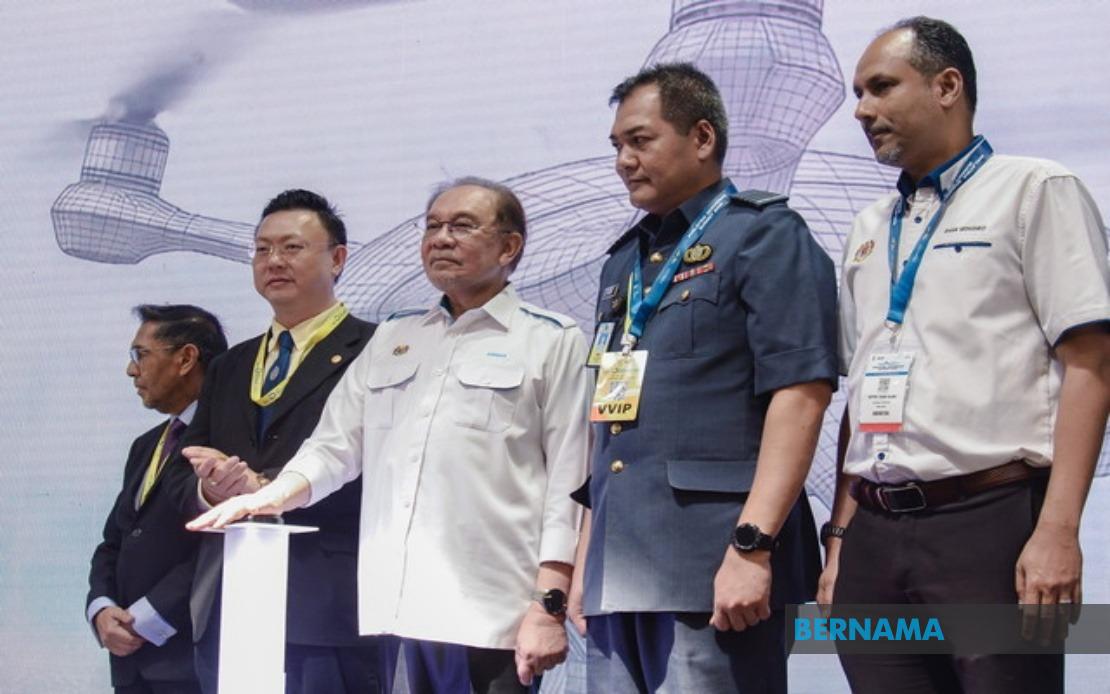
Prime Minister Datuk Seri Anwar Ibrahim has underscored the strategic imperative for Malaysia to move swiftly in developing unmanned aerial vehicle (UAV) and drone technologies, positioning the sector as essential to the nation's economic advancement and global competitiveness. Speaking at the closing ceremony of MyDrone Expo 2026 in Sepang, Anwar emphasised that technological acceleration across emerging sectors, particularly in the drone industry, represents a fundamental requirement for Malaysia to strengthen its standing in the international economic arena.
The drone sector operates at the intersection of multiple transformative technologies including artificial intelligence and digital transformation, Anwar noted, making it a particularly potent vehicle for spurring innovation, enhancing productivity gains, and generating sustained economic expansion. This convergence of technologies means that investment in UAVs extends beyond a single industrial segment; it cultivates capabilities and expertise applicable across numerous economic domains and creates spillover effects throughout the broader technology ecosystem.
Anwar highlighted the substantial market opportunity underlying this strategic push, pointing to projections that the global UAV market will surpass USD55 billion by 2030. Beyond this headline figure, the emerging low-altitude economy—encompassing airspace utilisation for commercial, agricultural, and industrial purposes below traditional aviation corridors—is increasingly becoming a significant attractor of capital investment and entrepreneurial activity. Countries that establish leadership positions early in this space stand to capture disproportionate shares of both market value and the high-skilled employment opportunities such industries generate.
The MyDrone Expo 2026, jointly organised by the World UAV Federation Malaysia Chapter and the Malaysia UAV Development Association, demonstrated considerable market dynamism within the domestic sector. The three-day event, which concluded with remarks from the Prime Minister, attracted participation from more than 100 exhibition booths and drew thousands of industry professionals and delegates representing 46 countries. This international attendance underscores Malaysia's potential as a regional hub for drone technology development and commercialisation.
To capitalise on these opportunities and translate the sector's potential into tangible economic outcomes, Anwar has directed Cabinet ministers, policymakers, research establishments, and relevant government agencies to furnish comprehensive regulatory and ecosystem support to drone industry participants. This top-level governmental commitment signals that UAV development is not an ancillary policy concern but rather a central component of Malaysia's broader economic strategy.
The Prime Minister articulated a comprehensive policy framework extending beyond military and defence applications. While acknowledging the strategic importance of drone capabilities for national security, Anwar stressed equal emphasis on civil sector deployment across agriculture, plantation management, and other commercial domains where UAVs can materially enhance operational efficiency and productivity. This balanced approach recognises that sustained industrial growth requires diverse demand sources and application areas.
The government has committed to several foundational reforms to nurture the drone ecosystem's development. Priority areas include modernising regulatory frameworks to accommodate innovation while maintaining appropriate safety and security standards, expanding research funding channels dedicated to UAV technologies and related fields, and establishing robust testing and certification infrastructure. These institutional foundations are prerequisite to attracting capital investment and encouraging private sector participation in the sector.
Anwar has particularly emphasised the necessity for enhanced collaboration spanning private enterprises, government research bodies, and academic institutions. Building a comprehensive talent pipeline requires deliberate coordination among these actors to ensure educational programmes align with industry skill requirements. The Prime Minister referenced existing successful models in artificial intelligence and quantum computing, where dedicated academic faculties have helped position Malaysia as a credible centre for research and capability development. Replicating this collaborative approach in the drone sector could produce comparable returns.
For Malaysian businesses and investors, this governmental articulation of drone sector support creates a clearer strategic environment in which to evaluate opportunities and make resource allocation decisions. The combination of explicit political backing, projected market growth trajectories, and commitment to ecosystem development suggests the sector warrants serious consideration within technology-focused investment portfolios. Regional competitors including Singapore and Vietnam have similarly prioritised UAV capabilities, meaning Malaysia's success in this domain will substantially depend on execution velocity and the effectiveness of announced support mechanisms.
The international participation evident at the MyDrone Expo signals growing recognition of Malaysia's potential within global drone supply chains and technology networks. As developed economies and regional powers compete for leadership in UAV innovation, Malaysia's geographical position, existing electronics manufacturing capabilities, and commitment to technology advancement position it favourably for capturing elements of this expanding industry. However, realising this potential requires sustained implementation of the policy commitments announced by the Prime Minister and rapid translation of strategic vision into concrete regulatory, financial, and institutional reforms that lower barriers to participation for both domestic enterprises and foreign investors seeking to establish regional operations.

