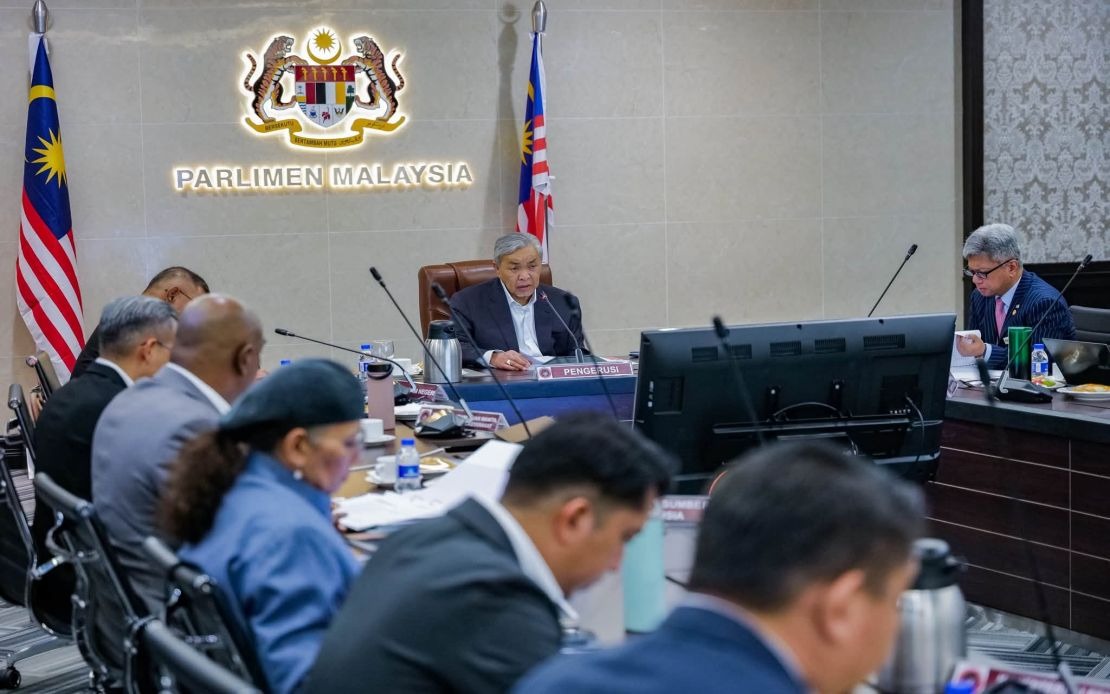
Deputy Prime Minister Datuk Seri Dr Ahmad Zahid Hamidi has called for Malaysia to enhance its refugee administration framework, emphasising that safeguarding displaced persons must occur alongside protecting the nation's borders and sovereignty. Speaking after leading the 6th High-Level Committee meeting focused on refugee and asylum-seeker administration, Ahmad Zahid stressed that Malaysia cannot treat refugee policy as purely a logistical challenge. Instead, the country must approach the issue as an integrated governance concern that encompasses humanitarian accountability, public safety and the interests of ordinary Malaysians.
The timing of Ahmad Zahid's remarks reflects global pressures bearing down on nations worldwide. The United Nations reports that more than 122 million people have been forcibly displaced by conflicts and persistent instability across multiple continents, creating unprecedented demand on receiving countries. This scale of displacement has intensified scrutiny on how nations like Malaysia, positioned at a strategic crossroads between regions experiencing significant upheaval, manage their obligations to vulnerable populations while protecting citizens.
Ahmad Zahid, who also oversees the Rural and Regional Development Ministry, underscored that effective refugee management transcends administrative convenience. He articulated that each policy decision must ultimately serve Malaysia's broader national interests and reflect the democratic will of its population. This framing suggests the government recognises growing public debate about immigration and asylum, and seeks to demonstrate that compassion and security are not mutually exclusive goals.
The high-level committee meeting examined how Malaysia's existing refugee management mechanisms are functioning and whether they align with current needs and legal obligations. Participants reviewed implementation progress of these frameworks to ensure they remain systematic, coherent and responsive to changing circumstances. This assessment-focused approach indicates the government is pursuing evidence-based adjustments rather than sweeping ideological overhauls.
A specific focus emerged on the Refugee Registration Document (DPP) scheme, Malaysia's principal system for identifying and documenting displaced persons within its borders. The committee evaluated how this system is operating and whether it adequately serves both protection and administrative objectives. The DPP represents a critical tool for distinguishing genuine refugees from other migrants and enabling targeted support provision.
The committee also concentrated on harmonising access guidelines for education and healthcare services available to refugee populations. These are particularly sensitive policy areas because they directly affect vulnerable individuals—especially children—while also generating public discussion about resource allocation and service provision. By streamlining guidelines, the government aims to ensure that relevant agencies can implement policies consistently, legally and efficiently. Better coordination across ministries and departments would reduce bureaucratic friction and enable clearer communication with schools, hospitals and other service providers.
For Malaysia specifically, refugee policy carries distinctive weight given the nation's geographic position and demographics. Southeast Asia faces displacement pressures from Myanmar, Afghanistan and other regional instability sources. Malaysia has historically hosted significant refugee populations, including Rohingya from Myanmar and others from South Asia and the Middle East. This experience has created both institutional knowledge about managing displacement and public awareness of associated challenges, from housing and employment to social cohesion and security vetting.
The government's emphasis on balancing humanitarian and security considerations reflects recognition that public confidence in refugee policy depends on both dimensions receiving credible attention. Malaysians must believe that their country is both demonstrating compassion toward those fleeing persecution and violence, and protecting national interests and social stability. When either dimension appears neglected, political support for refugee programmes can erode, potentially leading to more restrictive policies that harm vulnerable populations.
Ahmad Zahid's articulation of this balance also acknowledges international humanitarian law obligations that Malaysia has undertaken through various conventions and regional agreements. These commitments establish expectations about non-refoulement—the principle that asylum-seekers should not be returned to places where they face persecution—and basic protection standards. Simultaneously, Malaysia retains legitimate authority to screen arrivals, verify claims and ensure that national security processes function properly.
The committee's work reflects ongoing evolution in how Southeast Asian governments approach refugee challenges. Rather than viewing these issues through a binary lens—either maximum acceptance or restrictive closure—there is growing recognition that sophisticated administration, inter-agency coordination and context-appropriate policies can serve multiple objectives simultaneously. This pragmatic approach requires technical capacity, adequate resourcing and political commitment.
Looking forward, the effectiveness of Malaysia's refugee framework will depend on whether the enhancements discussed by the committee translate into tangible improvements in protection delivery and administrative efficiency. The education and healthcare access guidelines, once streamlined, will need proper communication to implementing agencies and adequate training to ensure consistent application. The DPP system will require ongoing technological and procedural refinement to handle population growth and changing displacement patterns.
The committee's focus on systematic, legally compliant administration also suggests the government recognises that refugee policy must withstand scrutiny from multiple angles—humanitarian organisations monitoring protection standards, civil society examining resource allocation, and security agencies ensuring vetting processes function properly. Successfully managing these competing scrutinies requires transparent processes, clear public communication and genuine coordination across traditionally siloed government departments.

