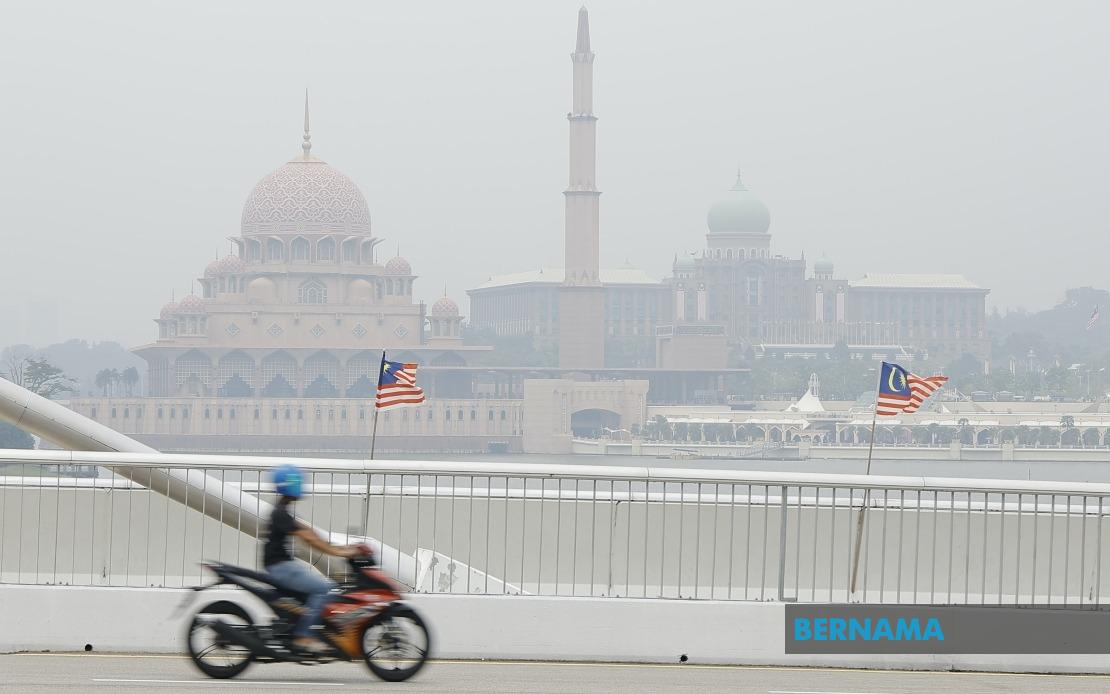
Malaysia needs to move beyond reactive crisis management and implement a sophisticated early warning system for haze, according to Associate Professor Dr Azman Azid, director of the Universiti Sultan Zainal Abidin Besut Campus. Speaking at Kuala Nerus, the environmental researcher emphasised that sufficient data already exists to construct a predictive framework capable of detecting haze threats 48 to 72 hours in advance, allowing authorities and healthcare systems to prepare before pollution reaches dangerous levels.
The urgency of this shift is underscored by alarming health data. Recent Ministry of Health figures revealed a 259 per cent surge in asthma cases during the 32nd and 33rd epidemiological weeks, with reported cases jumping from 61 to 219. This dramatic increase demonstrates that haze poses far more serious consequences than air quality readings alone suggest, revealing a growing burden on respiratory disease management across the country. Azman argued that the current approach—monitoring pollutant indices, tracking smoke movement, and issuing warnings—arrives too late to prevent health impacts, as the damage occurs once pollutants saturate the atmosphere.
The proposed system would function as a complement to existing Air Pollutant Index monitoring rather than a replacement. By integrating multiple data streams, including hotspot locations from fire detection systems, satellite imagery for smoke plume identification, meteorological patterns showing wind direction and speed, atmospheric trajectory models, and fine particulate matter measurements (PM2.5), Malaysia could construct a comprehensive forecasting mechanism. Hotspot data would pinpoint fire locations, while satellite systems would visualise smoke progression, enabling meteorologists to calculate wind patterns and atmospheric models to trace the origin and path of polluted air masses moving toward populated areas.
This integrated approach would provide early intervention opportunities. If the combined model projects elevated PM2.5 concentrations in a particular region within two to three days, hospitals and clinics could activate enhanced respiratory care preparations, stockpile necessary medications, and staff appropriately. Schools could reschedule outdoor activities to safer times, protecting vulnerable populations including children and the elderly. The current system essentially waits for the Air Pollutant Index to spike before reacting, meaning intervention occurs only after pollutants have already infiltrated the environment and residents have begun experiencing health effects.
Malaysia possesses the technological infrastructure necessary for such a system. The nation already operates advanced weather forecasting capabilities, creating a logical foundation for developing parallel haze forecasting systems designed for public comprehension. The data integration challenge is not one of missing information but rather organisational fragmentation—ensuring that meteorological agencies, environmental monitoring bodies, and health authorities share information seamlessly and in real time. Azman underscored this point, noting that the critical question is not whether data exists but whether existing datasets are genuinely unified to enable forecasting significantly earlier than current detection methods allow.
Regional cooperation amplifies the system's potential effectiveness, given that transboundary smoke movement makes individual national responses insufficient. Malaysia participates in the ASEAN Agreement on Transboundary Haze Pollution, yet current cooperation mechanisms primarily involve sharing data and coordinating post-crisis reactions rather than pursuing proactive prevention. Strengthening regional collaboration requires advances in fire source mapping, shared smoke trajectory forecasting, technology exchange, coordinated firefighting assistance, and established rapid response protocols. Air and smoke molecules recognise no political boundaries, making isolated national action inherently limited when pollution originates from neighbouring countries experiencing uncontrolled burning across vast areas.
Parallel to technological development, Malaysia must intensify enforcement of existing regulations governing open burning, agricultural fires, and peatland monitoring. Legal frameworks exist but require more rigorous implementation and penalties to deter damaging practices. The Ministry of Health data indicates that enforcement deficiencies directly translate into preventable respiratory illness surges. Strengthening these mechanisms represents a complementary strategy to forecasting, reducing fire incidence at the source rather than merely preparing to respond once pollution occurs.
Addressing transboundary haze comprehensively demands a multifaceted strategy transcending technology alone. Fire prevention in high-risk areas, sustainable peatland management practices, atmospheric modelling capacity, strengthened regional diplomacy, and fundamental shifts toward sustainable land use patterns all contribute to long-term solutions. Technology enables prediction and health protection, but enforcement prevents fires, and diplomacy builds regional commitment to shared environmental standards. In the immediate term, Malaysia may not prevent all smoke plumes from entering national airspace, yet implementing predictive systems offers concrete opportunities to reduce fire incidence, forecast smoke movement considerably earlier, and critically, shield public health from deteriorating air quality impacts.
The asthma case surge represents not merely an epidemiological curiosity but a clarion call for policy reorientation. As Malaysia faces recurring haze episodes and potentially escalating air pollution due to regional development pressures, the burden on healthcare systems will intensify unless prevention and early intervention strategies take precedence over post-crisis management. The window for implementing comprehensive haze forecasting systems remains open, requiring coordinated action among environmental agencies, meteorological services, health authorities, and political leadership to transform available data into actionable intelligence protecting millions of Malaysian residents.

