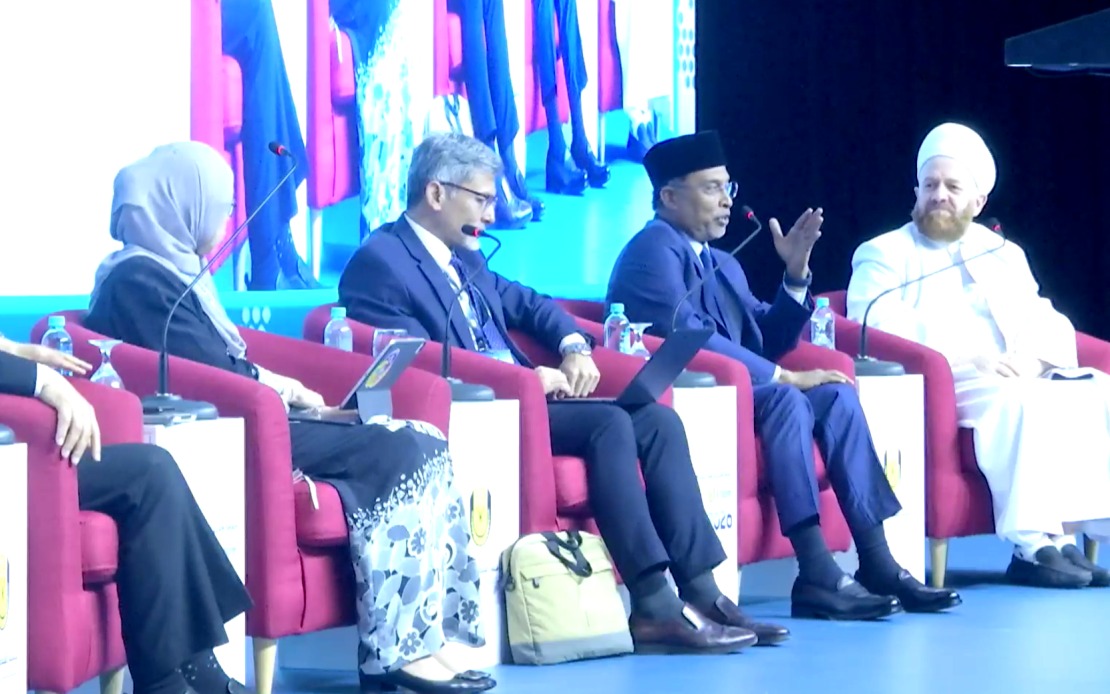
Malaysia must urgently weave artificial intelligence and cutting-edge technologies into its higher education fabric while maintaining robust ethical guardrails, according to Higher Education Minister Datuk Seri Dr Zambry Abd Kadir. Speaking at the 8th World Conference on Islamic Thought and Civilisation in Ipoh, Zambry stressed that the country's ability to build competitive human and intellectual capital depends on how universities navigate the intersection of technological disruption and moral development. The challenge ahead, he suggested, is not merely adopting new tools but ensuring they serve humanity's deeper values rather than undermine them.
The Ministry of Higher Education has responded to this imperative by charting a comprehensive 10-year roadmap spanning 2026 to 2035. Rather than pursuing technology for its own sake, the blueprint explicitly balances three interconnected priorities: technological progress, human capital growth, and the cultivation of moral character. This strategic framework reflects growing recognition among policymakers that Malaysia's competitive advantage in the global economy ultimately rests not on computing power alone but on the calibre of graduates entering the workforce—individuals who combine technical acumen with ethical reasoning and social responsibility.
Zambry's remarks highlight a fundamental tension in contemporary education. Artificial intelligence, quantum computing, and related fields are advancing at unprecedented speed, reshaping entire industries and creating both opportunities and risks. Yet universities across Southeast Asia have struggled to update curricula fast enough to keep pace. Malaysia's approach, as outlined by the minister, seeks to resolve this tension by embedding ethics and moral philosophy directly into the study of these emerging disciplines rather than treating them as separate concerns. This represents a departure from the traditional siloed approach where technology and humanities occupy different institutional corners.
The shift from STEM to STEAM—adding arts and liberal studies to the traditional Science, Technology, Engineering and Mathematics framework—embodies this philosophy in practical terms. Zambry cited Universiti Teknologi Petronas as an exemplar, noting that its engineering programmes deliberately require students to undertake coursework beyond their technical specialisation. By exposing future engineers to humanities and social sciences, these institutions cultivate not merely problem-solvers but thoughtful professionals capable of considering the broader societal implications of their work. This interdisciplinary approach develops critical thinking—arguably the most valuable skill in an AI-driven economy where specific technical knowledge becomes obsolete rapidly but the ability to learn, adapt, and reason remains timeless.
The minister's emphasis on character development strikes at a concern that resonates throughout Southeast Asia: that rapid technological adoption without corresponding ethical maturation creates a vacuum that algorithms and efficiency cannot fill. While artificial intelligence excels at processing information and generating precise answers, it operates within parameters set by humans. The question of what values should guide those parameters—and who decides—is fundamentally a question of human judgment, wisdom, and conscience. Malaysia's blueprint attempts to ensure that graduates possess not only the technical literacy to work alongside AI but also the moral framework to question when its use is appropriate and when human judgment must prevail.
For Malaysian universities, this framework carries significant practical implications. Institutions will need to recruit faculty members capable of bridging traditionally separate disciplines, designing curricula that weave ethical reasoning throughout technical programmes rather than confining it to elective courses. Assessment methods will require rethinking; traditional examinations measuring factual recall and problem-solving increasingly seem insufficient for evaluating graduates' readiness to navigate ethical dilemmas in professional life. University leadership must also foster institutional cultures that reward and celebrate this integrative approach rather than continuing to privilege specialisation and disciplinary purity.
The regional context amplifies the urgency of this educational reorientation. Across Southeast Asia, countries are competing intensely to position themselves as technology hubs and attract multinational investment in AI research and development. Singapore, Vietnam, and Indonesia have all announced ambitious digitalisation strategies. Yet the region also grapples with concerns about job displacement, data privacy, algorithmic bias, and the concentration of wealth created by technological disruption. Malaysia's insistence on embedding ethics into higher education from the outset offers a potential pathway to capturing technology's benefits while mitigating some of these harms—but only if execution matches ambition.
Zambry's reference to striking the right balance reveals underlying complexity in the policy challenge. Universities cannot become mere ethics seminars at the expense of technical rigour; Malaysia's economy requires graduates with genuine expertise in AI, cybersecurity, and digital infrastructure. Conversely, turning out technically proficient graduates who lack ethical grounding or social awareness risks creating professionals who optimise for narrow metrics without considering broader consequences. The 10-year blueprint's success will ultimately depend on whether Malaysian universities can genuinely synthesise these elements rather than treating them as competing demands.
Looking forward, implementation will prove more demanding than policy articulation. Universities accustomed to traditional structures and funding models may resist the investments required to establish genuinely interdisciplinary programmes. Students trained under the old STEM paradigm may initially resist the inclusion of arts and humanities, fearing it dilutes their competitive advantage. Employers accustomed to hiring specialists may need convincing that graduates with broader perspectives and ethical awareness justify the investment. Yet Zambry's framing suggests the ministry recognises these obstacles and intends to use its 10-year horizon to enable gradual, sustainable transformation rather than disruptive change.
The minister's vision ultimately reflects a conviction that Malaysia's future competitiveness depends on developing not just smart workers but wise leaders—professionals equipped to shape technology's trajectory rather than merely adapting to it. In an era when artificial intelligence increasingly influences consequential decisions across healthcare, finance, criminal justice, and governance, this emphasis on ethics and moral reasoning represents not a luxury but a necessity. Whether Malaysian higher education can deliver on this ambition remains to be seen, but the strategic clarity provided by the 10-year blueprint and the minister's public advocacy suggest serious intent to try.

