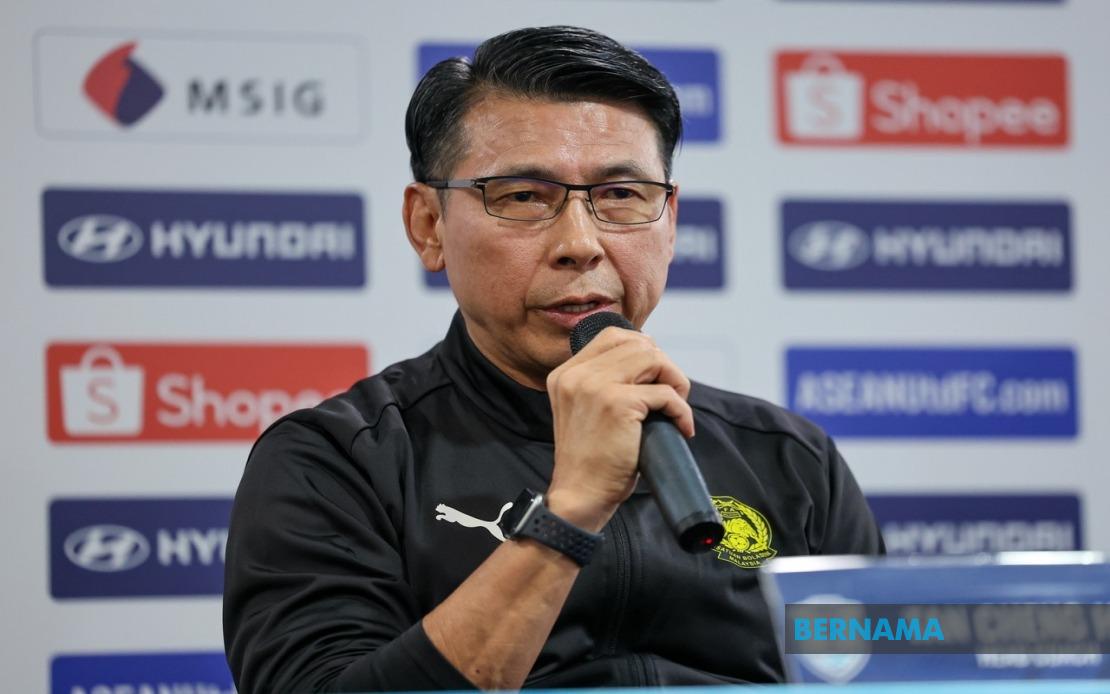
Malaysia's interim football coach Tan Cheng Hoe is sounding a note of caution as his Harimau Malaya side prepares to face Laos in Group B of the ASEAN Cup 2026, with the match scheduled for tomorrow at the Kuala Lumpur Football Stadium in Cheras. Having secured an impressive 2-1 victory against Myanmar in the tournament opener on Saturday, the national team now sits second in their group, but Cheng Hoe is adamant that the rising expectations surrounding Malaysia's prospects must not breed a dangerous overconfidence that could prove costly against their Southeast Asian neighbours.
The Laos national team, despite falling 0-5 to seven-time champions Thailand in their opening fixture, represents a threat that demands respect and careful tactical consideration. Cheng Hoe's assessment reveals a squad composed predominantly of players under 23 years old—a factor that, while suggesting potential long-term development, does not diminish the immediate danger they pose. Young teams hungry to prove themselves often display resilience and determination that belies their inexperience, and Laos will be acutely aware that their tournament survival depends on securing a positive result sooner rather than later.
The coaching staff has conducted detailed analysis of Laos' playing style, identifying their capacity to launch dangerous counter-attacks as a particular concern. This tactical profile means Malaysia must exhibit discipline in possession, particularly in their own half, avoiding the careless turnovers that could expose the back line to rapid transitions. The urgency of such defensive conscientiousness was evident during Saturday's encounter with Myanmar, where Malaysia's first-half performance lacked the sharpness required at international level before a commanding second-half recovery salvaged the match through superior fighting spirit.
Cheng Hoe praised his players' ability to respond when adversity emerged against Myanmar, highlighting how the squad's experienced contingent provided crucial steadying influence when the team faced difficulty. The presence of established internationals such as Paulo Josue and Mohamadou Sumareh has proven invaluable in maintaining collective composure and mentoring younger colleagues through the demands of tournament football. These seasoned operators serve as both on-field leaders and off-field exemplars, their professionalism setting standards that ripple through the entire squad.
Forward Syafiq Ahmad echoed this sentiment, emphasising that the integration of youth with experience represents a deliberate squad construction that balances immediate competitive capability with longer-term development objectives. For emerging players navigating the intensity of continental competition, the presence of trustworthy senior figures who have navigated similar challenges provides both psychological reassurance and practical football education that cannot be replicated through training drills alone. This mentoring dynamic has clearly accelerated adaptation among the younger cohort.
Yet Cheng Hoe's overriding message to his players remains firmly focused on the immediate challenge ahead. Despite inheriting what appears a favourable tournament position—currently second in Group B on goal difference level with leaders Thailand—premature advancement planning would be a dangerous indulgence. The coach has repeatedly stressed that concentration must remain anchored on the Laos assignment, with the squad working methodically under his direction to execute the tactical blueprint designed to neutralise their opponents' strengths.
The Group B standings underscore both Malaysia's progress and the competitive uncertainty that still characterises this tournament stage. With Thailand's opening victory establishing them as group leaders and the Philippines occupying third place following their own match, the clustering of results means that tomorrow's outcome carries disproportionate weight for subsequent advancement scenarios. Myanmar and Laos, both pointless after their opening fixtures, face elimination mathematics that should provoke precisely the kind of desperate intensity Cheng Hoe warns his players to anticipate.
The tactical imperative for Malaysia involves executing clinical finishing when attacking opportunities materialise, given that marginal goal differences may ultimately determine progression. Saturday's victory over Myanmar, while convincing in its second-half dominance, required two goals to overcome their opponents—a ratio that might prove insufficient against more organised defensive structures. Cheng Hoe has consistently demanded improved efficiency in the final third, recognising that tournament football often rewards those who convert their limited chances into goals with ruthless precision.
Laos' recent demolition by Thailand, while appearing catastrophic on paper, paradoxically creates circumstances where Cheng Hoe's wariness proves particularly prescient. Humbled teams frequently respond with structured, compact defensive organisations designed to prevent recurrence of similar scorelines. Such defensive discipline, even deployed by less technically gifted squads, can frustrate superior opponents who approach matches with diminished intensity or tactical flexibility. The historical record of ASEAN Cup competition is littered with examples of favoured sides stumbling against opponents dismissed as lesser, a cautionary lesson that should inform Malaysian preparation.
The tournament's structure, requiring only the top two teams from each group to progress to the semi-finals, concentrates intensity in these early fixtures. Malaysia's current position provides opportunity, yet also vulnerability—one poor performance could trigger a cascading loss of momentum that proves difficult to arrest. Conversely, a convincing victory would substantially advance their knockout-stage prospects while simultaneously imposing psychological pressure on rivals chasing limited semi-final berths. Tomorrow's match therefore transcends its surface appearance as a routine second-round fixture, instead representing a consequential turning point in Malaysia's tournament narrative.

