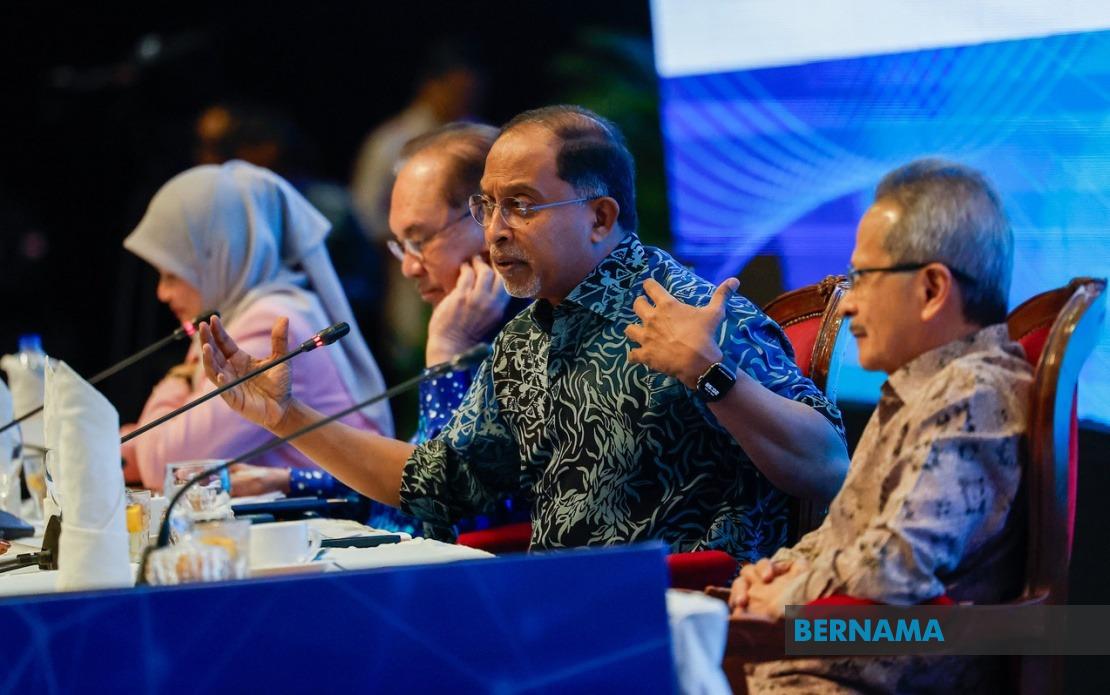
The future of Malaysia's higher education system hinges on reforming key legislation that has governed universities for over five decades, according to Higher Education Minister Datuk Seri Dr Zambry Abd Kadir. Speaking at the MADANI Malaysian Scholars Forum Series 13 at the University of Malaya, Zambry stressed the urgency of revisiting the Universities and University Colleges Act 1971 (AUKU) and other related laws to prevent the sector from being strangled by regulations increasingly out of step with contemporary needs.
The minister's intervention reflects growing recognition among policymakers that AUKU, enacted during a vastly different era in Malaysian development, now represents an obstacle to institutional innovation and academic progression. Zambry acknowledged that restrictions baked into the legislation have constrained the sector's evolution and that the government is actively exploring new dimensions, particularly around safeguarding academic freedom, enabling genuine freedom of expression, and empowering students to play a more active role in their educational journey. These issues have become flashpoints in Malaysian higher education discourse, with critics arguing that current rules place excessive limits on intellectual discourse within campuses.
The Ministry of Higher Education is considering an ambitious consolidation project that would eventually supersede the fragmented regulatory landscape. Rather than continuing to amend multiple overlapping acts, KPT is exploring the creation of a unified "One Higher Education Act" that would streamline coordination across the entire sector under a single, more robust legal framework. This consolidation approach represents a significant conceptual shift from incremental tinkering toward comprehensive legislative redesign. An Independent Committee has already been established to systematically gather input from academics, student representatives, and other stakeholders, ensuring that reform efforts rest on broad consultation rather than top-down imposition.
The forum, held with Prime Minister Datuk Seri Anwar Ibrahim moderating and Education Minister Datuk Seri Fadhlina Sidek participating as a panelist, underscores the government's priority placement on education reform at the highest levels. The presence of such senior figures signals that reviewing tertiary education legislation is not a routine administrative matter but a strategic undertaking integral to Malaysia's longer-term development trajectory. Anwar's personal involvement in moderating the discussion highlights the interconnection between higher education policy and the broader MADANI framework underpinning the current administration's governance philosophy.
Parallel to tertiary education reform, Fadhlina articulated the Ministry of Education's commitment to democratising access across the entire education pipeline. Her emphasis on "humane education" reframes schooling as something fundamentally oriented toward recognising and nurturing the diverse talents and potential within each learner, rather than treating students as interchangeable units optimised solely for examination performance. This philosophical repositioning has practical implications, evidenced by continued expansion of innovative delivery models including Schools in Hospital, educational facilities in rehabilitation centres, and the K9 and K11 school programmes designed specifically for Orang Asli communities.
The ministry's approach to early childhood education further illustrates this holistic vision. By substantially expanding free pre-school access on a nationwide basis, MOE is addressing both equity and practical household economics, recognising that educational opportunity must begin well before formal schooling and that financial barriers can derail potential from the earliest stages. This preventive strategy, targeting disadvantaged families through subsidised early learning, represents a departure from reactive interventions attempted further downstream when achievement gaps have already calcified.
Fadhlina's critique of examination-centric educational philosophy carries particular relevance for Malaysia's tertiary sector and its relationship to employment markets. Her argument that schools should develop balanced individuals with mental resilience and moral grounding, rather than simply producing credentials for employers, suggests a fundamental mismatch between how outcomes are currently measured and what society actually requires. This observation resonates directly with the AUKU review agenda, as restrictive legislation often reinforces credentialism and narrow skill development at the expense of the broader intellectual and ethical formation that Fadhlina advocates.
The minister's explicit recognition that children arrive in classrooms with varying emotional, psychological, and social needs represents an acknowledgment that education policy cannot operate in abstraction from students' lived realities. Some learners navigate learning difficulties, others contend with family instability or anxiety disorders, yet traditional rigid systems often fail to accommodate this complexity. By insisting that the system must address this full spectrum of human need, Fadhlina implicitly critiques the one-size-fits-all model that has historically dominated Malaysian schooling and that continues to influence higher education institutions operating under outdated regulatory frameworks.
The drive to review and substantially reform AUKU must be understood within Southeast Asia's broader educational context. Regional competitors have undertaken similar legislative modernisations, granting universities greater autonomy in areas such as curriculum design, international collaboration, and research prioritisation. Malaysia's delay in updating its foundational university legislation places local institutions at a competitive disadvantage when attempting to attract international talent, forge research partnerships, or position themselves as regional knowledge hubs. Contemporaries like Singapore, Thailand, and Indonesia have already granted their tertiary sectors greater operational flexibility through legislative reform.
The emphasis on academic freedom in the reform discussion carries particular significance in Malaysia's political environment, where campus speech restrictions have periodically generated controversy. By explicitly positioning academic freedom as a pillar of AUKU modernisation, Zambry signals governmental willingness to recalibrate the balance between institutional governance and intellectual expression. Whether implementation will match this rhetorical commitment remains to be seen, but the public articulation of this principle at a high-level forum establishes a framework against which future progress can be measured and creates political accountability for ensuring that any revised legislation genuinely expands rather than merely appears to expand scholarly autonomy.
The Independent Committee mechanism for gathering stakeholder input offers an opportunity for Malaysian academics and students to shape legislation that will govern their institutions for decades ahead. The success of this consultation process will largely determine whether the resulting reforms represent genuine modernisation or cosmetic adjustments that preserve existing power structures under new language. For Malaysia's higher education system to compete effectively and evolve meaningfully, the reform effort must go substantially beyond symbolic gestures. Stakeholders and observers should scrutinise the committee's composition, methodology, and the receptiveness shown to recommendations that challenge institutional interests, ensuring that reform translates into tangible expansion of academic space and institutional capacity.

