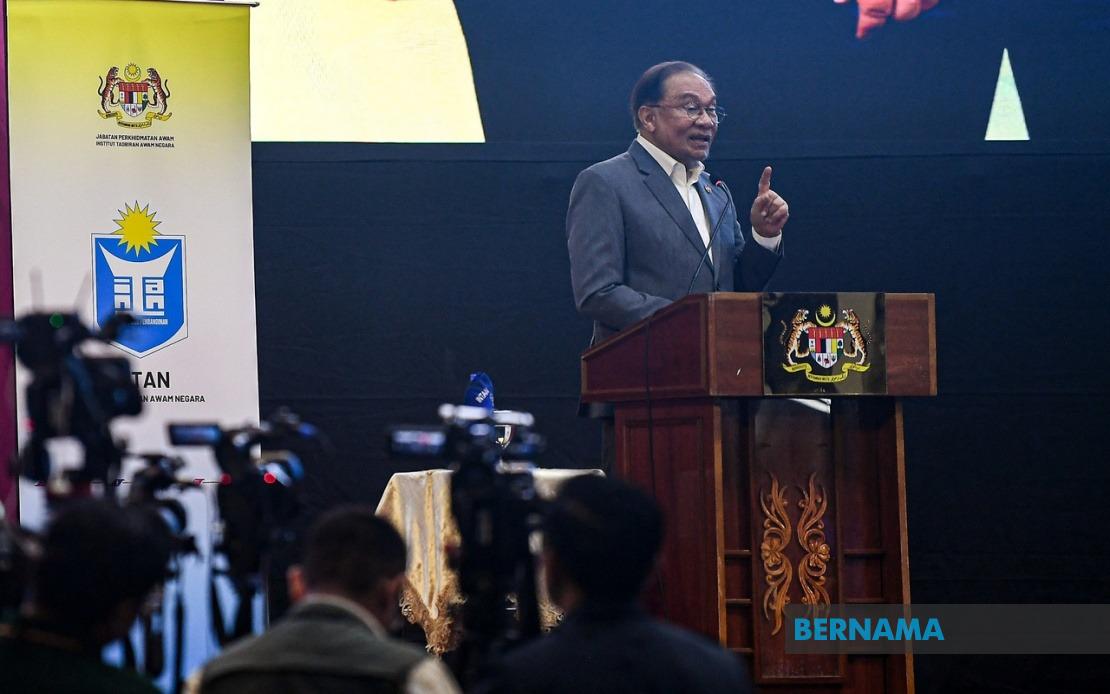
Prime Minister Datuk Seri Anwar Ibrahim has made a forthright appeal to Malaysians to liberate themselves from the psychological chains of colonialism, challenging a widespread tendency to regard Western institutions, languages, governance frameworks and cultural practices as inherently more advanced or desirable than homegrown alternatives. Speaking at Universiti Islam Selangor in Bangi on July 20, Anwar framed this shift in perspective not merely as cultural pride but as a fundamental requirement for genuine national independence nearly seven decades after Merdeka.
Anwar's remarks underscore a persistent paradox in post-independence Malaysia: while the nation has achieved political sovereignty, segments of society remain culturally and intellectually oriented towards Western models as the gold standard for progress. This phenomenon, he suggested, extends across multiple domains—from education policy and language choices to economic frameworks and administrative structures. The Prime Minister's intervention reflects growing concern within government circles that Malaysia risks squandering its independence if it continues to blindly replicate external systems without filtering them through a distinctly Malaysian lens.
The PM illustrated his point with a pointed observation about post-independence generations who maintain what he termed a "half-English" mentality. Despite their Malaysian citizenship and brown skin, many among this cohort instinctively default to Western standards when evaluating quality across sectors. In education, this manifests as an unquestioned preference for English-medium instruction; in business, it translates to adopting wholesale Western economic models; and in governance, it results in uncritical adoption of Western political and administrative systems. Anwar's diagnosis suggests that decolonising the Malaysian mindset requires more than institutional reform—it demands a fundamental recalibration of values and aspirations.
This message carries particular resonance in contemporary Malaysia, where debates over language policy, university curricula and development models remain contentious. The push to elevate Bahasa Malaysia while preserving English proficiency, the periodic calls for Islamising higher education, and discussions about whether Malaysia should follow Western or Asian governance models all reflect underlying tensions between different visions of national identity. Anwar's intervention suggests the government believes these tensions can only be resolved through conscious rejection of perceived Western superiority.
The speech was delivered during a gathering with civil servants from the Central Zone, attended by Chief Secretary to the Government Tan Sri Shamsul Azri Abu Bakar and Director-General of the Public Service Tan Sri Wan Ahmad Dahlan Abdul Aziz. The venue and audience choice underscored the government's intention to embed this philosophy throughout the civil service, which plays a crucial role in implementing national policies and shaping public discourse. By directing this message at civil servants, Anwar signalled that decolonising the Malaysian mindset is not an optional cultural exercise but a matter of state policy.
Anwar emphasised that the responsibility of today's generation extends considerably beyond simply enjoying the fruits of independence secured by previous generations. Rather, contemporary Malaysians bear an obligation to ensure that continued national development rests on authentic values and a coherent national identity rooted in Malaysian, rather than imported, foundations. This framing transforms the decolonisation project from historical reckoning into forward-looking necessity.
The Prime Minister's comments implicitly challenge a development paradigm that has dominated Malaysian policy circles for decades, in which Western best practices are routinely imported with minimal adaptation. Whether in public administration, urban planning, healthcare delivery or education systems, Malaysia has typically benchmarked itself against Western examples. While this approach has yielded benefits, Anwar's intervention suggests it has also created a dependency that undermines genuine innovation and fails to leverage Malaysia's unique strengths, cultural resources and regional position.
For Southeast Asian observers, Anwar's emphasis on rejecting colonial mentality resonates beyond Malaysia's borders. The region broadly grapples with similar tensions between Western-influenced development models and indigenous approaches to governance, economics and culture. Countries like Indonesia, Thailand and Vietnam have in recent years reasserted national values and challenged wholesale Westernisation, though with varying degrees of success and consistency. Malaysia's articulation of this challenge from the highest political level may provide a template—or a cautionary tale—for other nations navigating comparable transitions.
The practical implications of Anwar's call remain to be seen. Translating rhetorical commitment to decolonised thinking into concrete policy changes presents significant challenges. Education reform, language policy adjustments, and economic restructuring all require sustained political will and careful management of competing interests. Moreover, selectively adopting Western ideas while rejecting others demands sophisticated judgment about which elements serve national interests—a task easier stated than executed.
Anwar's message also implicitly addresses anxieties about Malaysia's competitive position in an increasingly multipolar world. As China's influence expands regionally and globally, and as non-Western development models gain credibility, Malaysia faces genuine choices about which external references to adopt. Anwar's call for indigenous-centred development can be read partly as an effort to position Malaysia as charting its own course rather than remaining locked in Western-oriented frameworks that may not serve its long-term interests.
The challenge ahead involves distinguishing between necessary rejection of unexamined Western dominance and potentially counterproductive insularity. Malaysia benefits from global engagement, technological transfer and intellectual exchange regardless of origin. What Anwar appears to advocate is not isolation but conscious selection—adopting ideas, practices and models on the basis of genuine fit with Malaysian circumstances and values rather than mere prestige or assumed superiority. This calibrated approach could potentially unlock innovation that neither wholesale Westernisation nor defensive nationalism alone would produce.

