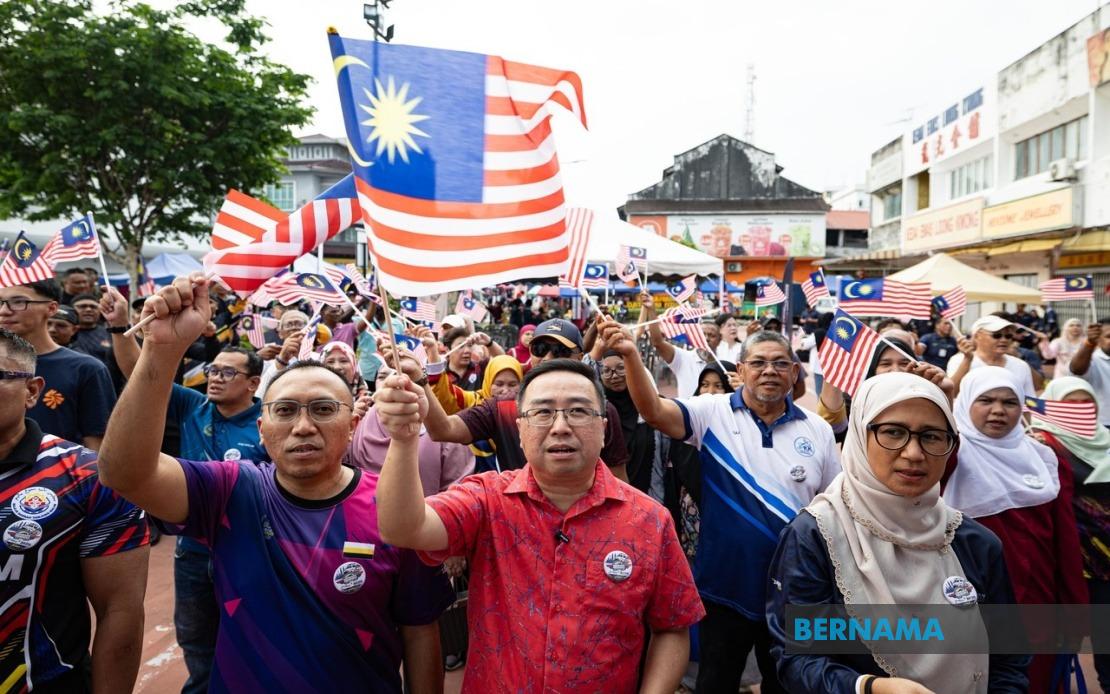
Malaysia's path forward depends on developing a more sophisticated understanding of what nationhood means—one that transcends the narrow confines of identity politics, fear-mongering, and coercion that have increasingly characterised public discourse. This call comes from Science, Technology and Innovation Minister Datuk Chang Lih Kang, who argues that the nation cannot afford to perpetuate a political culture that reduces complex national questions to matters of race and religion. Instead, he envisions a Malaysia where every citizen, irrespective of ethnicity, religious belief, socioeconomic background, or political preference, genuinely perceives themselves as having a meaningful role in determining the country's trajectory.
The foundation of this transformed Malaysia, according to Chang, rests on institutional reform. Building a strong and united nation requires more than rhetorical appeals or coercive measures designed to silence dissent. Rather, it demands the development of institutions characterised by genuine strength, professional competence, and impartial application of rules. The judiciary, civil service, and regulatory bodies must operate with visible fairness, delivering public services and enforcing laws without regard to racial, religious, or partisan considerations. This represents a significant departure from governance models that have occasionally weaponised state machinery to advantage particular communities or punish political opponents.
Good governance emerges as the critical safeguard against the fragmentation and polarisation that accompanies identity-based politics. When public institutions function with integrity and demonstrate clear commitment to equitable treatment, citizens develop confidence in the system itself rather than retreating into narrow communal identities for protection. This shift is particularly urgent given how irresponsible invocations of race and religion can fragment society into competing blocs, each convinced that other communities receive preferential treatment. Such perception gaps, whether grounded in reality or not, undermine social cohesion and create zero-sum political dynamics where one group's gain appears inherently connected to another's loss.
Chang's framing reflects concerns echoed by institutional analysts studying Southeast Asian democracies: nations that anchor legitimacy primarily in identity politics face structural vulnerability to democratic backsliding and elite capture. When electoral competition consistently revolves around questions of communal representation and religious primacy, politicians face incentives to radicalise their messaging, polarise constituencies, and utilise state resources in ways that reinforce division. Malaysia's multicultural composition, while representing a significant national asset, becomes weaponised in this context rather than celebrated as foundation for shared prosperity.
The minister's observations on patriotism and national symbolism address a parallel tension affecting contemporary Malaysian discourse. The national flag deserves respect and reverence as an embodiment of historical struggle, collective sacrifice, and aspirational futures. Yet enforcement mechanisms surrounding patriotic expression require proportionality and discriminating judgment. When genuine mistakes—such as inadvertent mishandling of the Jalur Gemilang—trigger severe legal consequences, arrest procedures, or public vilification campaigns, the effect paradoxically corrodes rather than strengthens patriotic sentiment. Citizens become apprehensive about displaying national symbols for fear of disproportionate punishment, transforming patriotism from genuine emotional attachment into anxious compliance.
A genuinely confident nation possesses the maturity to distinguish between honest errors warranting education and deliberate provocations demanding response. Intent matters profoundly in this calculus. Context shapes interpretation significantly. Proportionality ensures that consequences align with actual transgression rather than symbolic significance. Chang argues that government agencies should conceive their role primarily through an educational and guidance lens rather than adopting reflexively punitive stances. This reframing would require substantial shifts in institutional culture, training, and enforcement protocols across numerous agencies.
The broader societal response to minor infractions similarly warrants recalibration. When communities habitually express outrage over genuine mistakes, converting them into national controversies demanding investigation and punishment, collective emotional temperature rises constantly. Empathy and forgiveness become rarer commodities in public discourse, replaced by reflexive condemnation and maximalist interpretations of every misstep. Chang advocates instead for measured responses that acknowledge human fallibility while maintaining clear lines against deliberate incitement to hatred or calculated divisiveness.
This philosophical framework connects to observations made by Sultan Perak Sultan Nazrin Shah at the 8th World Conference on Islamic Thought and Civilisation regarding unity constructed through shared belonging versus unity imposed through coercive mechanisms. The former generates resilience through genuine commitment and emotional investment; the latter depends on enforcement capacity and remains vulnerable to collapse when coercive power weakens or legitimacy erodes. Malaysia's trajectory depends significantly on which model shapes national identity construction going forward.
The envisioned Malaysia transcends the compartmentalisation that sometimes characterises contemporary multicultural societies, where communities maintain parallel institutional structures, media ecosystems, and social networks with minimal organic interaction. Instead, Chang articulates a vision where cultural diversity, religious pluralism, linguistic multiplicity, and varied traditions actively strengthen the national fabric rather than existing in tension with it. Citizens from all backgrounds perceive concrete opportunities for meaningful participation in national projects and see genuine evidence that their perspectives receive consideration in policy formation.
As Malaysia marks another Merdeka anniversary, Chang reframes the essential national question away from performative displays of patriotic ardour toward substantive inquiries about the kind of nation being constructed for subsequent generations. Loud proclamations of love for country matter less than demonstrable commitment to creating governance systems and political cultures where such love feels warranted across diverse communities. This requires resisting temptations to deploy division for narrow political advantage and rejecting impulses toward excessive state intervention in citizens' lives.
Leadership, Chang emphasises, carries special responsibility in this context. Those occupying positions of authority must consistently remember that their role involves stewardship of collective interests rather than advancement of factional agendas. The machinery of state should never be weaponised against citizens on grounds of political difference or cultural identity. These principles, while straightforward in articulation, demand constant vigilance and cultural transformation within institutions accustomed to utilising state power in instrumentally partisan ways.
The minister's intervention enters Malaysian discourse at a moment when polarisation pressures intensify and competing narratives regarding national identity proliferate across social and traditional media platforms. His call for mature institutional reform, proportionate governance responses, and genuine inclusion represents one viable pathway toward democratic consolidation. Whether political incentive structures permit widespread adoption of such principles remains an open question, particularly when electoral dynamics often reward divisive messaging and identity-based mobilisation. Nevertheless, articulating alternative visions of nationhood and governance represents a necessary precondition for eventual systemic change.

